
Integrated Drinking Water Testing Solutions
Introduction
Access to safe drinking water is fundamental to public health. However, ensuring water quality requires systematic evaluation of potential chemical and microbial contaminants. Municipalities, water treatment facilities, and food and beverage production sites are therefore required to perform routine testing in accordance with regulatory frameworks established by authorities such as the World Health Organization, the U.S. Environmental Protection Agency, and the European Union.
To support these requirements, we offer a comprehensive portfolio of drinking water testing solutions. This includes advanced instrumentation, validated test kits, and high-quality reference materials designed to enable accurate detection and quantification of contaminants. Together, these solutions support reliable, reproducible results and facilitate compliance with regulatory standards.
Section Overview
Drinking Water Treatment Stages
Drinking water treatment consists of a sequence of physical and chemical processes designed to remove contaminants and ensure water is safe for human consumption.


Flocculation
This stage involves gentle, slow mixing in flocculation basins, allowing micro-flocs to collide and bind into larger flocs that can be more easily removed. Careful control of mixing intensity is essential, as excessive shear can break flocs apart, while insufficient mixing limits their growth.

Clarification
In this stage, water flows into sedimentation basins or tanks where hydraulic conditions allow the heavier flocs to settle at the bottom. This process removes most suspended solids, forming a sludge layer that is subsequently separated and removed.

Filtration
The clarified water is passed through filtration media, typically consisting of layers of sand, gravel, and activated carbon. This step removes remaining fine particles and reduces microorganisms, including bacteria, parasites, and viruses.

Disinfection
The final stage involves the addition of disinfectants such as chlorine, chloramine, or chlorine dioxide to inactivate remaining pathogens. Alternative or complementary methods, including ultraviolet irradiation or ozonation, may also be applied. A residual level of disinfectant is maintained to protect water from microbial contamination during distribution through pipelines.
Drinking Water Testing Solutions
Regulatory agencies mandate the use of standardized methods, such as ISO, EPA, and AOAC protocols, for drinking water analysis. A range of analytical techniques are applied, including quantitative analysis, chromatography, spectrophotometry, reflectometry, physical parameter measurement, and microbiological testing. These assessments are performed across the entire treatment workflow, from source water through intermediate stages such as flocculation and clarification, to final distribution points including tap sampling. Consistent quality control across these stages requires reliable and well-integrated analytical solutions.
An integrated portfolio of Spectroquant® solutions supports these requirements by enabling clear, consistent, and reproducible data generation throughout the testing process.
Spectroquant® Prove plus spectrophotometers are designed for the chemical analysis of drinking water, wastewater, and process water. These systems deliver high sensitivity and reliable performance, supporting accurate quantification across a wide range of parameters. Complementing these systems, Spectroquant® Test Kits are available as ready-to-use solutions compatible with both Spectroquant® instruments and photometers from other manufacturers, enabling rapid, secure, and precise measurements for routine monitoring as well as specialized analyses.
To support accuracy and comparability of results, Spectroquant® single- and multi-parameter standards are offered as ready-to-use solutions with defined concentrations, expanded measurement uncertainty, and traceability to NIST primary reference materials. For laboratories requiring customized dilutions the, Certipur® and TraceCERT® standard solutions offer high-purity standard solutions suitable for the precise preparation of laboratory-specific standards.
Below is a comprehensive overview of tests and standards organized by key parameters, along with instruments and supporting tools. This structure enables efficient navigation to identify suitable solutions for specific drinking water testing requirements. Additional guidance and support are available through customer service, if required.
Nitrogen Compounds
Nitrogen in drinking water is commonly present as nitrate, nitrite, or ammonium, each reflecting different stages of the nitrogen cycle and varying contamination sources. Monitoring these forms is essential, as elevated levels can indicate agricultural runoff, wastewater contamination, or inadequate treatment, and may pose risks to human health and water quality.1,2
Ordering Information
Ammonium Test Kits & Standard Solutions
Nitrate Test Kits & Standard Solutions
Nitrite Test Kits & Standard Solutions
BOD/COD/TOC
Chemical Oxygen Demand (COD), Biochemical Oxygen Demand (BOD), and Total Organic Carbon (TOC) are key indicators of organic pollution in water. COD measures the total amount of oxygen required to chemically oxidize organic and inorganic matter, while BOD reflects the oxygen consumed by microorganisms during the biological degradation of organic substances. TOC quantifies the total carbon content of organic compounds present. Together, these parameters provide a comprehensive assessment of organic load, treatment efficiency, and overall water quality.
From an analytical perspective, failure to monitor these parameters can lead to incomplete characterization of organic content, resulting in underestimation of oxygen demand, poor process control, and reduced method reliability. This may compromise calibration accuracy, mask matrix interferences, and limit the ability to detect treatment inefficiencies or variations in organic load, ultimately affecting data comparability and regulatory compliance. 3,4
Ordering Information
BOD Test Kits & Standard Solutions
COD Test Kits & Standard Solutions
TOC Test Kits & Standard Solutions
Phosphate
Phosphate in drinking water is present as orthophosphate, polyphosphate, or organic phosphorus, originating from natural sources, runoff, or treatment additives. Its measurement is important for monitoring nutrient levels and controlling processes such as corrosion inhibition. Insufficient monitoring of phosphate can lead to poor control of dosing strategies, variability due to phosphate speciation, and reduced accuracy and comparability of results.3,5
Ordering Information
Phosphate Test Kits & Standard Solutions
Sulfurous Compounds
Sulfurous components in drinking water are primarily present as sulfate and sulfide, originating from natural mineral dissolution, industrial inputs, or microbial processes. Sulfate is a common inorganic ion that can influence taste and contribute to scaling, while sulfide, often present as hydrogen sulfide, is associated with odor and anaerobic conditions.
Inadequate monitoring of these species can result in undetected changes in water chemistry, affecting sensory quality, corrosion behavior, and overall treatment control. Reliable determination of both sulfate and sulfide is therefore essential for consistent water quality assessment.3,6
Ordering Information
Sulfate, Sulfide & Sulfite Test Kits & Standard Solutions
Disinfectants, Cleaning Agents & Byproducts
Disinfectants are widely used in drinking water treatment to inactivate microorganisms. In addition, cleaning agents, including ionic and non-ionic surfactants, may be introduced through industrial or domestic sources. Disinfection processes can also generate byproducts, such as bromate, particularly during ozonation.
Inadequate monitoring of these parameters can lead to ineffective disinfection, residual chemical imbalances, or the formation of harmful byproducts. Accurate determination is therefore essential to verify disinfection efficiency, control residual levels, and ensure compliance with regulatory limits for both active agents and their byproducts.3,7
Ordering Information
Test Kits & Standard Solutions
(Pseudo)halogenides
(Pseudo)halogenides in drinking water include halide ions such as chloride, and bromide, as well as related species like cyanide and thiocyanate. These ions may originate from natural sources, industrial activities, or treatment inputs, and can influence water chemistry and reactivity.
Monitoring this group is essential, as halides such as bromide and iodide can act as precursors for the formation of disinfection byproducts during chlorination or ozonation. In addition, elevated levels of certain (pseudo)halogenides, particularly cyanide, are associated with toxicity and pose direct risks to human health. Reliable determination is therefore critical to control treatment processes, minimize byproduct formation, and ensure compliance with safety standards.3,8
Ordering Information
Chloride Test Kits & Standard Solutions
Cyanide & Fluoride Test Kits & Standard Solutions
CombiCheck Standard Solutions
Metals
Metals in drinking water, such as iron, manganese, lead, copper, and arsenic, may originate from natural geological sources, industrial contamination, or corrosion of distribution systems. While some metals occur naturally at low concentrations, elevated levels can affect water quality and safety.
Monitoring metals is essential, as certain elements pose direct health risks even at low concentrations, while others can impact taste, color, and scaling behavior. In addition, variations in metal concentrations can indicate corrosion or treatment inefficiencies, making accurate determination critical for process control and regulatory compliance.8
Ordering Information
Aluminium & Arsenic Test Kits & Standard Solutions
Cadmium & Chromium Test Kits & Standard Solutions
Cobalt & Copper Test Kits & Standard Solutions
Iron & Lead Test Kits & Standard Solutions
Magnesium, & Manganese Test Kits & Standard Solutions
Molybdenum, Nickel & Zinc Test Kits & Standard Solutions
CombiCheck Standard Solutions
Pesticides
Pesticides are widely used to control pests in agricultural and non-agricultural settings; however, their residues can enter water systems through runoff, leaching, and environmental dispersion. As a result, trace levels may be detected in drinking water sources.
Monitoring is required under international regulatory frameworks to ensure that pesticide concentrations remain within permissible limits. Accurate analysis, supported by high-quality reference materials, is essential for reliable detection, quantification, and compliance with established safety standards. Explore our comprehensive portfolio of pesticide reference materials to support your testing requirements.
PFAS & Other Organics
Per- and polyfluoroalkyl substances (PFAS) are a class of persistent, highly stable chemicals widely used across industrial and consumer applications. Due to their resistance to degradation, PFAS can accumulate in water sources and are increasingly monitored in drinking water. In addition to PFAS, other organic contaminants such as volatile organic compounds (VOCs), semi-volatile compounds, hydrocarbons, and industrial chemicals may be present, originating from industrial discharges, agricultural activities, or distribution system materials.
Routine analysis is essential to detect trace-level contamination and ensure compliance with evolving regulatory frameworks, including EPA, ASTM, and EN/DIN methods. Accurate quantification requires well-characterized reference materials that support method validation and reliable data generation. Explore our growing portfolio of PFAS reference materials to support your testing needs. The recently introduced certified reference material (CRM) mixes for PFAS in drinking water are suitable for EPA Methods 533 and 537.1, supporting standardized and compliant analysis.
Ordering Information
PFAS Certified Reference Materials (CRMs)
Other Organics Test Kits
Other Parameters
This category includes additional parameters relevant for comprehensive water quality assessment, such as alkalinity, pH, hardness, and selected ions including boron, calcium, potassium, and silicate. These parameters provide important information on buffering capacity, mineral content, and overall chemical stability of water.
Monitoring these parameters supports effective process control and helps ensure consistency in treatment performance and distribution system conditions. Variations in alkalinity and pH can influence corrosion and scaling behavior, while hardness and silicate levels affect deposition and operational efficiency. Reliable measurement of these parameters is therefore essential for maintaining water quality and optimizing treatment processes.
Ordering Information
Acid Capacity & pH Test Kits
Boron, Calcium & Potassium Test Kits
Hardness Test Kits
Silicate Test Kits and Standard Solutions
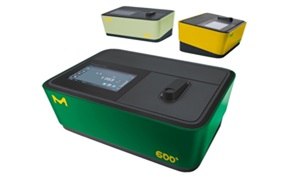
Spectrophotometers
Spectroquant® Prove plus spectrophotometers are superior quality smart devices for fast, precise water analysis with high sensitivity. They are preprogrammed for a wide range of test kits, enabling easy and intuitive water analysis.
- Spectroquant® Prove plus 100 spectrophotometer for routine testing
- Spectroquant® Prove plus 300 spectrophotometer for sensitive measurements
- Spectroquant® Prove plus 600 spectrophotometer for complex analyses

Thermoreactors
Spectroquant® thermoreactors provide controlled thermal digestion to support consistent and reliable sample preparation. The high-quality devices are ideal for determination of key drinking water parameters in combination with Spectroquant® Test Kits.
- Spectroquant® TR 320 thermoreactor with 12 holes, 7 preinstalled programs
- Spectroquant® TR 420 thermoreactor with 24 holes, 7 preinstalled programs, 8 freely selectable programs
- Spectroquant® TR 620 thermoreactor with 2x12 holes in 2 heating zones, 7 preinstalled programs, 8 freely selectable

Colorimeters
Spectroquant® Move colorimeters are compact, dust-tight, and waterproof devices for reliable testing on-site testing.
- Spectroquant® Move DC colorimeter for five key water disinfection parameters: chlorine, ozone, chlorine dioxide, cyanuric acid, and pH“
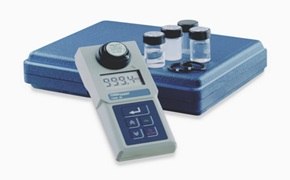
Turbidimetric Tools
Turbiquant® turbidimeters are designed for reliable, on-site measurement of total suspended solids in drinking water. The instruments can be easily and accurately calibrated using the Turbiquant® Calibration Standard Set.
- Turbiquant® 1100 IR turbidimeter for NTU/FNU measurements using IR at 860 nm, required in Europe by ISO 7027 of DIN EN 27027
- Turbiquant® 1100 T turbidimeter for NTU/FNU measurements using a Tungsten lamp, required by USEPA 180.1, APHA, AWWA, and WPCF
- Calibration Standard Set for calibrating Turbiquant® 1100 IR and 1100 T
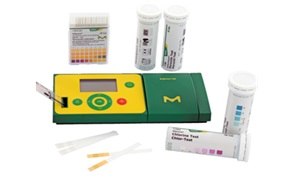
Rapid Testing Tools
MQuant® test strips are designed for fast, semi-quantitative screening of drinking water with minimal sample preparation, supporting routine field pre-testing and decision-making prior to quantitative analysis. MQuant® pH indicator strips allow rapid pH measurement across a range of water matrices, including drinking water. The MQuant® StripScan mobile app captures and interprets the results from compatible MQuant® test strips within seconds, eliminating subjective visual interpretation and improving the consistency of readouts.
MQuant® visual test kits enable rapid on-site measurement of key parameters using colorimetric methods, where reagent addition produces a color change proportional to analyte concentration. The concentration is determined by comparison with standard references using color-disk or color-card comparator systems.
In addition, MQuant® Titrimetric Tests operate through controlled addition of a titrant until a defined endpoint is reached, indicated by a color change or other measurable signal. These visual test kits are designed for ease-of-use and deliver reliable results across a wide concentration range, supporting both laboratory and field applications.
The MQuant® compact laboratory for water testing integrates multiple essential tests into a single kit, enabling rapid assessment of water quality, with refill packs available for individual parameters.
The Reflectoquant® system extends rapid testing capabilities by combining test strips with the portable RQflex® 20, enabling rapid and quantitative analyses of drinking water samples.
Milli-Q® Pure and Ultrapure Water Purification Systems
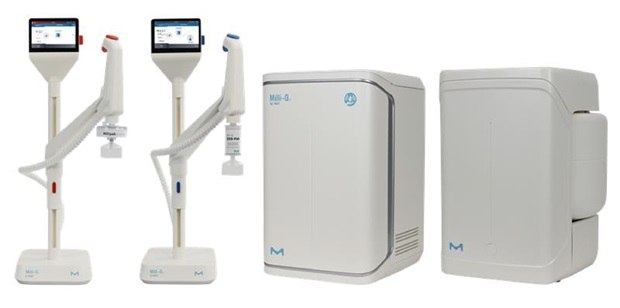
The quality of water used for the preparation of reagents, samples, blanks, and standard solutions is critical in drinking water analysis, as it can directly influence analytical results. The use of high-quality laboratory water is therefore essential to ensure accuracy and reliability.
Milli-Q® water purification systems are designed to deliver consistent water quality for analytical applications. Milli-Q® IQ 7 series systems produce both pure and ultrapure water directly from tap water, while a range of Application Paks enables targeted removal of specific contaminants at the point of dispense.
The Application POD-Pak range includes:
- LC-Pak® polisher – For trace and ultra-trace organic analysis (HPLC, LC-MS, LC-MS/MS); suitable for PFAS analysis
- VOC-Pak® polisher – Delivers water suitable for GC-MS testing of VOCs
- EDS-Pak® polisher – Removes endocrine disruptors (bisphenol A, phthalates…)
- Millipak® 0.22 µm filter – Removes particles and bacteria; water is suitable for microbial testing
In addition, the Milli-Q® IQ Element water purification unit is specifically designed to meet the stringent requirements of trace and ultra-trace elemental analysis, including applications such as AAS, ICP-MS, and ion chromatography (IC).
HPLC & GC
Gas Chromatography (GC) and High-Performance Liquid Chromatography (HPLC/UHPLC) are established analytical techniques for comprehensive drinking water contaminant analysis. These methods provide high sensitivity and selectivity and are commonly used to complement point-of-use testing approaches.

- Gas Chromatography (GC): Primarily applied for the analysis of volatile organic compounds (VOCs), GC separates analytes in the gas phase and is used for the detection of compounds such as solvents and pesticides.

- High-Performance Liquid Chromatography (HPLC): Applied to non-volatile and thermally unstable compounds, HPLC enables the analysis of a broad range of contaminants, including pharmaceuticals and other organic pollutants.
While point-of-use testing enables rapid, on-site screening for immediate decision-making, GC and HPLC provide complementary capabilities, including multi-compound quantification at trace levels, definitive identification through coupling with mass spectrometry, and suitability for regulatory compliance in complex contaminant analysis. Sample preparation using Supelclean™ SPE sorbents supports effective matrix cleanup and analyte enrichment. Together, these chromatographic techniques function as confirmatory methods, supporting the validation of point-of-use results and enabling the detection of contaminants that may not be captured by field-based tests, in alignment with WHO, USEPA, and EU standards.

Analytical Workflow (left to right). Sample collection, sample preparation, chromatography, and analysis.
Search our literature for chromatography related applications:
- Chromatogram Search
- HPLC Columns
- GC Columns, Accessories & Adsorbents
- Overview of our entire PFAS offering
Thin-Layer Chromatography (TLC) and High-Performance Thin-Layer Chromatography (HPTLC) combined with Bioassay - Bioautography
Thin-layer chromatography (TLC) and high-performance thin-layer chromatography (HPTLC) are established separation techniques that enable fast and efficient analysis without the need for complex sample preparation or high capital investment. The ability to analyze multiple samples simultaneously on a single plate supports high throughput, reduced cost per analysis, and short turnaround times. In addition, the high matrix tolerance of TLC methods provides flexibility for applications such as cross-verification of HPLC results and complementary method development.
When combined with biological detection, TLC or HPTLC enables the identification of bioactive compounds in complex matrices, including water samples. This approach, referred to as bioautography, involves chromatographic separation followed by exposure of the plate to a microorganism or enzyme system. Bioactive compounds are then visualized directly as active zones, allowing the detection of substances such as antimicrobial agents, hormone-like compounds, antioxidants, or enzyme inhibitors.
Learn more about the determination of Nonylphenols (NP). These ubiquitous substances show estrogenic activity, that can be easily detected based on Bioautography technique.
Microbial Water Testing for Drinking Water
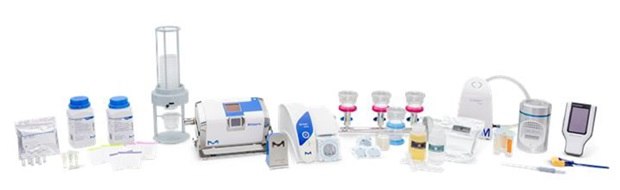
Membrane filtration is a standard method for assessing microbial contamination in water. A defined sample is passed through a microporous membrane that retains microorganisms. Following filtration, the membrane is transferred to a suitable culture medium to support microbial growth, enabling detection and enumeration. The Milliflex Oasis® system is designed as an integrated solution for water and bioburden testing in the pharmaceutical industry, incorporating touch-free membrane transfer to support productivity, result reliability, and regulatory compliance. In addition, the EZ product family, including manifolds, vacuum pumps, and consumables, supports streamlined workflows for water and beverage testing.
For reliable detection of indicator organisms in drinking water:
- Chromocult® Coliform Agar for the simultaneous detection and enumeration of coliform bacteria and E. coli validated according to ISO 9308-1 methods.
- ReadyCult® Coliforms for routine monitoring of drinking water systems as per ISO 10705-1.
- Detection and enumeration of somatic coliphages using plaque assays as per ISO 10705-1 with the VIRAPREP® kit.
References
如要继续阅读,请登录或创建帐户。
暂无帐户?