
932175

Potassium hexachloroplatinate(IV) CHEMBEADS
solid
别名:
Dipotassium hexachloroplatinate, Dipotassium platinum hexachloride, Platinic potassium chloride, Platinum potassium chloride, Potassium chloroplatinate, Potassium platinum(IV) chloride, Potassium platinum(IV) hexachloride
登录 查看组织和合同定价。
选择尺寸
变更视图
关于此项目
产品名称
Potassium hexachloroplatinate(IV) CHEMBEADS,
Quality Level
product line
ChemBeads
form
solid
storage temp.
2-8°C
SMILES string
[K][K].Cl[Pt](Cl)(Cl)(Cl)(Cl)Cl
InChI
1S/6ClH.2K.Pt/h6*1H;;;/q;;;;;;2*+1;+4/p-6
InChI key
DPAIVKJGTXERIM-UHFFFAOYSA-H
General description
Potassium hexachloroplatinate (K2PtCl6) is the inorganic compound that is commonly used as a platinum (Pt) precursor for the preparation of platinum-based compounds.
Application
Potassium hexachloroplatinate (K2PtCl6) can be used to synthesize:
Learn more about ChemBeads products
Product is also available as neat precatalyst (206067)
- K2PtCl6-PEG/SiO2 complex catalytic system for vapor-phase hydrosilylation reaction.
- Pt-decorated nickel pyrophosphate ß-Ni2P2O7/Pt and nickel phosphate Ni3(PO4)2/Pt catalysts for the hydrogen evolution reaction (HER) by water splitting.
- Polypyrrole-platinum complex sphere catalyst for the decomposition of hydrogen peroxide to form oxygen.
Learn more about ChemBeads products
Product is also available as neat precatalyst (206067)
Other Notes
High-Throughput Reaction Screening with Nanomoles of Solid Reagents Coated on Glass Beads
Versatile Methods to Dispense Sub-Milligram Quantities of Solids using Chemical Coated Beads for High-Throughput Experimentation
ChemBead Enabled High-Throughput Cross-Electrophile Coupling Reveals a New Complementary Ligand
Versatile Methods to Dispense Sub-Milligram Quantities of Solids using Chemical Coated Beads for High-Throughput Experimentation
ChemBead Enabled High-Throughput Cross-Electrophile Coupling Reveals a New Complementary Ligand


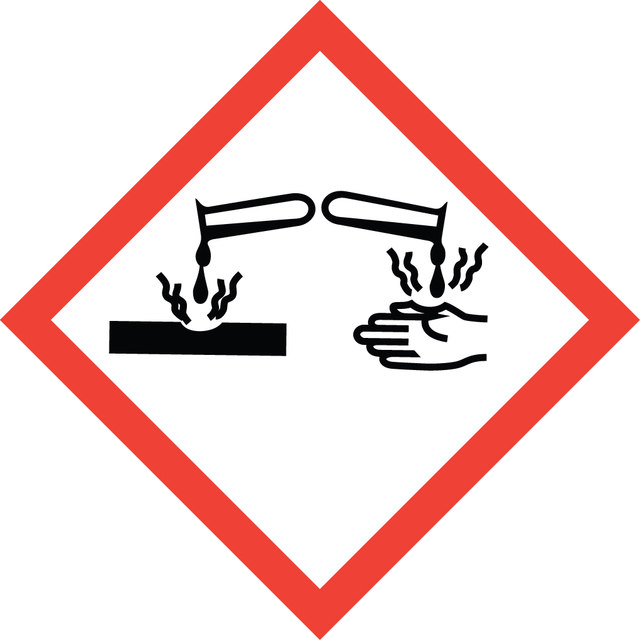

signalword
Danger
Hazard Classifications
Acute Tox. 3 Oral - Aquatic Acute 1 - Aquatic Chronic 1 - Eye Dam. 1 - Met. Corr. 1 - Resp. Sens. 1 - Skin Sens. 1 - STOT RE 1
存储类别
6.1D - Non-combustible acute toxic Cat.3 / toxic hazardous materials or hazardous materials causing chronic effects
wgk
WGK 1
flash_point_f
does not flash
flash_point_c
does not flash
法规信息
新产品
此项目有
Versatile Methods to Dispense Submilligram Quantities of Solids Using Chemical-Coated Beads for High-Throughput Experimentation
Martin, et al.
Organic Process Research & Development, 2, 1900?1907-1900?1907 (2019)
Ana L Aguirre et al.
Chemistry (Weinheim an der Bergstrasse, Germany), 27(51), 12981-12986 (2021-07-08)
High-throughput experimentation (HTE) methods are central to modern medicinal chemistry. While many HTE approaches to C-N and Csp2 -Csp2 bonds are available, options for Csp2 -Csp3 bonds are limited. We report here how the adaptation of nickel-catalyzed cross-electrophile coupling of
Noah P Tu et al.
Angewandte Chemie (International ed. in English), 58(24), 7987-7991 (2019-03-21)
Technologies that enable rapid screening of diverse reaction conditions are of critical importance to methodology development and reaction optimization, especially when molecules of high complexity and scarcity are involved. The lack of a general solid dispensing method for chemical reagents
全球贸易项目编号
| 货号 | GTIN |
|---|---|
| 932175-1G | 04065269177548 |