
180173

二硫化碳
ACS reagent, ≥99.9%
登录 查看组织和合同定价。
选择尺寸
关于此项目
经验公式(希尔记法):
CS2
化学文摘社编号:
分子量:
76.14
UNSPSC Code:
12352100
NACRES:
NA.21
PubChem Substance ID:
EC Number:
200-843-6
Beilstein/REAXYS Number:
1098293
MDL number:
Assay:
≥99.9%
Grade:
ACS reagent
Bp:
46 °C (lit.)
Vapor pressure:
5.83 psi
refractive index
n20/D 1.627 (lit.)
bp
46 °C (lit.)
mp
−112-−111 °C (lit.)
density
1.266 g/mL at 25 °C (lit.)
InChI key
QGJOPFRUJISHPQ-UHFFFAOYSA-N
InChI
1S/CS2/c2-1-3
SMILES string
S=C=S
grade
ACS reagent
vapor density
2.67 (vs air)
vapor pressure
5.83 psi
assay
≥99.9%
form
liquid
autoignition temp.
212 °F
expl. lim.
50 %
dilution
(for analytical testing)
impurities
H2S, passes test (lim. ~1.5 ppm), SO2, passes test (lim ~2.5 ppm), ≤0.05% water
evapn. residue
≤0.002%
color
APHA: ≤10
Quality Level
正在寻找类似产品? 访问 产品对比指南
General description
Carbon disulfide (CS2) is a colorless liquid. It is present in atmosphere and natural waters in the form of sulfur gas. It is responsible for the production of sulfur dioxide (SO2) in the atmosphere (stratosphere and/or troposphere). Its lifetime in the atmosphere has been proposed to be around 12 days. It is a non-polar solvent.
Carbon disulfide is a highly volatile, flammable liquid with low ignition temperature. It can be synthesized by reacting hydrocarbon gas with sulfur. It is an important raw material for preparing viscose rayon and cellophane film.
Our premium ACS solvents are ideal for routine chemical synthesis, drying, purification, and critical labware cleaning. They meet or exceed the rigorous standards of the American Chemical Society (ACS), ensuring high-quality results for your research needs.
Premium ACS Solvents: Our solvents meet or exceed the stringent standards set by the American Chemical Society, ensuring high quality and reliability for your laboratory applications.
Replicable and Publishable Results: Designed for consistency, our solvents deliver results that can be reliably reproduced, making them ideal for research that requires publication.
Versatile Applications: Suitable for routine chemical synthesis, drying, purification, and critical labware cleaning, our solvents cater to a wide range of research needs in the laboratory.
Premium ACS Solvents: Our solvents meet or exceed the stringent standards set by the American Chemical Society, ensuring high quality and reliability for your laboratory applications.
Replicable and Publishable Results: Designed for consistency, our solvents deliver results that can be reliably reproduced, making them ideal for research that requires publication.
Versatile Applications: Suitable for routine chemical synthesis, drying, purification, and critical labware cleaning, our solvents cater to a wide range of research needs in the laboratory.
Application
Carbon disulfide has been used for the desorption of air samples during analysis of trihalomethanes (THMs) in those samples.
It may be used in the preparation of dibenzyl trithiocarbonate, a RAFT (Reversible Addition-Fragmentation Transfer) chain-transfer agent (CTA). It may be employed as a solvent in the preparation of benzyl chlorodithioformate.
It may be used in the preparation of dibenzyl trithiocarbonate, a RAFT (Reversible Addition-Fragmentation Transfer) chain-transfer agent (CTA). It may be employed as a solvent in the preparation of benzyl chlorodithioformate.
Carbon disulfide may be used in the xanthogenation of cellulose and in the synthesis of poly(ethylene trithiocarbonate) and dithiocarbamates. C2S may undergo hydrolysis catalyzed by nanosized titania and zirconia to form CO2 and H2S. It can also generate 1,3-dithiolium carbenes via cycloaddition with acetylenes.
Packaging
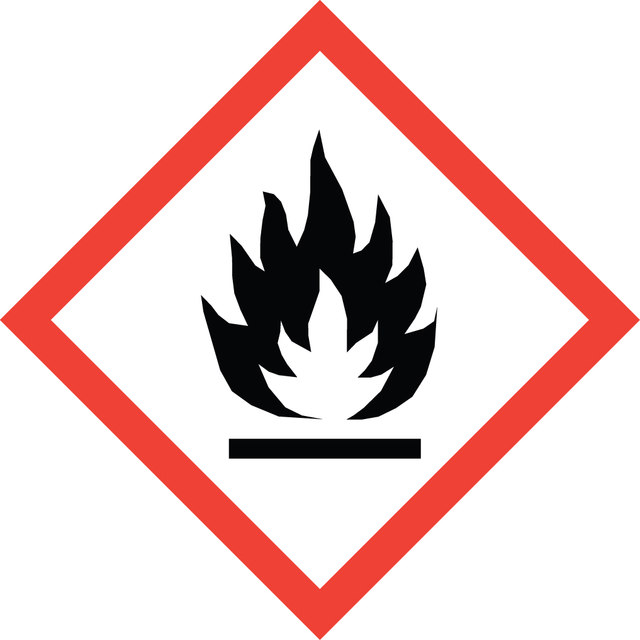
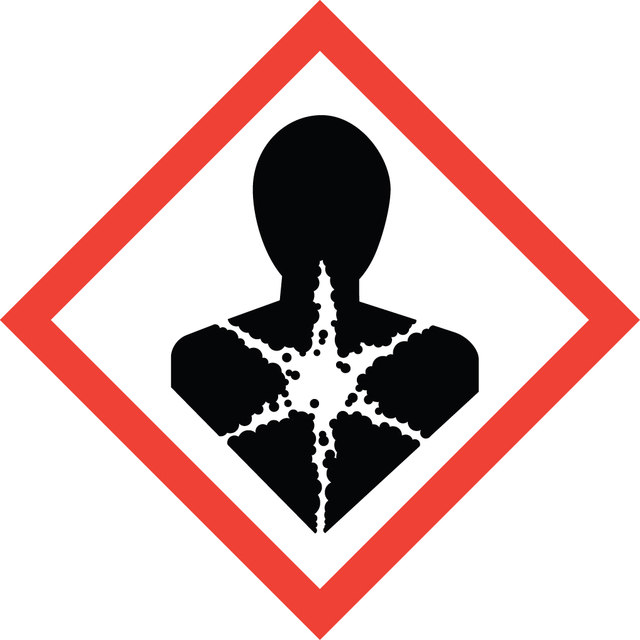

signalword
Danger
Hazard Classifications
Acute Tox. 4 Inhalation - Eye Irrit. 2 - Flam. Liq. 2 - Repr. 2 - Skin Irrit. 2 - STOT RE 1
target_organs
Peripheral nervous system,Central nervous system,Cardio-vascular system,Eyes
存储类别
3 - Flammable liquids
wgk
WGK 2
flash_point_f
-22.0 °F - closed cup
flash_point_c
-30 °C - closed cup
法规信息
监管及禁止进口产品
此项目有
Copolymerization of ethylene sulfide and carbon disulfide.
Soga K, et al.
Journal of Polymer Science, 14(3), 677-684 (1976)
Carbon Disulfide.
Smith DE and Timmerman RW.
Kirk-Othmer Encyclopedia of Chemical Technology (2003)
An efficient, one-pot, synthesis of dithiocarbamates from the corresponding alcohols using Mitsunobu's reagent.
Chaturvedi D and Ray S.
Tetrahedron Letters, 47(8), 1307-1309 (2006)
Cyril Catto et al.
International journal of environmental research and public health, 9(8), 2562-2586 (2012-10-16)
In order to improve disinfection by-product (DBP) exposure assessment, this study was designed to document both water and air levels of these chemical contaminants in two indoor swimming pools and to analyze their within-day and day-to-day variations in both of
1, 3-Dithiolium carbenes from acetylenes and carbon disulfide.
Hartzler HD.
Journal of the American Chemical Society, 95(13), 4379-4387 (1973)
我们的科学家团队拥有各种研究领域经验,包括生命科学、材料科学、化学合成、色谱、分析及许多其他领域.
联系客户支持