
117323

4,4′-亚甲基双(2-氯苯胺)
85%
别名:
2,2′-二氯-4,4′-亚甲基二苯胺, 4,4′-二氨基-3,3′-二氯二苯甲烷
登录 查看组织和合同定价。
选择尺寸
关于此项目
线性分子式:
CH2[C6H3(Cl)NH2]2
化学文摘社编号:
分子量:
267.15
UNSPSC Code:
12162002
NACRES:
NA.23
PubChem Substance ID:
EC Number:
202-918-9
Beilstein/REAXYS Number:
1882318
MDL number:
InChI key
IBOFVQJTBBUKMU-UHFFFAOYSA-N
InChI
1S/C13H12Cl2N2/c14-10-6-8(1-3-12(10)16)5-9-2-4-13(17)11(15)7-9/h1-4,6-7H,5,16-17H2
SMILES string
Nc1ccc(Cc2ccc(N)c(Cl)c2)cc1Cl
assay
85%
form
solid
bp
202-214 °C/0.3 mmHg (lit.)
mp
102-107 °C (lit.)
Quality Level
正在寻找类似产品? 访问 产品对比指南
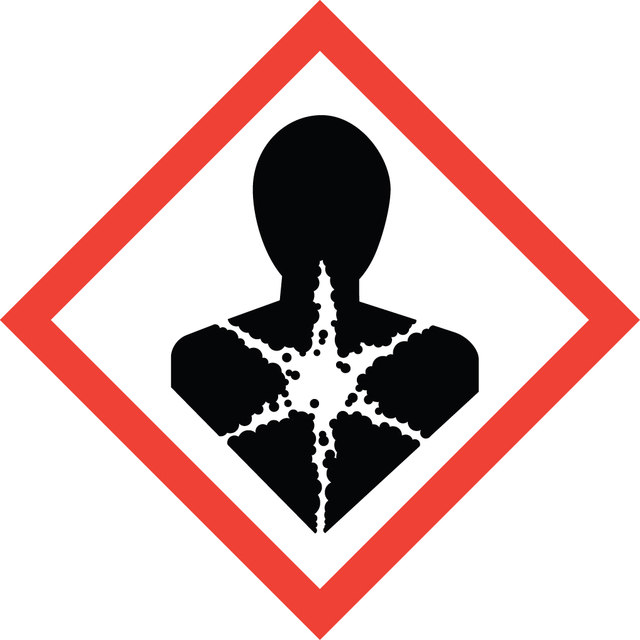

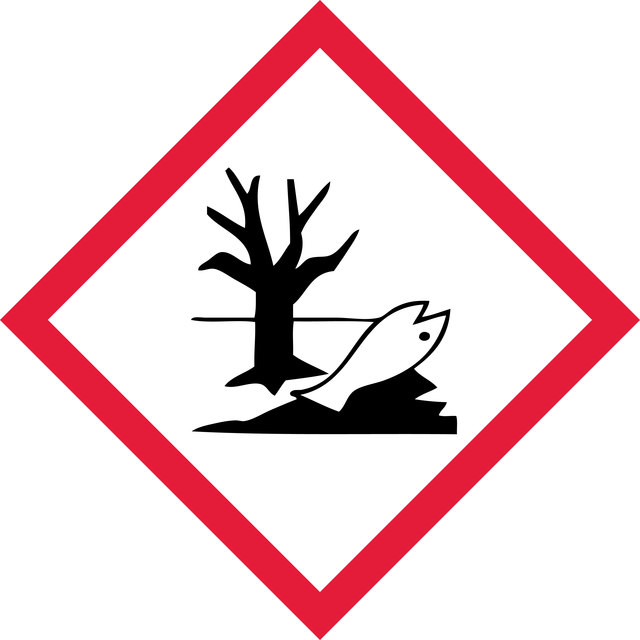
signalword
Danger
hcodes
Hazard Classifications
Acute Tox. 4 Oral - Aquatic Acute 1 - Aquatic Chronic 1 - Carc. 1B - Muta. 2
存储类别
6.1C - Combustible acute toxic Cat.3 / toxic compounds or compounds which causing chronic effects
wgk
WGK 3
flash_point_f
235.4 °F - closed cup
flash_point_c
113 °C - closed cup
法规信息
危险化学品
此项目有
Hong-I Chen et al.
Journal of occupational health, 49(5), 389-398 (2007-10-24)
Oxidative DNA damage may play an important role in the human carcinogenic process. Recently, we reported a case of bladder cancer among 4, 4'-methylenebis (2-chloroaniline) (MBOCA)-exposed workers. By measuring the plasma level of 8-hydroxydeoxyguanosine (8-OHdG), we investigated the association between
Chiu-Shong Liu et al.
Environmental health perspectives, 113(6), 771-774 (2005-06-03)
A 52-year-old male chemical worker was admitted to the hospital with a history of paroxysmal microscopic hematuria for about 2 years and nocturia with gross hematuria about five times per night for 2 months. He was a nonsmoker and denied
4,4'-Methylenebis(2-chloroaniline).
Report on carcinogens : carcinogen profiles, 11, III167-III168 (2004-01-01)
R E Savage et al.
Journal of occupational and environmental medicine, 40(2), 125-135 (1998-03-21)
Many bladder cancers are indolent, and since there are no biomarkers to predict progression, the prognosis is problematic. Utilizing an in vitro/in vivo human uroepithelial cell (SV-HUC.PC) transformation system, we investigated several molecular events occurring along the continuum of exposure
P Vineis et al.
Cancer causes & control : CCC, 8(3), 346-355 (1997-05-01)
Epidemiological evidence on the relation between aromatic amines and cancer risk is reviewed. In particular, cancer risk in humans resulting from exposure to aromatic amines from occupational sources and tobacco smoking is assessed with reference to ecologic, cohort, and case-control
我们的科学家团队拥有各种研究领域经验,包括生命科学、材料科学、化学合成、色谱、分析及许多其他领域.
联系客户支持