
931950

Sodium perchlorate
≥99.9% trace metals basis
别名:
Sodium Perchlorate, Hyperchloric acid sodium salt
登录并加购,请在购物车里查看协议价、货期和发货地。
选择规格
变更视图
关于此项目
Assay:
≥99.9% trace metals basis
Grade:
anhydrous
Form:
powder
Solubility:
H2O: 209 g/dL at 15 °C
grade
anhydrous
Quality Segment
assay
≥99.9% trace metals basis
form
powder
reaction suitability
core: sodium
impurities
≤1000 ppm (trace metals analysis)
pH
6.0-8.0 (25 °C, 5%, aq.sol.)
mp
482 °C
solubility
H2O: 209 g/dL at 15 °C
anion traces
chloride (Cl-): ≤30 ppm, sulfate (SO42-): ≤20 ppm
cation traces
Fe: ≤5 ppm, K: ≤500 ppm
SMILES string
[Na+].[Cl](=O)(=O)(=O)[O-]
InChI
1S/ClHO4.Na/c2-1(3,4)5;/h(H,2,3,4,5);/q;+1/p-1
InChI key
BAZAXWOYCMUHIX-UHFFFAOYSA-M
General description
Anhydrous sodium perchlorate is a white crystalline solid. It is hygroscopic and absorbs water to form its monohydrate. Anhydrous sodium perchlorate is highly soluble in water, and soluble in a range of polar organic solvents such as methanol, ethanol, acetone, carbonates (including ethylene carbonate, dimethyl carbonate, propylene carbonate, and diethyl carbonate), and ethers (including dimethoxyethane, tetrahydrofuran, and triethylene glycol dimethyl ether). It is insoluble in benzene, chloroform, and toluene.
Application
The major application of anhydrous sodium perchlorate is as an electrolyte in sodium-ion batteries. It is popular because of its solubility in ethers and carbonates, its wide electrochemical stability window (e.g. from 0 to 5 V vs Na+/Na in propylene carbonate, triglyme, or diethylcarbonate)[1], and its compatibility with a wide range of materials. It has been used in batteries with hard-carbon anodes[2], mesoporous carbon anodes[3], sodium cobalt oxide cathodes (NaxCoO2)[4], sodium vanadium oxide cathodes (NaxVO2)[5], titanium dioxide cathodes[6], and emerging materials like high-entropy layered oxide cathodes[7].
Packaging
10 g in glass bottle
25 g in glass bottle
25 g in glass bottle
Still not finding the right product?
Explore all of our products under Sodium perchlorate
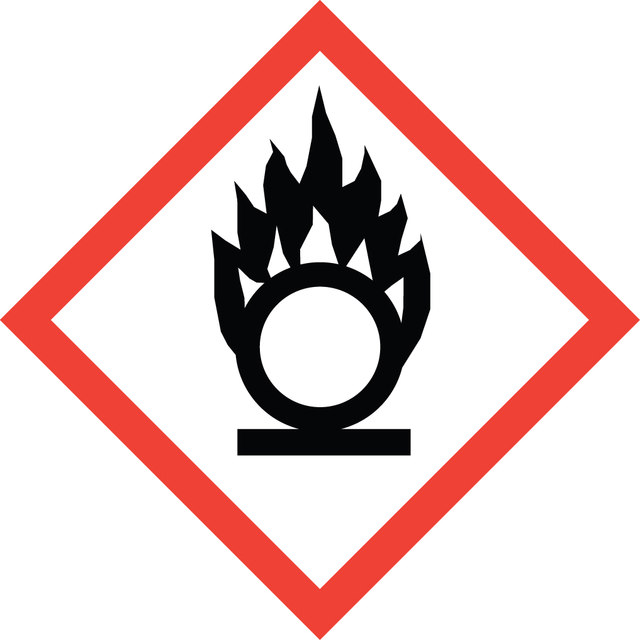


signalword
Danger
hcodes
Hazard Classifications
Acute Tox. 4 Oral - Eye Irrit. 2 - Ox. Sol. 1 - STOT RE 2
target_organs
Thyroid
存储类别
5.1A - Strongly oxidizing hazardous materials
wgk
WGK 1