
grade
pharmaceutical primary standard
API family
phenacetin
manufacturer/tradename
USP
mp
133-136 °C
application(s)
pharmaceutical (small molecule)
format
neat
SMILES string
CCOc1ccc(NC(C)=O)cc1
InChI
1S/C10H13NO2/c1-3-13-10-6-4-9(5-7-10)11-8(2)12/h4-7H,3H2,1-2H3,(H,11,12)
InChI key
CPJSUEIXXCENMM-UHFFFAOYSA-N
General description
Phenacetin Melting Point Standard (Phenacetin) is a lipid-soluble drug with moderate solubility with aqueous solvents. Its oral absorption is based on formulation factors like particle size. Its major metabolic route is O-dealkylation to paracetamol and its minor pathways are deacetylation and hydroxylation to form pphenetidine, 2-hydroxyphenetidine, 2- and 3-hydroxyphenacetin and N-hydroxyphenacetin.
Application
Phenacetin Melting Point Standard USP reference standard, intended for use in specified quality tests and assays as specified in the USP compendia.
Biochem/physiol Actions
CYP1A2 和 CYP2D6 的底物。
Analysis Note
These products are for test and assay use only. They are not meant for administration to humans or animals and cannot be used to diagnose, treat, or cure diseases of any kind.
Other Notes
Sales restrictions may apply.
Still not finding the right product?
Explore all of our products under 非那西丁
signalword
Danger
flash_point_f
Not applicable
flash_point_c
Not applicable
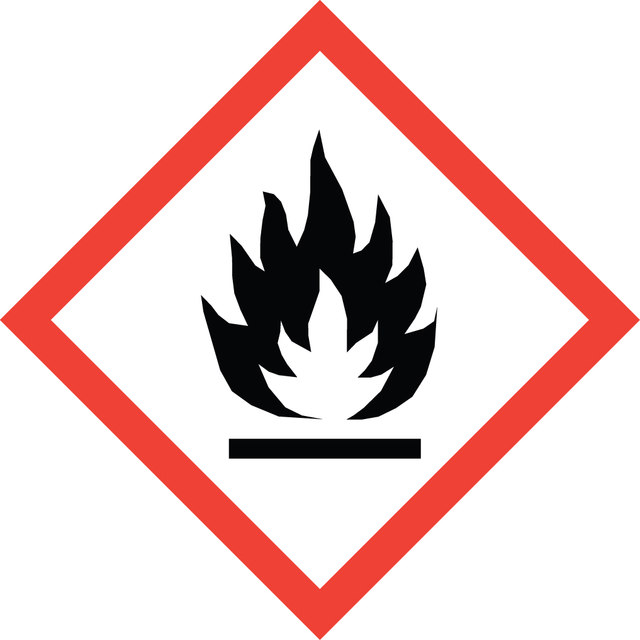


hcodes
Hazard Classifications
Acute Tox. 4 Oral - Carc. 2 - Muta. 2 - Skin Sens. 1 - Water-react. 2
存储类别
4.3 - Hazardous materials which set free flammable gases upon contact with water
法规信息
涉药品监管产品
此项目有
Kinetics and metabolism of paracetamol and phenacetin
Prescott, L.F.
British Journal of Clinical Pharmacology (1980)
S P Clissold
Drugs, 32 Suppl 4, 46-59 (1986-01-01)
Since their synthesis in the late 1800s paracetamol (acetaminophen) and phenacetin have followed divergent pathways with regard to their popularity as mild analgesic/antipyretic drugs. Initially, paracetamol was discarded in favour of phenacetin because the latter drug was supposedly less toxic.
[Phenacetin abuse I. Occurrence, per capita consumption and costs of treatment].
M J Mihatsch et al.
Schweizerische medizinische Wochenschrift, 110(4), 108-115 (1980-01-28)
全球贸易项目编号
| 货号 | GTIN |
|---|---|
| 1514008-1G | 04061838739193 |