
P5561

丙酸
BioReagent, suitable for insect cell culture, ~98%
别名:
Propanoic acid, Propanyl acid, 初油酸
登录 查看组织和合同定价。
选择尺寸
变更视图
关于此项目
线性分子式:
CH3CH2COOH
化学文摘社编号:
分子量:
74.08
UNSPSC Code:
12352207
NACRES:
NA.71
PubChem Substance ID:
EC Number:
201-176-3
Beilstein/REAXYS Number:
506071
MDL number:
Assay:
~98%
vapor density
2.55 (vs air)
Quality Level
vapor pressure
2.4 mmHg ( 20 °C)
product line
BioReagent
assay
~98%
autoignition temp.
955 °F
expl. lim.
12.1 %
technique(s)
cell culture | insect: suitable
refractive index
n20/D 1.386 (lit.)
bp
141 °C (lit.)
mp
−24-−23 °C (lit.)
solubility
H2O: soluble
density
0.99 g/mL at 25 °C (lit.), 0.993 g/mL at 25 °C (lit.)
SMILES string
CCC(O)=O
InChI
1S/C3H6O2/c1-2-3(4)5/h2H2,1H3,(H,4,5)
InChI key
XBDQKXXYIPTUBI-UHFFFAOYSA-N
General description
丙酸(PA)是一种天然羧酸,它在纯态下是一种无色的腐蚀性液体,具有难闻的气味。它可与水混溶。工业上以羰基镍作为催化剂,通过乙烯的加氢羧化作用制备丙酸。已有研究发现PA可减少食物摄入量、降低血浆和肝脏的脂肪酸含量、改善组织胰岛素敏感性并发挥免疫抑制作用。丙酸是一种出色的原材料,因为它稳定、廉价且安全,甚至可以用作食品添加剂。
Application
用于昆虫细胞培养,抑制霉菌生长。
Still not finding the right product?
Explore all of our products under 丙酸
flash_point_f
129.2 °F - closed cup
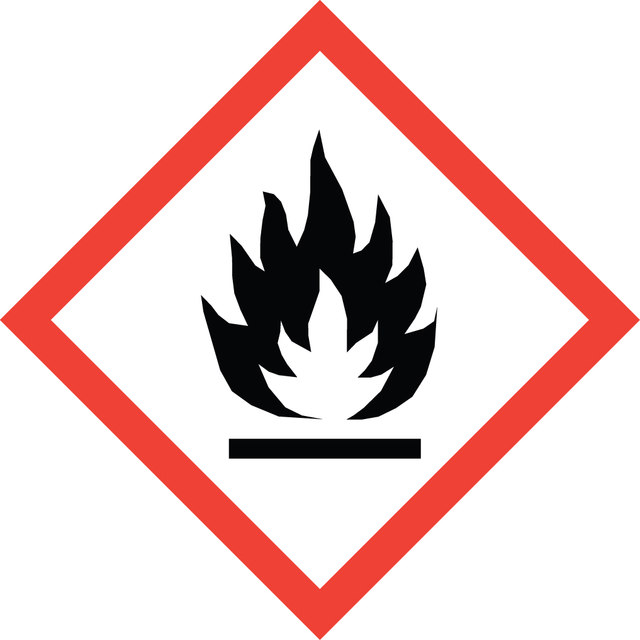
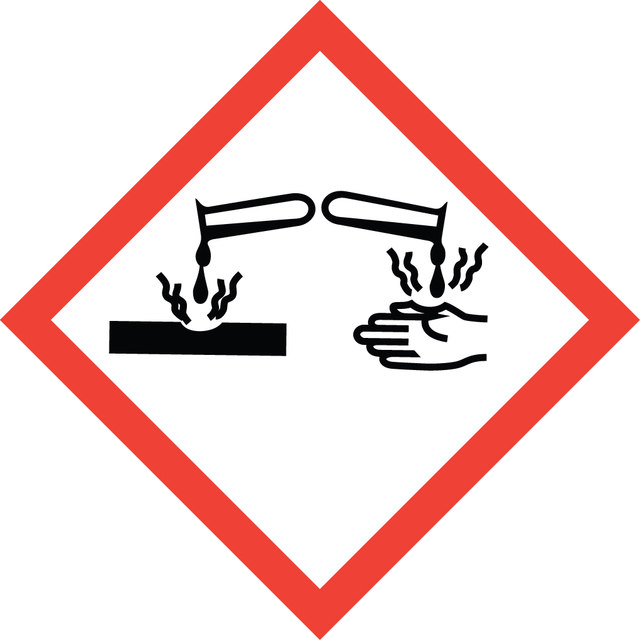

signalword
Danger
hcodes
Hazard Classifications
Eye Dam. 1 - Flam. Liq. 3 - Skin Corr. 1B - STOT SE 3
target_organs
Respiratory system
存储类别
3 - Flammable liquids
wgk
WGK 1
flash_point_c
54 °C - closed cup
ppe
Faceshields, Gloves, Goggles, type ABEK (EN14387) respirator filter
法规信息
危险化学品
此项目有
Biological effects of propionic acid in humans; metabolism, potential applications and underlying mechanisms
Sa'ad, H., et al.
Molecular and Cellular Biology, 1801 (11), 1175-1183 (2010)
Flour and Breads and their Fortification in Health and Disease Prevention.
Victor R. Preedy, Ronald Ross Watson, Vinood B
Technology & Engineering, 476-476 (2011)
Nucleophilic ?-Carbon Activation of Propionic Acid as a 3-Carbon Synthon by Carbene Organocatalysis
Jin, Zhichao, et al.
Chemistry?A European Journal , 21 (26), 9360-9363 (2015)
全球贸易项目编号
| 货号 | GTIN |
|---|---|
| P5561-1L | 04061834391944 |