跳转至内容
Merck
CN

23120

α-氯醛糖

≥98.0% (chloralose, AT)

别名:

1,2-O-(2,2,2-三氯亚乙基)-α-D-呋喃(型)葡萄糖, Anhydro-D-glucochloral, 氯醛糖

登录 查看组织和合同定价。

选择尺寸


关于此项目

经验公式(希尔记法):
C8H11Cl3O6
化学文摘社编号:
分子量:
309.53
UNSPSC Code:
12352201
NACRES:
NA.21
PubChem Substance ID:
EC Number:
240-016-7
Beilstein/REAXYS Number:
85418
MDL number:
技术服务
需要帮助?我们经验丰富的科学家团队随时乐意为您服务。
让我们为您提供帮助
技术服务
需要帮助?我们经验丰富的科学家团队随时乐意为您服务。
让我们为您提供帮助

InChI key

OJYGBLRPYBAHRT-IPQSZEQASA-N

InChI

1S/C8H11Cl3O6/c9-8(10,11)7-16-5-3(14)4(2(13)1-12)15-6(5)17-7/h2-7,12-14H,1H2/t2-,3+,4-,5-,6-,7-/m1/s1

SMILES string

OC[C@@H](O)[C@H]1O[C@@H]2O[C@@H](O[C@@H]2[C@H]1O)C(Cl)(Cl)Cl

assay

≥98.0% (chloralose, AT)

form

powder

optical activity

[α]20/D +17±2°, 5 hr, c = 2% in ethanol

impurities

15% Beta-chloralose

mp

178-184 °C

solubility

water: soluble 1 gm in 225 ml at 15 °C, chloroform: slightly soluble, diethyl ether: soluble, glacial acetic acid: soluble, petroleum ether: insoluble

正在寻找类似产品? 访问 产品对比指南

Biochem/physiol Actions

α-Chloralose stimulates the gama-aminobutyric acid (GABA)-induced chloride conductance of gama-aminobutyric acidA (GABAA) receptors expressed in Xenopus laevis oocytes.

Other Notes

~85% α-氯醛糖与 ~15% β-氯醛糖的异构体混合物
To gain a comprehensive understanding of our extensive range of Monosaccharides for your research, we encourage you to visit our Carbohydrates Category page.

pictograms

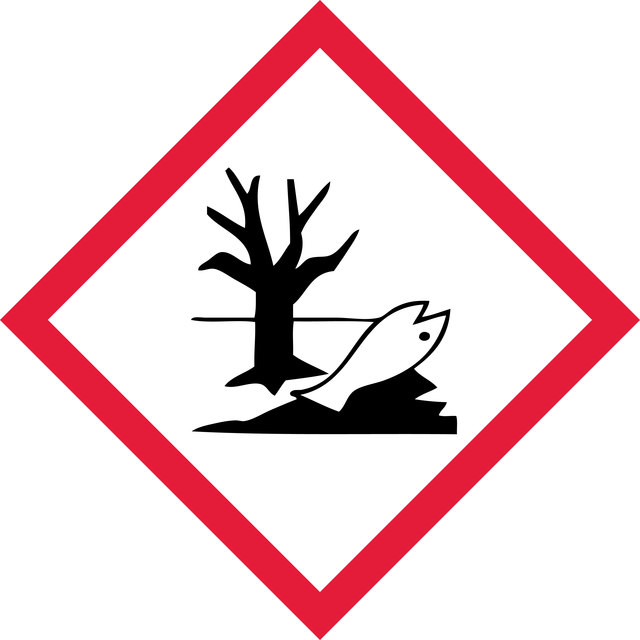
Skull and crossbonesEnvironment

signalword

Danger

Hazard Classifications

Acute Tox. 3 Oral - Acute Tox. 4 Inhalation - Aquatic Acute 1 - Aquatic Chronic 1 - STOT SE 3

target_organs

Central nervous system

存储类别

6.1D - Non-combustible acute toxic Cat.3 / toxic hazardous materials or hazardous materials causing chronic effects

wgk

WGK 1

flash_point_f

Not applicable

flash_point_c

Not applicable

ppe

dust mask type N95 (US), Eyeshields, Faceshields, Gloves

法规信息

危险化学品
涉药品监管产品
此项目有

历史批次信息供参考:

分析证书(COA)

Lot/Batch Number

没有发现合适的版本?

如果您需要特殊版本,可通过批号或批次号查找具体证书。

已有该产品?

在文件库中查找您最近购买产品的文档。

访问文档库

K M Garrett et al.
The Journal of pharmacology and experimental therapeutics, 285(2), 680-686 (1998-05-15)
alpha-Chloralose is widely used as an anesthetic in the laboratory due to its minimal effects on autonomic and cardiovascular systems, yet little is known about its mechanism of action. We examined the effects of alpha-chloralose on gamma-aminobutyric acid type A
R W Gear et al.
The Journal of neuroscience : the official journal of the Society for Neuroscience, 19(16), 7175-7181 (1999-08-06)
We tested the hypothesis that noxious stimuli induce pain modulation by activation of supraspinal structures. We found that intense noxious stimuli (i.e., subdermal injection of capsaicin or paw immersion in hot water) induced profound attenuation of the jaw-opening reflex in
Kathleen A Williams et al.
Magnetic resonance imaging, 28(7), 995-1003 (2010-05-12)
Functional connectivity measures based upon low-frequency blood-oxygenation-level-dependent functional magnetic resonance imaging (BOLD fMRI) signal fluctuations have become a widely used tool for investigating spontaneous brain activity in humans. Still unknown, however, is the precise relationship between neural activity, the hemodynamic
E Gerace et al.
Journal of analytical toxicology, 36(6), 452-456 (2012-05-11)
Chloralose (alpha-chloralose) is a poisonous substance currently used as a rodenticide or avicide. It has primarily been used in Europe since 1893 as a human and veterinary hypnotic agent. Chloralose is a central nervous system depressant also acting as a
Congwu Du et al.
The European journal of neuroscience, 30(8), 1565-1575 (2009-10-14)
Most studies of the effect of cocaine on brain activity in laboratory animals are preformed under anesthesia, which could potentially affect the physiological responses to cocaine. Here we assessed the effects of two commonly used anesthetics [alpha-chloralose (alpha-CHLOR) and isofluorane

我们的科学家团队拥有各种研究领域经验,包括生命科学、材料科学、化学合成、色谱、分析及许多其他领域.

联系客户支持