
256366

乙二醇丁醚
spectrophotometric grade, ≥99.0%
别名:
2-丁氧基乙醇, 丁基溶纤剂
登录 查看组织和合同定价。
选择尺寸
变更视图
关于此项目
线性分子式:
CH3(CH2)3OCH2CH2OH
化学文摘社编号:
分子量:
118.17
UNSPSC Code:
12352104
NACRES:
NA.21
PubChem Substance ID:
EC Number:
203-905-0
Beilstein/REAXYS Number:
1732511
MDL number:
Assay:
≥99.0%
Grade:
spectrophotometric grade
Technique(s):
UV/Vis spectroscopy: suitable
Bp:
169-172.5 °C (lit.)
Vapor pressure:
<1 mmHg ( 20 °C), 10 mmHg ( 81 °C)
grade
spectrophotometric grade
Quality Level
vapor density
4.1 (vs air)
vapor pressure
<1 mmHg ( 20 °C), 10 mmHg ( 81 °C)
assay
≥99.0%
form
liquid
autoignition temp.
473 °F
expl. lim.
10.6 %
technique(s)
UV/Vis spectroscopy: suitable
impurities
≤0.1% water
evapn. residue
<0.001%
refractive index
n20/D 1.419 (lit.)
bp
169-172.5 °C (lit.)
mp
−75 °C (lit.)
density
0.902 g/mL at 25 °C (lit.)
λ
H2O reference
UV absorption
λ: 230 nm Amax: 1.0, λ: 250 nm Amax: 0.10, λ: 275 nm Amax: 0.05, λ: 300-400 nm Amax: 0.01
SMILES string
CCCCOCCO
InChI
1S/C6H14O2/c1-2-3-5-8-6-4-7/h7H,2-6H2,1H3
InChI key
POAOYUHQDCAZBD-UHFFFAOYSA-N
General description
Ethylene glycol butyl ether is a member of the glycol ether family. It is commonly used as a solvent for pharmaceuticals, agricultural chemicals hydraulic fluids, resins, and varnishes. Ethylene glycol butyl ether or 2-Butoxyethanol (BEG) has an amphiphilic character, it can be utilized to stabilize emulsions, particularly in oil spill dispersants.
Application
Ethylene glycol butyl ether is used as a co-solvent:,In the preparation of conductive inks.
Still not finding the right product?
Explore all of our products under 乙二醇丁醚
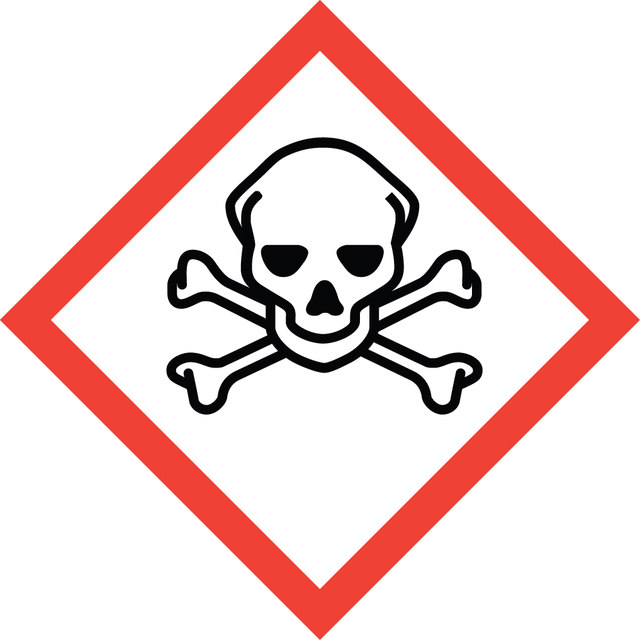
signalword
Danger
hcodes
Hazard Classifications
Acute Tox. 3 Inhalation - Acute Tox. 4 Oral - Eye Irrit. 2 - Skin Irrit. 2
存储类别
6.1C - Combustible acute toxic Cat.3 / toxic compounds or compounds which causing chronic effects
wgk
WGK 1
flash_point_f
152.6 °F - Pensky-Martens closed cup
flash_point_c
67 °C - Pensky-Martens closed cup
法规信息
危险化学品
此项目有
B S Dean et al.
Journal of toxicology. Clinical toxicology, 30(4), 557-563 (1992-01-01)
Ethylene glycol butyl ether, CAS 111-76-2, an ingredient in many popular commercial window/glass cleaners, is known to produce equal if not greater toxicity than ethylene glycol when administered to animals. Treatment recommendations for human poisonings are based upon animal data
Reproductive toxicology. Ethylene glycol monobutyl ether.
Environmental health perspectives, 105 Suppl 1, 217-218 (1997-02-01)
Ryszard Tokarczyk et al.
Journal of chromatography. A, 1217(44), 6964-6970 (2010-09-22)
A gas chromatography-mass spectrometry isotope dilution (GC-MS ID) method was developed and tested for the determination of 14 common glycol ethers in consumer products. Stable isotope labelled standards, 2-methoxyethanol-D(7) and 2-butoxyethanol-(13)C(2) (CDN isotopes) were employed to enhance the accuracy and
全球贸易项目编号
| 货号 | GTIN |
|---|---|
| 256366-1L | 04061826052181 |
| 256366-2L | 04061826052464 |