
126799

1-十二烷醇
reagent grade, 98%
别名:
十二碳醇, 十二醇, 月桂醇
登录 查看组织和合同定价。
选择尺寸
关于此项目
线性分子式:
CH3(CH2)11OH
化学文摘社编号:
分子量:
186.33
NACRES:
NA.21
PubChem Substance ID:
eCl@ss:
39020229
UNSPSC Code:
12352104
EC Number:
203-982-0
MDL number:
Beilstein/REAXYS Number:
1738860
Assay:
98%
Grade:
reagent grade
Bp:
260-262 °C (lit.)
Vapor pressure:
0.1 mmHg ( 20 °C)
InChI key
LQZZUXJYWNFBMV-UHFFFAOYSA-N
InChI
1S/C12H26O/c1-2-3-4-5-6-7-8-9-10-11-12-13/h13H,2-12H2,1H3
SMILES string
CCCCCCCCCCCCO
grade
reagent grade
vapor density
7.4 (vs air)
vapor pressure
0.1 mmHg ( 20 °C)
assay
98%
form
solid or liquid
autoignition temp.
500 °F
expl. lim.
4 %
refractive index
n20/D 1.442 (lit.)
bp
260-262 °C (lit.)
mp
22-26 °C (lit.)
solubility
water: slightly soluble 1 g/L at 23 °C
density
0.833 g/mL at 25 °C (lit.)
Quality Level
正在寻找类似产品? 访问 产品对比指南
General description
1-十二烷醇,一种脂肪醇,是一种长链脂肪醇。通过使用高压显微镜检查和DSC(差示扫描量热法)评估了其与各种其他脂肪醇(1-十四烷醇,1-十六烷醇和1-十八烷醇)的二元混合物的固液相图。它在多壁碳纳米管(MWCNT)负载的MoO3(Mo/MWCNTs)和含钾的Mo/MWCNTs(K/Mo/MWCNTs)催化剂的存在下进行氧化,得到1-十二烷醛。已经报道了在Ru和Pt基碳催化剂存在下的氧化。
Application
1-十二烷醇可用作移液器小瓶分散液-液微萃取法与HPCL研究相结合的浸提试剂。

signalword
Warning
hcodes
Hazard Classifications
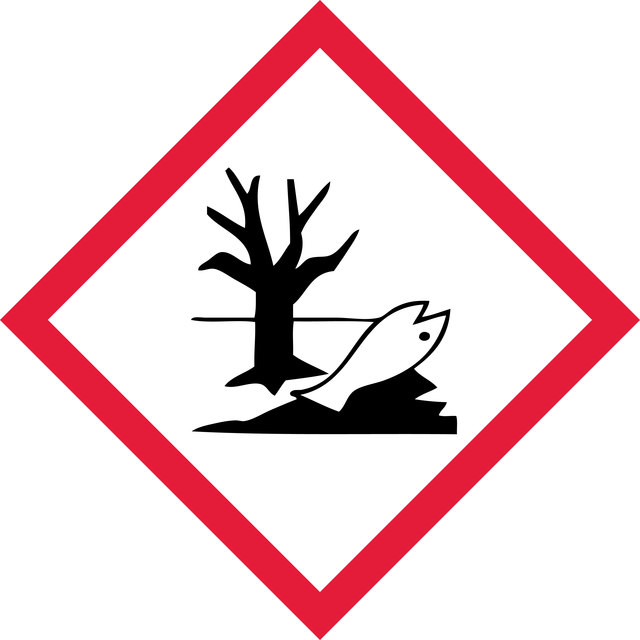
Aquatic Acute 1 - Aquatic Chronic 1 - Eye Irrit. 2
存储类别
11 - Combustible Solids
flash_point_f
249.8 °F - closed cup
flash_point_c
121 °C - closed cup
Potassium-promoted Mo/MWCNTs catalysts for effective partial oxidation of 1-dodecanol to 1-dodecanal.
Liao SY and Ko AN.
Applied Catalysis A: General, 496, 79-85 (2015)
Fragrances by selective oxidation of long-chain alcohols.
Villa A, et al.
Chinese Journal of Catalysis, 35(6), 945-951 (2014)
High Pressure Solid-Liquid Equilibrium of Fatty Alcohols Binary Systems from 1-Dodecanol, 1-Tetradecanol, 1-Hexadecanol, and 1-Octadecanol.
Dorighello Carareto ND, et al.
Journal of Chemical and Engineering Data, 60(10), 2966-2973 (2015)
Xuefei Xi et al.
Journal of separation science, 39(2), 391-398 (2015-11-04)
A simple, sensitive, and efficient method of using a pipette vial to perform dispersive liquid-liquid microextraction based on the solidification of floating organic droplets was coupled with high-performance liquid chromatography (HPLC) and a diode array detector for the preconcentration and
Samuel D Banister et al.
Bioorganic & medicinal chemistry letters, 21(12), 3622-3626 (2011-05-11)
A series of N-substituted 4-azahexacyclo[5.4.1.0(2,6).0(3,10).0(5,9).0(8,11)]dodecan-3-ols incorporating the respective arylalkyl subunits from several known sigma (σ) receptor ligands were synthesized and evaluated for their affinity against σ receptors and dopamine receptors. The hybrid trishomocubane-derived ligands (4-6) showed good selectivity for σ(1)
我们的科学家团队拥有各种研究领域经验,包括生命科学、材料科学、化学合成、色谱、分析及许多其他领域.
联系客户支持