
77800

苯乙醛 溶液
technical, ~50% in diethyl phthalate
登录 查看组织和合同定价。
选择尺寸
关于此项目
线性分子式:
C6H5CH2CHO
化学文摘社编号:
分子量:
120.15
PubChem Substance ID:
UNSPSC Code:
12352100
Beilstein/REAXYS Number:
385791
MDL number:
SMILES string
[H]C(=O)Cc1ccccc1
InChI
1S/C8H8O/c9-7-6-8-4-2-1-3-5-8/h1-5,7H,6H2
InChI key
DTUQWGWMVIHBKE-UHFFFAOYSA-N
grade
technical
concentration
~50% in diethyl phthalate
impurities
≤2% free acid
refractive index
n20/D 1.521
density
1.079 g/mL at 20 °C
storage temp.
2-8°C
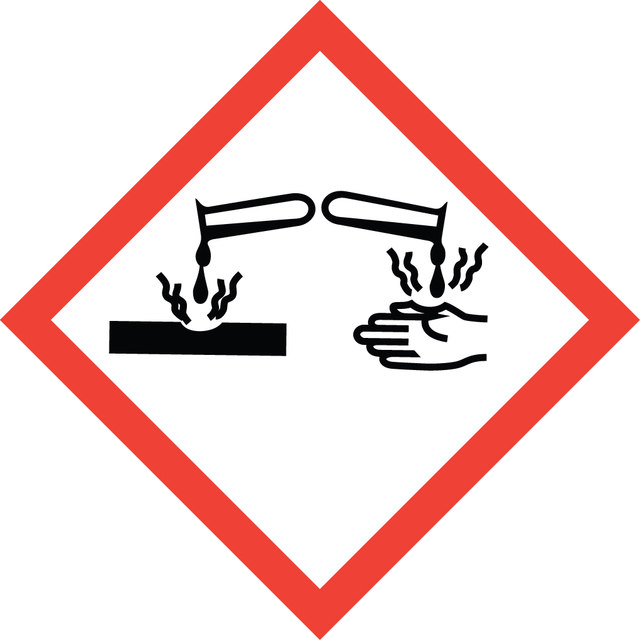

signalword
Danger
hcodes
Hazard Classifications
Aquatic Chronic 3 - Eye Dam. 1 - Skin Corr. 1B - Skin Sens. 1
存储类别
8A - Combustible corrosive hazardous materials
wgk
WGK 2
flash_point_f
188.6 °F
flash_point_c
87 °C
法规信息
新产品
此项目有
Fong Lam Chu et al.
Journal of agricultural and food chemistry, 56(22), 10697-10704 (2008-10-29)
Benzaldehyde, a potent aroma chemical of bitter almond, can also be formed thermally from phenylalanine and may contribute to the formation of off-aroma. To identify the precursors involved in its generation during Maillard reaction, various model systems containing phenylalanine, phenylpyruvic
Peter J Landolt et al.
Pest management science, 69(2), 245-249 (2012-08-14)
Phenylacetaldehyde is a flower volatile and attractant for many nectar-seeking moths. Acetic acid is a microbial fermentation product that is present in insect sweet baits. It is weakly attractive to some moths and other insects, but can be additive or
Rajib Saha et al.
PloS one, 6(7), e21784-e21784 (2011-07-15)
The scope and breadth of genome-scale metabolic reconstructions have continued to expand over the last decade. Herein, we introduce a genome-scale model for a plant with direct applications to food and bioenergy production (i.e., maize). Maize annotation is still underway
Rosario Zamora et al.
Journal of agricultural and food chemistry, 60(21), 5491-5496 (2012-05-15)
The chemical conversion of phenylethylamine into phenylacetaldehyde in the presence of lipid oxidation products (LOPs) was studied to investigate the possibility that biogenic amines can be converted into Strecker aldehydes upon processing. Model systems of phenylethylamine and methyl 13-hydroperoxyoctadeca-9,11-dienoate (HP)
Moran Farhi et al.
Plant molecular biology, 72(3), 235-245 (2009-11-03)
Rose flowers, like flowers and fruits of many other plants, produce and emit the aromatic volatiles 2-phenylacetaldehyde (PAA) and 2-phenylethylalchohol (PEA) which have a distinctive flowery/rose-like scent. Previous studies in rose have shown that, similar to petunia flowers, PAA is
我们的科学家团队拥有各种研究领域经验,包括生命科学、材料科学、化学合成、色谱、分析及许多其他领域.
联系客户支持