
50463

4,N,N-三甲基苯胺
puriss., ≥99.0% (GC)
别名:
4-二甲氨基甲苯, N,N-二甲基-对甲苯胺
登录 查看组织和合同定价。
选择尺寸
关于此项目
线性分子式:
CH3C6H4N(CH3)2
化学文摘社编号:
分子量:
135.21
EC Number:
202-805-4
UNSPSC Code:
12352100
PubChem Substance ID:
Beilstein/REAXYS Number:
774409
MDL number:
Assay:
≥99.0% (GC)
InChI key
GYVGXEWAOAAJEU-UHFFFAOYSA-N
InChI
1S/C9H13N/c1-8-4-6-9(7-5-8)10(2)3/h4-7H,1-3H3
SMILES string
CN(C)c1ccc(C)cc1
vapor density
>1 (vs air)
grade
puriss.
assay
≥99.0% (GC)
expl. lim.
7 %
refractive index
n20/D 1.546 (lit.), n20/D 1.547
bp
211 °C (lit.), 90-92 °C/10 mmHg (lit.)
density
0.937 g/mL at 25 °C (lit.)
Quality Level
正在寻找类似产品? 访问 产品对比指南
Packaging
The 25 mL Sure/Seal™ bottle is recommended as a single-use bottle. Repeated punctures will likely result in decreased performance of product.
Legal Information
Sure/Seal is a trademark of Sigma-Aldrich Co. LLC
Disclaimer
储存中可能变成黄绿色
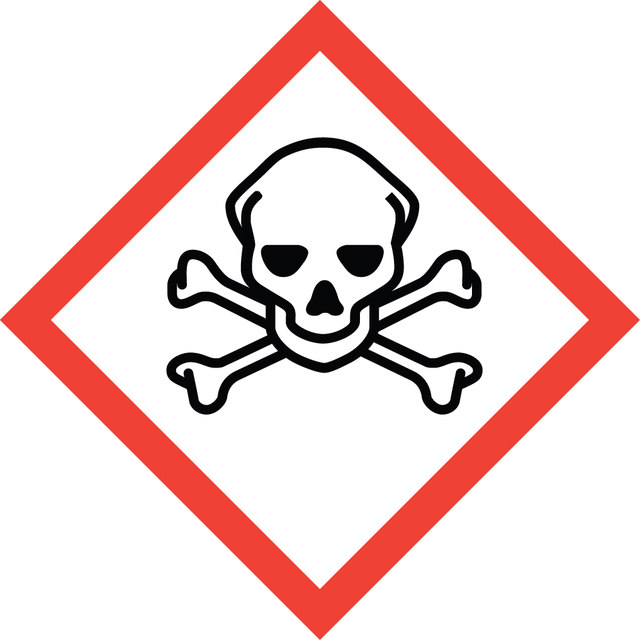
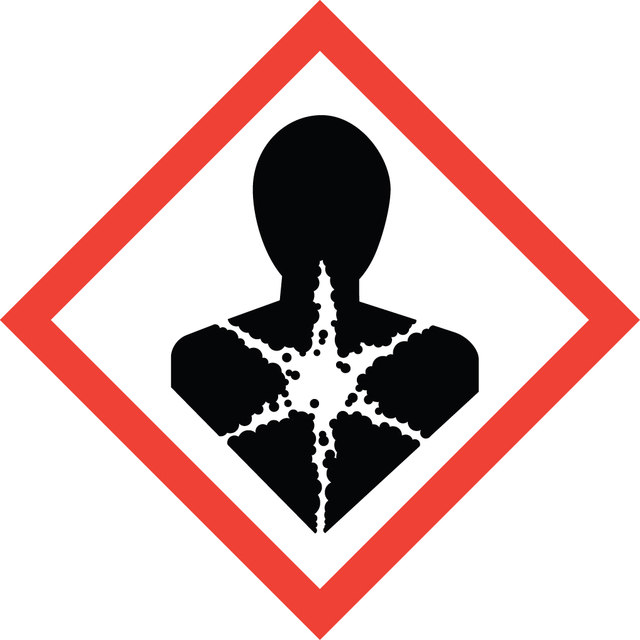
signalword
Danger
存储类别
6.1A - Combustible acute toxic Cat. 1 and 2 / very toxic hazardous materials
flash_point_f
168.8 °F - closed cup
flash_point_c
76 °C - closed cup
Hazard Classifications
Acute Tox. 3 Dermal - Acute Tox. 3 Oral - Acute Tox. 4 Inhalation - Aquatic Chronic 3 - Carc. 1B - Repr. 2 - Skin Sens. 1 - STOT RE 2
target_organs
Respiratory Tract,Blood
法规信息
新产品
此项目有
M Noda et al.
Journal of biomedical materials research. Part A, 83(1), 123-129 (2007-03-27)
Resin composites are widely used in dentistry, and are polymerized in situ using a blue-light activated, free-radical polymerization mechanism. Blue light (400-500nm) is used to activate camphoroquinone (CQ), which decomposes to form free radicals that are stabilized by dimethyl-p-toludine (DMPT).
Y Nomura et al.
Journal of materials science. Materials in medicine, 17(1), 29-32 (2006-01-04)
The polymerization initiators for resins cured using visible light usually consist of a photosensitizer, primarily camphorquinone (CQ), and a reducing agent, which is often a tertiary amine (DMPT, DMAEMA), while the initiator used for self-curing resins consists of benzoyl peroxide
Jennifer L Moreau et al.
Journal of biomedical materials research. Part A, 81(3), 594-602 (2006-12-21)
There is an increasing need to develop new biomaterials as tissue engineering scaffolds. Unfortunately, many of the materials that have been studied for these purposes are polyesters that hydrolytically degrade into acidic products, which may harm the surrounding tissue, and
S Makihira et al.
Mycoses, 45(8), 300-305 (2003-02-08)
The effects of four liquid components of denture acrylic resin on host cell activity and fungal adhesion were investigated in this study. The low concentration (1 micromol l(-1)) of the liquid components caused no change in the activities and morphologies
Seungbum Lee et al.
Journal of biomedical materials research. Part B, Applied biomaterials, 83(2), 391-399 (2007-04-20)
The objective of this investigation was to analyze whether various combinations of the ROS scavengers glutathione (GSH), N-acetyl-cysteine (NAC), and vitamins C and E decrease DNA damage due to visible-light-irradiated (VL-irradiated) camphorquinone/N,N-dimethyl-p-toluidine (CQ/DMT) compared with individual vitamin C or E.
我们的科学家团队拥有各种研究领域经验,包括生命科学、材料科学、化学合成、色谱、分析及许多其他领域.
联系客户支持