
46318

磺草酮
PESTANAL®, analytical standard
别名:
2-[2-氯-4-(甲磺酰)苯甲酰基]-1,3-环己二酮
登录 查看组织和合同定价。
选择尺寸
关于此项目
经验公式(希尔记法):
C14H13ClO5S
化学文摘社编号:
分子量:
328.77
UNSPSC Code:
41116107
NACRES:
NA.24
PubChem Substance ID:
MDL number:
Beilstein/REAXYS Number:
8155739
InChI
1S/C14H13ClO5S/c1-21(19,20)8-5-6-9(10(15)7-8)14(18)13-11(16)3-2-4-12(13)17/h5-7,13H,2-4H2,1H3
SMILES string
CS(=O)(=O)c1ccc(c(Cl)c1)C(=O)C2C(=O)CCCC2=O
InChI key
PQTBTIFWAXVEPB-UHFFFAOYSA-N
grade
analytical standard
product line
PESTANAL®
shelf life
limited shelf life, expiry date on the label
technique(s)
HPLC: suitable, gas chromatography (GC): suitable
application(s)
agriculture
environmental
format
neat
Quality Level
相关类别
General description
Sulcotrione is a herbicide belonging to the triketone class, commonly used in corn production.
Application
Refer to the product′s Certificate of Analysis for more information on a suitable instrument technique. Contact Technical Service for further support.
Sulcotrione may be used as an analytical reference standard for the quantification of the analyte in environmental samples using liquid chromatography coupled to tandem mass spectrometry.
Other Notes
Find a digital Reference Material for this product available on our online platform ChemisTwin® for NMR. You can use this digital equivalent on ChemisTwin® for your sample identity confirmation and compound quantification (with digital external standard). An NMR spectrum of this substance can be viewed and an online comparison against your sample can be performed with a few mouseclicks. Learn more here and start your free trial.
Legal Information
PESTANAL is a registered trademark of Merck KGaA, Darmstadt, Germany


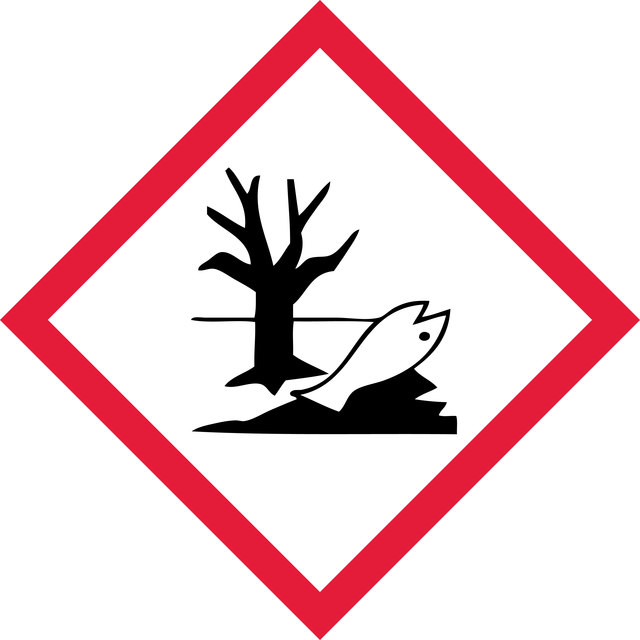
signalword
Warning
hcodes
Hazard Classifications
Aquatic Acute 1 - Aquatic Chronic 1 - Repr. 2 - Skin Sens. 1A - STOT RE 2
存储类别
11 - Combustible Solids
wgk
WGK 2
flash_point_f
Not applicable
flash_point_c
Not applicable
ppe
dust mask type N95 (US), Eyeshields, Faceshields, Gloves
法规信息
农药列管产品
此项目有
Christophe Calvayrac et al.
Pest management science, 68(3), 340-347 (2011-09-16)
The dissipation kinetics of the herbicide sulcotrione sprayed 4 times on a French soil was studied using a laboratory microcosm approach. An advanced cultivation-based method was then used to isolate the bacteria responsible for biotransformation of sulcotrione. Chromatographic methods were
J L Bonnet et al.
Archives of environmental contamination and toxicology, 55(4), 576-583 (2008-03-07)
The potential toxicity of sulcotrione (2-[2-chloro-4-(methylsulfonyl)benzoyl]-1,3-cyclohexanedione) and mesotrione (2-[4-(methylsulfonyl)-2-nitrobenzoyl]-1,3-cyclohexanedione), two selective triketonic herbicides, was assessed using representative environmental microorganisms frequently used in ecotoxicology: the eukaryote Tetrahymena pyriformis and the prokaryote Vibrio fischeri. The aims were also to evaluate the toxicity
Boris Eyheraguibel et al.
Journal of agricultural and food chemistry, 59(9), 4868-4873 (2011-03-24)
Pesticide reactivity toward light is rarely considered at the leaf surface after crop treatment; regardless, these degradation reactions directly impact the pesticide effectiveness. The use of sunscreen adjuvants to overcome photodegradation has presented some limitations so far. Raw hydroalcoholic plant
Luciana Gomides Freitas et al.
Journal of chromatography. A, 1028(2), 277-286 (2004-03-03)
The LC/ESI/MSMS method allows the trace quantification (ng/l) of the new triketone herbicides, i.e. sulcotrione and mesotrione, and important herbicides and metabolites, in natural waters. Solid phase extraction (SPE) for sample enrichment is performed with OASIS (recoveries 94-112% for parent
Jaroslaw Wiszniowski et al.
Chemosphere, 74(9), 1224-1230 (2008-12-30)
One of the strategies for decreasing the consumption of herbicides consists in improving their uptake and efficiency. It was suggested that the photodegradation of herbicides due to sunlight results in a greater demand of herbicides to be introduced into the
我们的科学家团队拥有各种研究领域经验,包括生命科学、材料科学、化学合成、色谱、分析及许多其他领域.
联系客户支持