
35596

PCB No 3
analytical standard
别名:
4-氯联苯, 4-PCB
登录 查看组织和合同定价。
选择尺寸
关于此项目
经验公式(希尔记法):
C12H9Cl
化学文摘社编号:
分子量:
188.65
Ballschmiter Number:
3
EC Number:
218-127-7
UNSPSC Code:
41116107
NACRES:
NA.24
PubChem Substance ID:
MDL number:
Beilstein/REAXYS Number:
774966
InChI key
FPWNLURCHDRMHC-UHFFFAOYSA-N
InChI
1S/C12H9Cl/c13-12-8-6-11(7-9-12)10-4-2-1-3-5-10/h1-9H
SMILES string
Clc1ccc(cc1)-c2ccccc2
grade
analytical standard
shelf life
limited shelf life, expiry date on the label
technique(s)
HPLC: suitable, gas chromatography (GC): suitable
application(s)
environmental
format
neat
General description
Polychlorinated biphenyls (PCBs) belong to the class of highly toxic pollutants commonly found in various environmental matrices and food products. They find a variety of applications as flame retardants, plasticizers, dielectric and heat transfer fluids, etc.
Application
PCB No 3 may be used as an analytical reference standard for the quantification of the analyte in aqueous solution in the presence of dissolved organic carbon using high-performance liquid chromatography technique.
Refer to the product′s Certificate of Analysis for more information on a suitable instrument technique. Contact Technical Service for further support.
Other Notes
Find a digital Reference Material for this product available on our online platform ChemisTwin® for NMR. You can use this digital equivalent on ChemisTwin® for your sample identity confirmation and compound quantification (with digital external standard). An NMR spectrum of this substance can be viewed and an online comparison against your sample can be performed with a few mouseclicks. Learn more here and start your free trial.
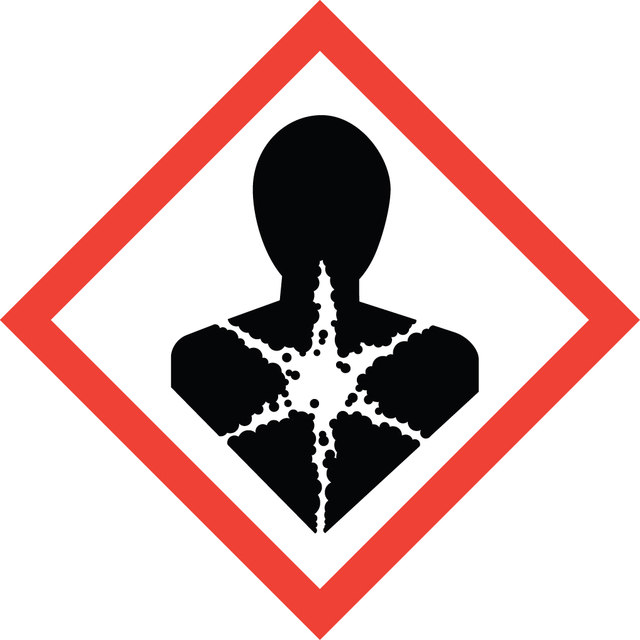

signalword
Warning
hcodes
Hazard Classifications
Aquatic Acute 1 - Aquatic Chronic 1 - STOT RE 2
存储类别
11 - Combustible Solids
wgk
WGK 3
flash_point_f
Not applicable
flash_point_c
Not applicable
ppe
dust mask type N95 (US), Eyeshields, Gloves
法规信息
危险化学品
此项目有
Markus Alexander Zettner et al.
Toxicological sciences : an official journal of the Society of Toxicology, 100(1), 88-98 (2007-08-10)
4-Monochlorobiphenyl (PCB3) is a component of commercial polychlorinated biphenyl (PCB) products and is an airborne environmental pollutant. Our recent study with transgenic Fischer 344 rats revealed the mutagenic potential of PCB3 in the livers of male rats. PCB3 is converted
Guangshu Zhai et al.
Environmental science & technology, 47(1), 557-562 (2012-12-12)
4-Monochlorobiphenyl (PCB3) has been proven to be transformed into hydroxylated metabolites of PCB3 (OH-PCB3s) in whole poplar plants in our previous work. However, hydroxylated metabolites of PCBs, including OH-PCB3s, as the substrates of sulfotransferases have not been studied in many
Parvaneh Espandiari et al.
Toxicological sciences : an official journal of the Society of Toxicology, 79(1), 41-46 (2004-02-21)
We recently reported that several mono- to tetrachlorinated biphenyls have initiating activity in the livers of Fischer 344 rats. In the present study, we investigated the metabolic activation of one of those compounds, 4-chlorobiphenyl (PCB 3). Monohydroxy (400 micromol/kg), dihydroxy
Guangshu Zhai et al.
Environmental science & technology, 44(10), 3901-3907 (2010-04-21)
4-Monochlorobiphenyl (CB3), mainly an airborne pollutant, undergoes rapid biotransformation to produce hydroxylated metabolites (OH-CB3s). However, up to now, hydroxylation of CB3 has not been studied in living organisms. In order to explore the formation of hydroxylated metabolites of CB3 in
Anna Ptak et al.
Reproductive toxicology (Elmsford, N.Y.), 20(1), 57-64 (2005-04-06)
Theca interna and granulosa cells from small, medium and large preovulatory porcine follicles were cultured as a monolayer to compare the effects of 4-chlorobiphenyl (PCB3) and its metabolites on estradiol secretion. Cells were treated with PCB3 or its mono- and
我们的科学家团队拥有各种研究领域经验,包括生命科学、材料科学、化学合成、色谱、分析及许多其他领域.
联系客户支持