
NE1015

Anti-Glial Fibrillary Acidic Protein Cocktail Mouse mAb (SMI-22)
liquid, clone SMI-22, Calbiochem®
别名:
Anti-GFAP Cocktail
登录 查看组织和合同定价。
选择尺寸
关于此项目
NACRES:
NA.43
UNSPSC Code:
12352203
Clone:
SMI-22, monoclonal
Species reactivity:
human, bovine, mouse, guinea pig, porcine, sheep, canine, rat, chicken
Application:
—
Citations:
12
biological source
mouse
antibody form
ascites fluid
antibody product type
primary antibodies
clone
SMI-22, monoclonal
form
liquid
contains
≤0.1% sodium azide as preservative
species reactivity
human, bovine, mouse, guinea pig, porcine, sheep, canine, rat, chicken
manufacturer/tradename
Calbiochem®
storage condition
OK to freeze, avoid repeated freeze/thaw cycles
dilution
(ELISA (1:1000)
Frozen Sections (1:1000)
Immunoblotting (1:1000)
Immunocytochemistry (1:1000)
Paraffin Sections (1:1000, trypsin or heat pre-treatment required))
isotype
IgG2b
shipped in
wet ice
storage temp.
−20°C
target post-translational modification
unmodified
Quality Level
Gene Information
human ... GFAP(2670)
General description
Mouse monoclonal antibody cocktail that contains a mixture of 3 antibodies supplied as undiluted ascites. Recognizes the ~50 kDa glial fibrillary acidic protein.
Recognizes ~50 kDa glial fibrillary acidic protein (GFAP) in human and bovine cytoskeletal preparations.
This Anti-Glial Fibrillary Acidic Protein Cocktail Mouse mAb is validated for use in ELISA, Frozen Sections, WB, ICC, Paraffin Sections for the detection of Glial Fibrillary Acidic Protein.
Immunogen
Bovine
purified bovine GFAP protein
Application

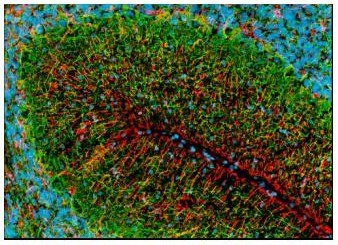
ELISA (1:1000)
Frozen Sections (1:1000, see comments)
Immunoblotting (1:1000)
Immunocytochemistry (1:1000, see comments)
Paraffin Sections (1:1000, trypsin or heat pre-treatment required)
Physical form
Undiluted ascites.
Preparation Note
Upon initial thaw, aliquot and freeze (-20°C).
Analysis Note
Positive Control
Astrocytes or cytoskeletal preparations
Astrocytes or cytoskeletal preparations
Other Notes
This cocktail is derived from the Bigner-Eng clones MAb1B4, MAb2E1, and MAb4A11 and provides a means for more comprehensive detection of astrocytomas than each clone alone. Each component is specific for GFAP and stains astrocytes and astrocytic processes as well as Bergman glia. Recognizes both anaplastic and reactive astrocytes by immunocytochemical staining. Does not recognize metastatic tumors and brain tumors of non-astrocytic origin, including medulloblastomas, meningiomas, choroid plexus papillomas, and schwannomas. For staining paraffin sections it is recommended that de-paraffinized sections be treated with 0.1% trypsin in 50 mM Tris-HCl, pH 7.6 for 20-30 min at 37°C or boiled in Tris-buffered saline, pH 9.0 for 15 min to expose the epitope. For immunocytochemistry or staining frozen sections, post-fixation in cold methanol or methanol/hydrogen peroxide for 10 min is required for access to the astrocytes in the sample. Antibody should be titrated for optimal results in individual systems.
Vick, W.W., et al. 1987. Acta. Cytol.31, 816.
McLendon R.E., et al. 1986. J. Neuropathol. Exp. Neurol.45, 692.
Pegram, C.N., et al. 1985. Neurochem. Pathol.3, 119.
McLendon R.E., et al. 1986. J. Neuropathol. Exp. Neurol.45, 692.
Pegram, C.N., et al. 1985. Neurochem. Pathol.3, 119.
Legal Information
CALBIOCHEM is a registered trademark of Merck KGaA, Darmstadt, Germany
Disclaimer
Toxicity: Standard Handling (A)
未找到合适的产品?
试试我们的产品选型工具.
存储类别
10 - Combustible liquids
wgk
WGK 1
Srinivasu Kallakuri et al.
PloS one, 13(2), e0193389-e0193389 (2018-03-01)
Blast exposure is an increasingly significant health hazard and can have a range of debilitating effects, including auditory dysfunction and traumatic brain injury. To assist in the development of effective treatments, a greater understanding of the mechanisms of blast-induced auditory
Michael R Grovola et al.
Brain pathology (Zurich, Switzerland), 31(5), e12953-e12953 (2021-05-08)
Over 2.8 million people experience mild traumatic brain injury (TBI) in the United States each year, which may lead to long-term neurological dysfunction. The mechanical forces that are caused by TBI propagate through the brain to produce diffuse axonal injury
Natalie J Pinkowski et al.
Neurobiology of learning and memory, 175, 107315-107315 (2020-09-28)
Cognitive deficits following a mild traumatic brain injury (mTBI) are common and are associated with learning deficits in school-age children. Some of these deficits include problems with long-term memory, working memory, processing speeds, attention, mental fatigue, and executive function. Processing
Michael R Grovola et al.
Biomedicines, 11(7) (2023-07-29)
Traumatic brain injury (TBI) is a major contributor to morbidity and mortality in the United States as several million people visit the emergency department every year due to TBI exposures. Unfortunately, there is still no consensus on the pathology underlying
Johann M Pacheco et al.
eNeuro, 6(6) (2019-11-22)
Millions of people suffer mild traumatic brain injuries (mTBIs) every year, and there is growing evidence that repeated injuries can result in long-term pathology. The acute symptoms of these injuries may or may not include the loss of consciousness but
我们的科学家团队拥有各种研究领域经验,包括生命科学、材料科学、化学合成、色谱、分析及许多其他领域.
联系客户支持