
W327506

二甲基三硫化物
≥98%, FG
别名:
2,3,4-三硫杂戊烷, 甲基硫烷基二硫烷基甲烷
登录 查看组织和合同定价。
选择尺寸
关于此项目
线性分子式:
CH3SSSCH3
化学文摘社编号:
分子量:
126.26
FEMA Number:
3275
Council of Europe no.:
539
UNSPSC Code:
12164502
PubChem Substance ID:
Flavis number:
12.013
EC Number:
222-910-9
NACRES:
NA.21
MDL number:
Beilstein/REAXYS Number:
1731604
Organoleptic:
meaty; alliaceous; sulfurous
Grade:
FG, Halal, Kosher
Biological source:
synthetic
Agency:
meets purity specifications of JECFA
Food allergen:
no known allergens
SMILES string
CSSSC
InChI
1S/C2H6S3/c1-3-5-4-2/h1-2H3
InChI key
YWHLKYXPLRWGSE-UHFFFAOYSA-N
biological source
synthetic
grade
FG, Halal, Kosher
agency
meets purity specifications of JECFA
reg. compliance
EU Regulation 1334/2008 & 178/2002
assay
≥98%
refractive index
n20/D 1.602 (lit.)
bp
58 °C/15 mmHg (lit.)
mp
−68 °C (lit.)
density
1.202 g/mL at 25 °C (lit.)
application(s)
flavors and fragrances
documentation
see Safety & Documentation for available documents
food allergen
no known allergens
organoleptic
meaty; alliaceous; sulfurous
正在寻找类似产品? 访问 产品对比指南
General description
二甲基三硫化物(DMTS)是一种挥发性硫化物(VSC)、 ,是油菜类蔬菜的主要香气成分。啤酒老化过程中会形成二甲基三硫化物。据报道,它是造成常见恶臭的真菌癌症样本。是一种重要的味觉和嗅觉(TO)引起的化合物在中国,主要与脓毒性/沼泽气味有关。它已通过微胞藻属鉴定为产生气味的常见化合物(腐烂时)。颗粒状活性炭(GAC)对藻类气味剂二甲基三硫化物的吸附已有报告。
Application
- 柑橘木虱中DcitOBP9的结合亲和力和特性研究。:研究考察了二甲基三硫(DMTS)与柑橘木虱气味结合蛋白DcitOBP9的结合特性,为DMTS在害虫防治策略中的潜在作用提供了见解(Pei et al., 2024)。

signalword
Warning
hcodes
Hazard Classifications
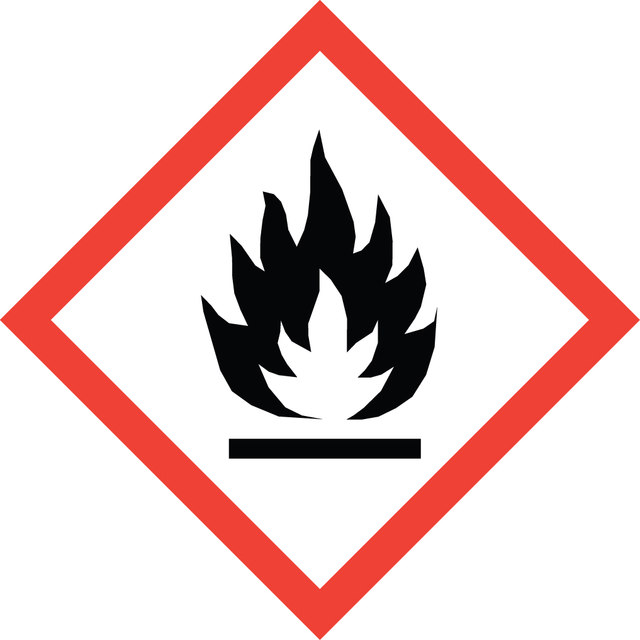
Acute Tox. 4 Oral - Eye Irrit. 2 - Flam. Liq. 3 - Skin Irrit. 2 - STOT SE 3
target_organs
Respiratory system
存储类别
3 - Flammable liquids
wgk
WGK 3
flash_point_f
132.8 °F - closed cup
flash_point_c
56 °C - closed cup
ppe
Eyeshields, Faceshields, Gloves, type ABEK (EN14387) respirator filter
法规信息
危险化学品
此项目有
Identification of dimethyl trisulfide as a major aroma component of cooked brassicaceous vegetables.
Maruyama FT.
Journal of Food Science, 35(5), 540-543 (1970)
Granular activated carbon (GAC) adsorption of two algal odorants, dimethyl trisulfide and ?-cyclocitral
Zhang K-J, et al.
Desalination, 266(1), 231-237 (2011)
Stability of Volatile Sulfur Compounds (VSCs) in sampling bags-impact of temperature.
Le H, et al.
Water Science and Technology, 68(8), 1880-1887 (2013)
P A Vazquez-Landaverde et al.
Journal of dairy science, 89(8), 2919-2927 (2006-07-15)
Volatile sulfur compounds have been reported to be responsible for the sulfurous off-flavors generated during the thermal processing of milk; however, their analysis has been a challenge due to their high reactivity, high volatility, and low sensory threshold. In this
Atsuko Isogai et al.
Journal of agricultural and food chemistry, 57(1), 189-195 (2008-12-19)
Dimethyl trisulfide (DMTS) is involved in the unpalatable aroma of stale sake, called "hineka"; however, the mechanism underlying the formation of DMTS during the storage of sake has not been elucidated. This paper investigates the precursors of DMTS in sake.
我们的科学家团队拥有各种研究领域经验,包括生命科学、材料科学、化学合成、色谱、分析及许多其他领域.
联系客户支持