
W317403

4-羟基-2,5-二甲基l-3(2H)-呋喃酮
≥98%, FCC, FG
别名:
2,5-二甲基-4-羟基-3(2H)-呋喃酮, 天然呋喃酮, 草莓呋喃酮
登录 查看组织和合同定价。
选择尺寸
关于此项目
经验公式(希尔记法):
C6H8O3
化学文摘社编号:
分子量:
128.13
FEMA Number:
3174
Council of Europe no.:
536
UNSPSC Code:
12164502
PubChem Substance ID:
Flavis number:
13.010
EC Number:
222-908-8
NACRES:
NA.21
MDL number:
Beilstein/REAXYS Number:
1281357
Organoleptic:
caramel; strawberry; sweet
Grade:
FG, Fragrance grade, Halal, Kosher
Biological source:
synthetic
Agency:
follows IFRA guidelines, meets purity specifications of JECFA
Food allergen:
no known allergens
SMILES string
CC1OC(C)=C(O)C1=O
InChI
1S/C6H8O3/c1-3-5(7)6(8)4(2)9-3/h3,8H,1-2H3
InChI key
INAXVXBDKKUCGI-UHFFFAOYSA-N
biological source
synthetic
grade
FG, Fragrance grade, Halal, Kosher
agency
follows IFRA guidelines, meets purity specifications of JECFA
reg. compliance
EU Regulation 1223/2009, EU Regulation 1334/2008 & 178/2002, FCC
assay
≥98%
mp
73-77 °C (lit.)
application(s)
flavors and fragrances
documentation
see Safety & Documentation for available documents
food allergen
no known allergens
fragrance allergen
no known allergens
organoleptic
caramel; strawberry; sweet
storage temp.
2-8°C
正在寻找类似产品? 访问 产品对比指南
General description
4-羟基-2,5-二甲基-3 (2 H )-呋喃酮是一种存在于菠萝 、草莓 和芒果等水果中的风味化合物。
Application
- 草莓风味化合物4-羟基-2,5-二甲基-3(2H)-呋喃酮生物合成所需的FaQR编码一种烯酮氧化还原酶。: 本研究确定FaQR基因对关键草莓风味化合物4-羟基-2,5-二甲基-3(2H)-呋喃酮的生物合成至关重要。该研究重点介绍了所涉及的酶途径及其在食品风味增强生物技术中的潜在应用 (Raab et al., 2006)。
signalword
Danger
存储类别
8A - Combustible corrosive hazardous materials
wgk
WGK 1
flash_point_f
Not applicable
flash_point_c
Not applicable
ppe
dust mask type N95 (US), Eyeshields, Gloves


hcodes
Hazard Classifications
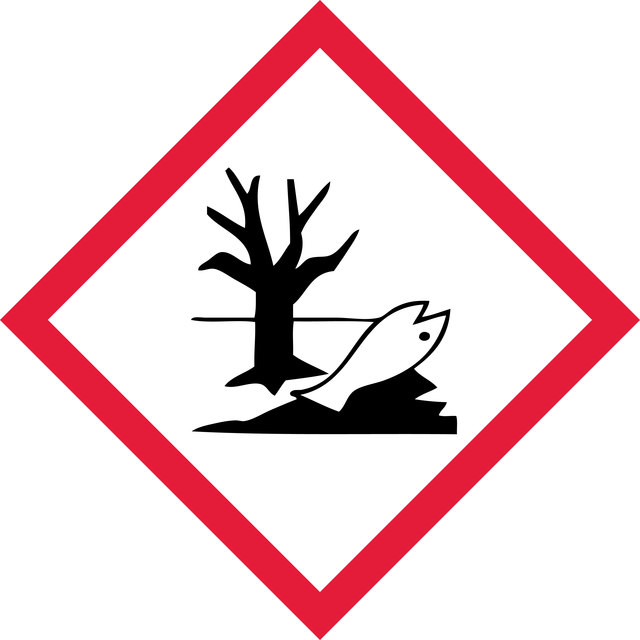
Acute Tox. 4 Oral - Aquatic Chronic 2 - Eye Dam. 1 - Skin Corr. 1B - Skin Sens. 1
Estimation of 2, 5?dimethyl?4?hydroxy?3 (2H)?furanone (FURANEOLA?) in cultivated and wild strawberries, pineapples and mangoes
Pickenhagen W, et al.
Journal of the Science of Food and Agriculture, 32(11), 1132-1134 (1981)
A rational synthesis of 4-hydroxy-2, 5-dimethyl-3 (2H)-furanone, a flavor component of pineapple
Henry DW & Silverstein RM.
The Journal of Organic Chemistry, 31(7), 2391-2394 (1966)
Woo Sang Sung et al.
Life sciences, 80(6), 586-591 (2006-11-14)
2,5-Dimethyl-4-hydroxy-3(2H)-furanone (DMHF), an aroma compound found in a number of fruits and foods, has shown various biological properties in animal models, but its antimicrobial effect remains poorly understood. The current study investigated the antimicrobial effect of DMHF using human pathogenic
Silke Illmann et al.
Journal of agricultural and food chemistry, 57(7), 2889-2895 (2009-03-05)
The formation of 4-hydroxy-2,5-dimethyl-3(2H)-furanone (HDMF) was studied in aqueous model systems containing L-rhamnose and L-lysine. The approach consisted in systematically varying four reaction parameters (rhamnose concentration, rhamnose to lysine ratio, pH, and phosphate concentration) at 3 levels. A fractional factorial
Thomas Raab et al.
The Plant cell, 18(4), 1023-1037 (2006-03-07)
The flavor of strawberry (Fragaria x ananassa) fruit is dominated by an uncommon group of aroma compounds with a 2,5-dimethyl-3(H)-furanone structure. We report the characterization of an enzyme involved in the biosynthesis of 4-hydroxy-2,5-dimethyl-3(2H)-furanone (HDMF; Furaneol), the key flavor compound
我们的科学家团队拥有各种研究领域经验,包括生命科学、材料科学、化学合成、色谱、分析及许多其他领域.
联系客户支持