
W312908

联苯
≥99%
登录 查看组织和合同定价。
选择尺寸
变更视图
关于此项目
线性分子式:
C6H5C6H5
化学文摘社编号:
分子量:
154.21
FEMA Number:
3129
Council of Europe no.:
10978
UNSPSC Code:
12164502
PubChem Substance ID:
Flavis number:
1.013
EC Number:
202-163-5
NACRES:
NA.21
MDL number:
Beilstein/REAXYS Number:
1634058
Organoleptic:
geranium; green
Biological source:
synthetic
Agency:
meets purity specifications of JECFA
Food allergen:
no known allergens
biological source
synthetic
agency
meets purity specifications of JECFA
vapor density
5.31 (vs air)
vapor pressure
9.46 mmHg ( 115 °C)
assay
≥99%
form
flakes, powder or crystals
autoignition temp.
1004 °F
expl. lim.
0.6 %, 111 °F, 5.8 %, 166 °F
bp
255 °C (lit.)
mp
68-70 °C (lit.)
application(s)
flavors and fragrances
documentation
see Safety & Documentation for available documents
food allergen
no known allergens
organoleptic
geranium; green
SMILES string
c1ccc(cc1)-c2ccccc2
InChI
1S/C12H10/c1-3-7-11(8-4-1)12-9-5-2-6-10-12/h1-10H
InChI key
ZUOUZKKEUPVFJK-UHFFFAOYSA-N
Gene Information
human ... CYP1A2(1544), ESR1(2099)
General description
联苯是一种芳香族碳氢化合物,常用作柑橘类水果的防腐剂。
Disclaimer
用于研发&或非欧盟(EU)食品用途。不用于零售。
Still not finding the right product?
Explore all of our products under 联苯

signalword
Warning
hcodes
Hazard Classifications
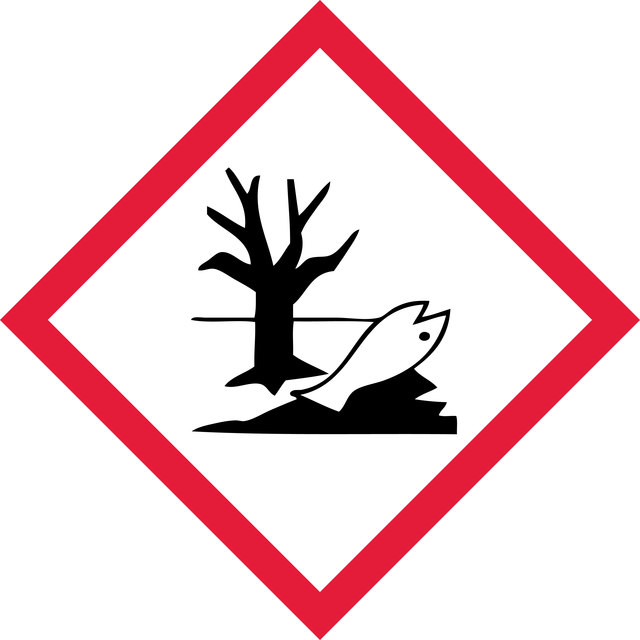
Aquatic Acute 1 - Aquatic Chronic 1 - Eye Irrit. 2 - Skin Irrit. 2 - STOT SE 3
target_organs
Respiratory system
存储类别
11 - Combustible Solids
wgk
WGK 2
flash_point_f
230.0 °F - closed cup
flash_point_c
110 °C - closed cup
ppe
dust mask type N95 (US), Eyeshields, Gloves
法规信息
危险化学品
此项目有
Anaerobic degradation of the aromatic hydrocarbon biphenyl by a sulfate-reducing enrichment culture.
Drazenka Selesi et al.
FEMS microbiology ecology, 68(1), 86-93 (2009-02-04)
The aromatic hydrocarbon biphenyl is a widely distributed environmental pollutant. Whereas the aerobic degradation of biphenyl has been extensively studied, knowledge of the anaerobic biphenyl-oxidizing bacteria and their biochemical degradation pathway is scarce. Here, we report on an enrichment culture
Xiaofeng Chen et al.
The Journal of organic chemistry, 77(17), 7572-7578 (2012-08-07)
A highly efficient cross-coupling of diarylborinic acids and anhydrides with aryl chlorides and bromides has been effected by using a palladium catalyst system co-supported by a strong σ-donor N-heterocyclic carbene (NHC), N,N'-bis(2,6-diisopropylphenyl) imidazol-2-ylidene, and a strong π-acceptor phosphite, triphenylphosphite, in
Guoxiang Jiang et al.
Carbohydrate polymers, 92(1), 758-764 (2012-12-12)
Ultrasound-assisted extraction was employed to extract polysaccharides from longan seed (LSP), with aids of a Box-Behnken statistical design to investigate the effects of ultrasonic power, time and liquid/solid ratio on the extraction recovery of the LSP. The structural analysis indicated
全球贸易项目编号
| 货号 | GTIN |
|---|---|
| W312908-10KG | 04061834397267 |
| W312908-SAMPLE | 04061835566587 |
| W312908-1KG | 04061835566570 |