
514381

氯化钛(III)
≥99.995% trace metals basis
别名:
三氯化钛
登录 查看组织和合同定价。
选择尺寸
关于此项目
线性分子式:
TiCl3
化学文摘社编号:
分子量:
154.23
UNSPSC Code:
26111700
PubChem Substance ID:
EC Number:
231-728-9
MDL number:
InChI key
YONPGGFAJWQGJC-UHFFFAOYSA-K
InChI
1S/3ClH.Ti/h3*1H;/q;;;+3/p-3
SMILES string
Cl[Ti](Cl)Cl
assay
≥99.995% trace metals basis
form
crystalline
reaction suitability
reagent type: catalyst
core: titanium
mp
440 °C (dec.) (lit.)
正在寻找类似产品? 访问 产品对比指南
Application
用于气相形成具有超细粒度的金属间化合物。
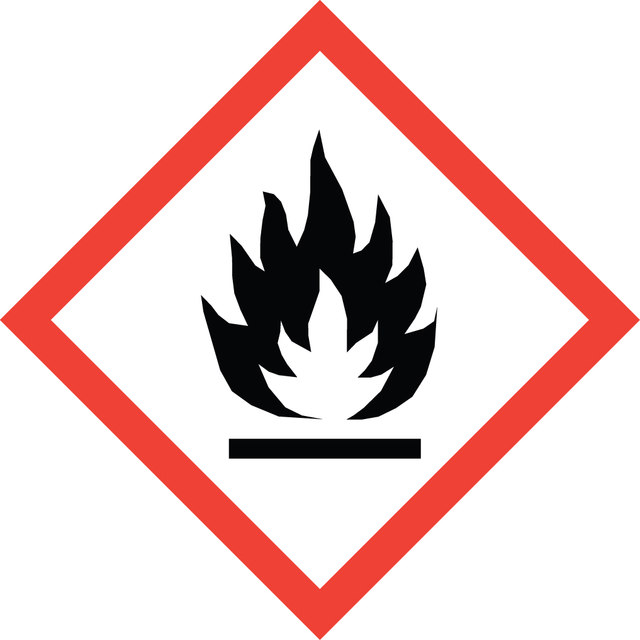
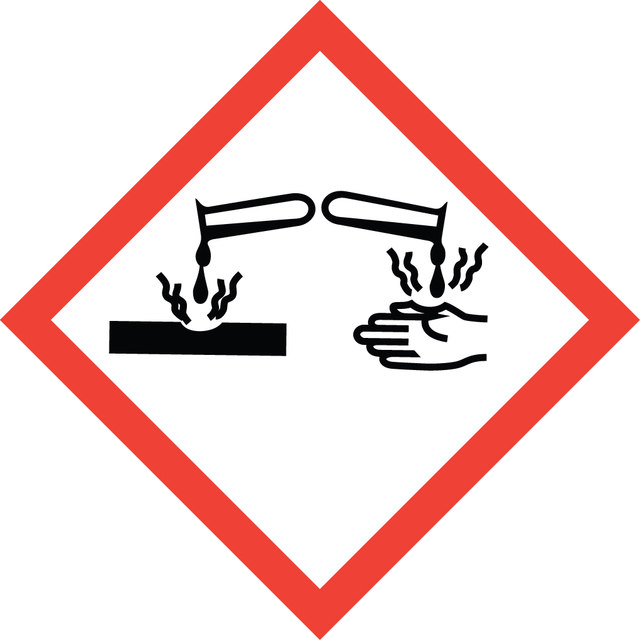
signalword
Danger
hcodes
Hazard Classifications
Pyr. Sol. 1 - Skin Corr. 1B
supp_hazards
存储类别
4.2 - Pyrophoric and self-heating hazardous materials
wgk
WGK 3
flash_point_f
Not applicable
flash_point_c
Not applicable
ppe
Eyeshields, Faceshields, Gloves, type P3 (EN 143) respirator cartridges
法规信息
新产品
此项目有
Gnana S Siluvai et al.
Biochemistry, 48(51), 12133-12144 (2009-11-20)
Sco-like proteins contain copper bound by two cysteines and a histidine residue. Although their function is still incompletely understood, there is a clear involvement with the assembly of cytochrome oxidases that contain the Cu(A) center in subunit 2, possibly mediating
Q F Seaton et al.
Analytical biochemistry, 138(1), 238-241 (1984-04-01)
Amine N-oxides have been observed to be reduced by titanium(III) chloride. To study this reaction, 24 model amine N-oxides were reacted with titanium(III) chloride. The products of these reactions were shown by melting (boiling) points, mixed melting points, derivatives, refractive
Chanmiya Sheikh et al.
Biological & pharmaceutical bulletin, 27(5), 710-713 (2004-05-11)
The aim of the present study was to determine the antimicrobial and cytotoxic activities of eight novel titanium(III) based coordination complexes [Ti(Pht)(2)(DL-serine)(2), S(1)], [Ti(Pht)(2)(glycine)(2), S(2))], [Ti(Pht)(2)(cystine)(2), S(3)], [Ti(Pht)(2)(DL-leucine)(2), S(4)], [Ti(Suc)(2)(L-leucine)(2), S(5)], [Ti(Suc)(2)(cystine)(2), S(6)], [Ti(Suc)(2)(cystein)(2), S(7)] and [Ti(Suc)(2)(DL-serine)(2), S(8)] against several
Hongwei Bai et al.
Chemistry (Weinheim an der Bergstrasse, Germany), 19(9), 3061-3070 (2013-01-31)
We report a facile non-hydrothermal method for the large-scale production of hierarchical TiO(2) nanorod spheres for the photocatalytic elimination of contaminants and killing bacteria. Crescent Ti/RF spheres were prepared by deliberately adding titanium trichloride (TiCl(3)) to the reaction of resorcinol
H A Akers et al.
Analytical biochemistry, 154(2), 559-563 (1986-05-01)
Thirteen model alpha-ketocarboxylic acids and alpha-dicarbonyl compounds have been observed to be reduced by titanium(III) chloride. The products of these reactions were shown by melting (boiling) points, mixed melting points, derivatives, refractive indices, infrared, and NMR comparisons with authentic compounds
我们的科学家团队拥有各种研究领域经验,包括生命科学、材料科学、化学合成、色谱、分析及许多其他领域.
联系客户支持