
41690

4,N,N-三甲基苯胺
≥98.5% (GC)
别名:
4-二甲氨基甲苯, N,N-二甲基-对甲苯胺
登录 查看组织和合同定价。
选择尺寸
关于此项目
线性分子式:
CH3C6H4N(CH3)2
化学文摘社编号:
分子量:
135.21
UNSPSC Code:
12352100
NACRES:
NA.22
PubChem Substance ID:
EC Number:
202-805-4
Beilstein/REAXYS Number:
774409
MDL number:
Assay:
≥98.5% (GC)
Form:
liquid
InChI key
GYVGXEWAOAAJEU-UHFFFAOYSA-N
InChI
1S/C9H13N/c1-8-4-6-9(7-5-8)10(2)3/h4-7H,1-3H3
SMILES string
CN(C)c1ccc(C)cc1
vapor density
>1 (vs air)
assay
≥98.5% (GC)
form
liquid
expl. lim.
7 %
refractive index
n20/D 1.546 (lit.), n20/D 1.547
bp
211 °C (lit.), 90-92 °C/10 mmHg (lit.)
density
0.936 g/mL at 20 °C, 0.937 g/mL at 25 °C (lit.)
functional group
amine
Quality Level
正在寻找类似产品? 访问 产品对比指南
General description
4,N,N-Trimethylaniline is a N-methyl-N-alkylaniline. Its reaction with vinyl ether catalyzed by CuCl2 has been reported to afford tetrahydroquinolines. Its radical cation undergoes reaction with the anthracene radical anion and generation of electrogenerated chemiluminescence (ECL) has been observed.
Application
- Charge-transfer complexes for redox polymerization: 4,N,N-Trimethylaniline used for on-demand amine/peroxide redox polymerization. This research offers a new perspective on the use of 4,N,N-Trimethylaniline in creating controlled polymer structures, which is crucial for various industrial and pharmaceutical applications (Garra et al., 2018).
Disclaimer
储存中可能变成黄绿色
signalword
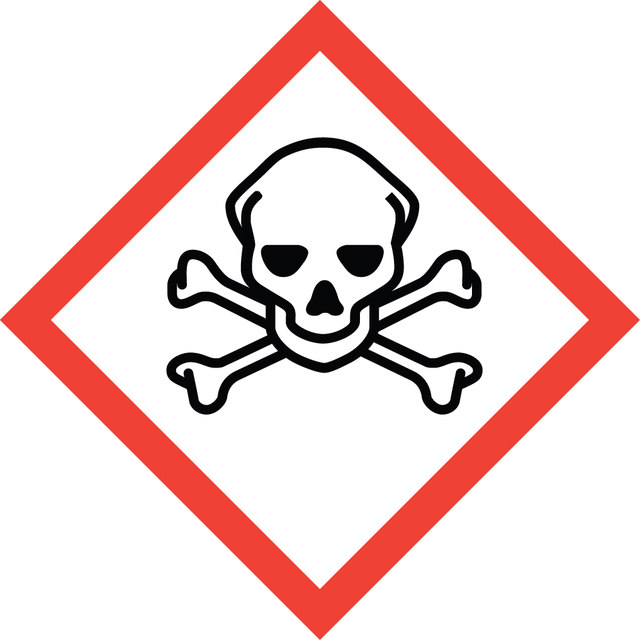
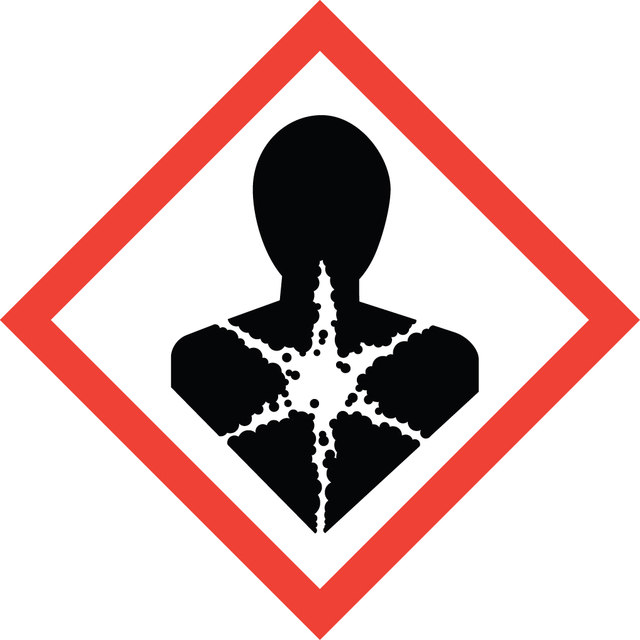
Danger
存储类别
6.1A - Combustible acute toxic Cat. 1 and 2 / very toxic hazardous materials
flash_point_f
168.8 °F - closed cup
flash_point_c
76 °C - closed cup
ppe
Eyeshields, Faceshields, Gloves, type ABEK (EN14387) respirator filter
target_organs
Respiratory Tract,Blood
Hazard Classifications
Acute Tox. 3 Dermal - Acute Tox. 3 Oral - Acute Tox. 4 Inhalation - Aquatic Chronic 3 - Carc. 1B - Repr. 2 - Skin Sens. 1 - STOT RE 2
法规信息
新产品
此项目有
Jacob B Ketter et al.
Journal of the American Chemical Society, 126(32), 10183-10189 (2004-08-12)
Electrogenerated chemiluminescence (ECL) arising from the reaction of radical ions has previously be shown to arise from a variety of states including excited singlets, triplets, excimers, and exciplexes. In this work we describe two systems that form emissive states in
Xianghua Yang et al.
Molecules (Basel, Switzerland), 11(12), 978-987 (2007-11-17)
Tetrahydroquinoline skeletons can be formed by a CuCl2-catalyzed one-pot reaction of N-methyl-N-alkylanilines and vinyl ethers in the presence of t-butyl-hydroperoxide.
Y Nomura et al.
Journal of materials science. Materials in medicine, 17(1), 29-32 (2006-01-04)
The polymerization initiators for resins cured using visible light usually consist of a photosensitizer, primarily camphorquinone (CQ), and a reducing agent, which is often a tertiary amine (DMPT, DMAEMA), while the initiator used for self-curing resins consists of benzoyl peroxide
M Noda et al.
Journal of biomedical materials research. Part A, 83(1), 123-129 (2007-03-27)
Resin composites are widely used in dentistry, and are polymerized in situ using a blue-light activated, free-radical polymerization mechanism. Blue light (400-500nm) is used to activate camphoroquinone (CQ), which decomposes to form free radicals that are stabilized by dimethyl-p-toludine (DMPT).
Anuradha Prakki et al.
Dental materials : official publication of the Academy of Dental Materials, 25(1), 26-32 (2008-09-02)
The purpose of this study was to evaluate the effect of two additives, propionaldehyde/aldehyde or 2,3-butanedione/diketone, on mechanical properties of Bis-GMA-based composites containing TEGDMA, propoxylated Bis-GMA (CH(3)Bis-GMA) or propoxylated fluorinated Bis-GMA (CF(3)Bis-GMA). Three control composites, Bis-GMA/diluent monomer (25/75 mol%), and
我们的科学家团队拥有各种研究领域经验,包括生命科学、材料科学、化学合成、色谱、分析及许多其他领域.
联系客户支持