
28910

1,4-环己二烯
purum, ≥97.0% (GC)
别名:
1,4-二氢苯
登录 查看组织和合同定价。
选择尺寸
关于此项目
经验公式(希尔记法):
C6H8
化学文摘社编号:
分子量:
80.13
UNSPSC Code:
12352100
NACRES:
NA.22
PubChem Substance ID:
EC Number:
211-043-1
Beilstein/REAXYS Number:
1900733
MDL number:
Assay:
≥97.0% (GC)
Form:
liquid
InChI key
UVJHQYIOXKWHFD-UHFFFAOYSA-N
InChI
1S/C6H8/c1-2-4-6-5-3-1/h1-2,5-6H,3-4H2
SMILES string
C1C=CCC=C1
grade
purum
assay
≥97.0% (GC)
form
liquid
contains
~0.2% 2,6-di-tert-butyl-4-methylphenol as stabilizer
Quality Level
refractive index
n20/D 1.472 (lit.), n20/D 1.473
bp
88-89 °C (lit.)
density
0.847 g/mL at 25 °C (lit.)
正在寻找类似产品? 访问 产品对比指南
General description
1,4-Cyclohexadiene is an effective hydrogen donor for catalytic hydrogenation reaction. The interaction between graphene segments and 1,4-cyclohexadiene was stuided using density-functional tight-binding (DFTB) method.
Application
1,4-Cyclohexadiene (1,4-CHD) was used to study the formation of parent ion from heavy fragmentation of 1,4-CHD on irradiation with a high-intensity laser pulse.
Other Notes
通过催化氢转移反应,在苄醚存在下选择性裂解苄酯
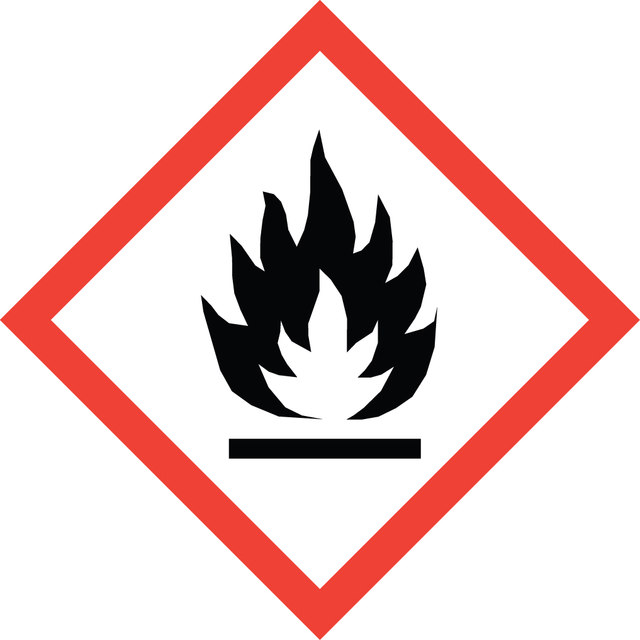

signalword
Danger
hcodes
Hazard Classifications
Carc. 1A - Flam. Liq. 2 - Muta. 1B - STOT RE 2
target_organs
Blood
存储类别
3 - Flammable liquids
wgk
WGK 3
flash_point_f
19.4 °F - closed cup
flash_point_c
-7 °C - closed cup
ppe
Eyeshields, Faceshields, Gloves, type ABEK (EN14387) respirator filter
法规信息
危险化学品
此项目有
A.M. Felix et al.
The Journal of Organic Chemistry, 43, 4194-4194 (1978)
A key factor in parent and fragment ion formation on irradiation with an intense femtosecond laser pulse.
Chemical Physics Letters, 563-570 null
Yan Meng et al.
Nanoscale, 5(24), 12178-12184 (2013-09-24)
To promote possible applications of graphene in molecular identification based on stacking effects, in particular in recognizing aromatic amino acids and even sequencing nucleobases in life sciences, we comprehensively study the interaction between graphene segments and different cyclic organic hydrocarbons
William A Donald et al.
Dalton transactions (Cambridge, England : 2003), 41(11), 3185-3193 (2012-01-31)
Relatively little is known about structural transformations of very small metal clusters that result from the adsorption of molecules. Here, the ligand-induced structural transformation of Ag(5)(+)(g) by 1,4-cyclohexadiene, which is capable of binding metal clusters as a bidentate ligand, is
Monika Ali Khan et al.
Chemical communications (Cambridge, England), 47(1), 215-217 (2010-08-24)
A cyclohexadiene ligand prepared by microbial arene 1,2-dihydroxylation undergoes spontaneous rearrangement upon complexation to tricarbonyliron(0). Subsequent iron removal affords a novel route to formal arene 2,3-dihydroxylation products enantiomeric to those obtainable by direct microbial arene oxidation.
我们的科学家团队拥有各种研究领域经验,包括生命科学、材料科学、化学合成、色谱、分析及许多其他领域.
联系客户支持