
XAD®-2 Resin - Sampling Train Methods for Environmental Analysis
Introduction
XAD®-2 resin is a versatile macroporous, nonionic polymeric adsorbent composed of polystyrene cross-linked with divinylbenzene (PS-DVB). It is widely used in environmental sampling methods developed by the U.S. Environmental Protection Agency (EPA) methods for the collection of semivolatile organic compounds (SVOCs) from air emissions. Due to its high surface area and hydrophobic, aromatic matrix, XAD®-2 resin exhibits strong affinity for non-polar to moderately polar organic compounds, including PFAS.
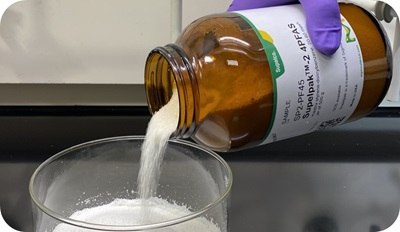
The Supelpak™-2 series represents purified, pre-cleaned, and screened versions of XAD®-2 resin, manufactured to meet defined purity and performance requirements for sampling applications.
This article examines the various sampling train methods that incorporate XAD®-2 resin, with emphasis on equipment requirements, cleaning procedures, and analytical techniques across different EPA methods.
Sampling Train Methods Using XAD®-2 Resin – Overview
Detailed procedural requirements should always be confirmed in the official method documentation. A high-level overview is provided below.
EPA Method 231
EPA Method 23 is the primary method for measuring polychlorinated dibenzo-p-dioxins (PCDDs), polychlorinated dibenzofurans (PCDFs), polychlorinated biphenyls (PCBs), and polycyclic aromatic hydrocarbons (PAHs) in emissions from stationary sources. The sampling train consists of a heated probe, heated filter, condenser, XAD®-2 adsorbent module, and an impinger system.
Recommended precleaned products: Supelpak™-2SV or Supelpak™-2SVM
EPA Method 0010 (Modified Method 5)2
EPA Method 0010 is designed for the sampling of semivolatile organic compounds (SVOCs) from hazardous waste incinerators. Like Method 23, it uses a modified Method 5 train, with the addition of a condenser and XAD®-2 adsorbent module.
Recommended precleaned products: Supelpak™-2SV or Supelpak™-2
EPA Other Test Method (OTM-45)3
EPA OTM-45 extends the sampling train methodology to per- and polyfluoroalkyl substances (PFAS), using XAD®-2 as a sorbent with specialized extraction and analysis procedures for these emerging contaminants.
Recommended precleaned product: Supelpak™-2 4PFAS
See also:
- Application note:
Reliable PFAS Monitoring and Analysis of Air Emissions With a Purified XAD® Resin, Pacific Rim laboratories, British Columbia, Canada - Poster:
Global Inter-Laboratory Evaluation of PFAS Detection Consistency Using Precleaned Polystyrene/Divinylbenzene, XAD™-2, Resin4 (NEMC 2025, St. Louis, MO, USA)
Interlaboratory Study for PFAS Background Extracted from Multiple Pre-cleaned XAD-2 Adsorbent Lots5 (ExTech 2025, Muelheim a.d.R., Germany) - Webinar:
Optimizing Your OTM-45 Workflow. Do's and Don'ts from a Panel of PFAS Experts
XAD®-2 Resin Preparation and Cleaning
The raw resin is shipped in a salt solution to inhibit microbial growth during storage. Prior to use, the resin must be thoroughly cleaned to remove impurities that could interfere with analytical results.
Cleaning is traditionally performed using Soxhlet extractor (Figure 1) with a glass thimble.

Notes:
- A minimum solvent volume of 1 mL per gram of resin is recommended for extracting and cleaning.
- When methylene chloride is used for cleaning, a glass wool (20410) plug or stainless-steel screen should be installed, as XAD®-2 resin floats in this solvent.
- After cleaning, the resin must be thoroughly dried, most commonly using high-purity nitrogen. To minimize potential contaminants from the nitrogen source, the use of hydrocarbon traps in the nitrogen supply is strongly recommended (Supelcarb HC Hydrocarbon Trap or Supelpure HC Hydrocarbon trap).
Learn more about our hydrocarbon traps here.
Sampling
Typical Sampling Train Equipment Key Components
- Probe and probe liner
- Filter and Filter holder
- Condenser
- Field Ready XAD®-2* module
- Impingers
- Secondary Field Ready XAD®-2* breakthrough module**
* See recommended cleaned XAD®-2 per method.
**For EPA OTM-45
For more information and supplies concerning the field equipment needed to run these methods, please refer to respective supplier information.
Post-Sampling Analysis by Method - Outlines
EPA Method 231
Extraction
- Spike filter with pre-extraction filter recovery standard
- Spike adsorbent with pre-extraction standard
- Soxhlet extraction with toluene for 16 hours
- Concentration of extract
Cleanup
- Alumina column chromatography (acidic or basic)
- Florisil column
- Silica gel column (activated, acid- or base-coated)
Analysis
- HRGC/HRMS with resolving power of at least 10,000
- Isotope dilution quantitation
- Specific column requirements for each compound class
- Recommended GC columns:
- PCB’s: SPB®-Octyl L × I.D. 30 m × 0.25 mm, df 0.25 μm (24218-U)
- PAH’s: SLB®-5ms, L × I.D. 30 m × 0.25 mm, df 0.25 μm (28471-U)
-PAH’s: SLB®-ILPAH, L × I.D. 20 m × 0.18 mm, df 0.05 μm (29799-U)
- PCDD/PCDF: Equity-5/SLB®-5ms and SP®-2331
EPA Method 00102
Note: Strict temperature control during sampling, not exceeding 50°C.
Extraction
- Transfer filter and XAD®-2 to glass thimble
- Soxhlet extraction with methylene chloride for 16 hours
- Concentration of extract
Analysis
- GC/MS following EPA Method 82705
- Recommended GC column:
SLB®-5ms, L × I.D. 30 m × 0.25 mm, df 0.25 μm (28471-U).
EPA OTM-453
Extraction
- Extract XAD®-2 fraction in a basic methanolic solution (1.5% v/v ammonium hydroxide in methanol) for 18 h ours
- Solid phase extraction (SPE) cleanup using WAX/GCB cartridges
Analysis
- LC-MS/MS operated in multiple reaction monitoring (MRM) mode
- Specialized PFAS-specific parameters
- Recommended HPLC column:
- Ascentis® Express 90 Å C18 PFAS (2.7 µm), L × I.D. 150 × 2.1 mm (53560-U)
- Ascentis® Express 90 Å PCS-Phenyl-Hexyl (2.7 µm), L × I.D. 100 mm × 2.1 mm (50691-U) - Recommended Delay column:
- Ascentis® Express 160 Å PFAS (2.7 μm) Delay, L × I.D. 5 cm × 3.0 mm (53572-U)
Conclusion
XAD®-2 resin plays a critical role in several EPA sampling methods for the collection of semivolatile organic compounds, including PFAS, from various emission sources. Accurate results depend on proper resin cleaning, careful handling during sampling, and strict adherence to method-specific extraction and analytical protocols when using XAD®-2 resin in sampling trains. The versatility of XAD®-2 resin enables its application across a broad range of environmental monitoring programs, from stack emissions to ambient air monitoring for a wide range of compounds.
Learn more about our selection of PFAS Tested Additives and Solvents.
Discover our complete portfolio of PFAS Reference Materials & Organic Pollutants Reference Materials
Related Products
References
如要继续阅读,请登录或创建帐户。
暂无帐户?