Sign In to View Organizational & Contract Pricing.
Select a Size
About This Item
Empirical Formula (Hill Notation):
C20H34N10O3S
CAS Number:
Molecular Weight:
494.61
MDL number:
UNSPSC Code:
12161600
NACRES:
NA.21
InChI key
WMEZDVILBKIODK-UHFFFAOYSA-N
InChI
1S/C20H34N10O3S/c1-19(2,3)29-14-17(22-25-29)11-27(12-18-15-30(26-23-18)20(4,5)6)10-16-13-28(24-21-16)8-7-9-34(31,32)33/h13-15H,7-12H2,1-6H3,(H,31,32,33)
SMILES string
[S](=O)(=O)(O)CCC[n]1nnc(c1)CN(Cc3nn[n](c3)C(C)(C)C)Cc2nn[n](c2)C(C)(C)C
form
solid
reaction suitability
reaction type: click chemistry
availability
available only in USA
storage temp.
2-8°C
Application
BTTES is a a next-generation, water-soluble ligand for the copper(I)-catalyzed azide-alkyne cycloaddition (CuAAC) that accelerates reaction rates and suppresses cell cytotoxicity. The biocompatibility and fast kinetics of BTTES are advancements from water-insoluble TBTA and are desirable for bioconjugation in diverse chemical biology experiments.
signalword
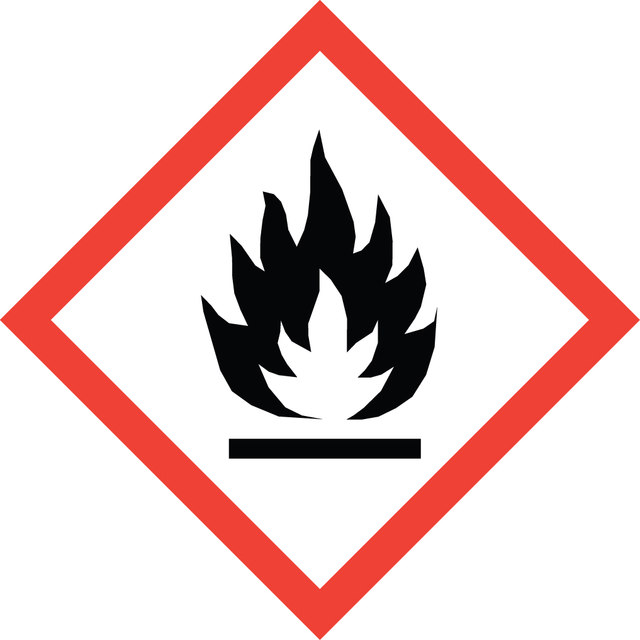
Danger
hcodes
Hazard Classifications
Self-react. C
Storage Class
5.2 - Organic peroxides and self-reacting hazardous materials
wgk
WGK 3
flash_point_f
Not applicable
flash_point_c
Not applicable
Regulatory Information
新产品
This item has
Choose from one of the most recent versions:
Already Own This Product?
Find documentation for the products that you have recently purchased in the Document Library.
Wei Wang et al.
Chemistry, an Asian journal, 6(10), 2796-2802 (2011-09-10)
The copper(I)-catalyzed azide-alkyne cycloaddition (CuAAC), the prototypical reaction of click chemistry, is accelerated by tris(triazolylmethyl)amine-based ligands. Herein, we compare two new ligands in this family--3-[4-({bis[(1-tert-butyl-1H-1,2,3-triazol-4-yl)methyl]amino}methyl)-1H-1,2,3-triazol-1-yl]propanol (BTTP) and the corresponding sulfated ligand 3-[4-({bis[(1-tert-butyl-1H-1,2,3-triazol-4-yl)methyl]amino}methyl)-1H-1,2,3-triazol-1-yl]propyl hydrogen sulfate (BTTPS)--for three bioconjugation applications: 1) labeling
David Soriano Del Amo et al.
Journal of the American Chemical Society, 132(47), 16893-16899 (2010-11-11)
The Cu(I)-catalyzed azide-alkyne cycloaddition (CuAAC) is the standard method for bioorthogonal conjugation. However, current Cu(I) catalyst formulations are toxic, hindering their use in living systems. Here we report that BTTES, a tris(triazolylmethyl)amine-based ligand for Cu(I), promotes the cycloaddition reaction rapidly
Christen Besanceney-Webler et al.
Angewandte Chemie (International ed. in English), 50(35), 8051-8056 (2011-07-16)
Raising the bar: the efficacy of bioorthogonal reactions for bioconjugation has been thoroughly evaluated in four different biological settings. Powered by the development of new biocompatible ligands, the copper-catalyzed azide-alkyne cycloaddition has brought about unsurpassed bioconjugation efficiency, and thus it
Our team of scientists has experience in all areas of research including Life Science, Material Science, Chemical Synthesis, Chromatography, Analytical and many others.
Contact Technical Service