Skip to Content
Merck
CN

306215

Poly(acrylic acid)

average Mv ~1,250,000

Sign In to View Organizational & Contract Pricing.

Select a Size


About This Item

Linear Formula:
(C3H4O2)n
CAS Number:
UNSPSC Code:
12162002
PubChem Substance ID:
NACRES:
NA.23
MDL number:
Technical Service
Need help? Our team of experienced scientists is here for you.
Let Us Assist
Technical Service
Need help? Our team of experienced scientists is here for you.
Let Us Assist

SMILES string

[Na+].[O-]C(=O)C=C

InChI

1S/C3H4O2.Na/c1-2-3(4)5;/h2H,1H2,(H,4,5);/q;+1/p-1

InChI key

NNMHYFLPFNGQFZ-UHFFFAOYSA-M

crosslinking

~0.1 % cross-linked

mol wt

average Mv ~1,250,000

viscosity

800-11,000 cP

transition temp

Tg 106 °C

Quality Level

Looking for similar products? Visit Product Comparison Guide

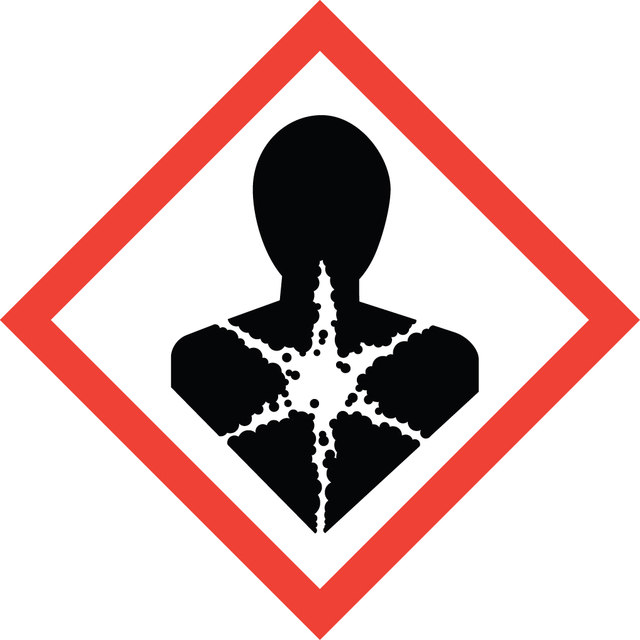
pictograms

Health hazard

signalword

Danger

hcodes

Hazard Classifications

Carc. 1A - Muta. 1B

Storage Class

6.1C - Combustible acute toxic Cat.3 / toxic compounds or compounds which causing chronic effects

wgk

WGK 3

flash_point_f

Not applicable

flash_point_c

Not applicable

ppe

Eyeshields, Gloves, type N95 (US)


Choose from one of the most recent versions:

Certificates of Analysis (COA)

Lot/Batch Number

Don't see the Right Version?

If you require a particular version, you can look up a specific certificate by the Lot or Batch number.

Already Own This Product?

Find documentation for the products that you have recently purchased in the Document Library.

Visit the Document Library

Laurence Glennon-Alty et al.
Acta biomaterialia, 9(4), 6041-6051 (2012-12-15)
Mesenchymal stem cells (MSCs) can generate chondrocytes in vitro, but typically need to be cultured as aggregates in the presence of transforming growth factor beta (TGF-β), which makes scale-up difficult. Here we investigated if polyacrylate substrates modelled on the functional
Lei Liu et al.
ACS nano, 7(2), 1368-1378 (2013-01-04)
Hierarchical FeOOH nanostructure array films constructed by different nanosized building blocks can be synthesized at the air-water interface via a bio-inspired gas-liquid diffusion method. In this approach, poly(acrylic acid) (PAA) as a crystal growth modifier plays a crucial role in
Marguerite J Kutyła et al.
International journal of pharmaceutics, 444(1-2), 175-184 (2013-01-19)
The aim of this work was to develop mucoadhesive hydrogels with variable drug delivery properties by crosslinking poly(acrylic acid) (PAA) with cyclodextrins (CDs). CD-PAA polymers with high CD content and good inter-batch reproducibility were synthesized by activating PAA with SOCl2
Nikos Petzetakis et al.
ACS nano, 7(2), 1120-1128 (2013-02-09)
The spontaneous one-step synthesis of hollow nanocages and nanotubes from spherical and cylindrical micelles based on poly(acrylic acid)-b-polylactide (P(AA)-b-P(LA)) block copolymers (BCPs) has been achieved. This structural reorganization, which occurs simply upon drying of the samples, was elucidated by transmission
Priscila Stona et al.
The journal of adhesive dentistry, 15(3), 221-227 (2013-04-06)
To examine the influence of 11.5% polyacrylic acid pretreatment on the interface and bond strength of self-adhesive resin cements (Maxcem Elite, RelyX Unicem, SeT) to dentin. Fifty-six third molars were randomly divided into seven groups: RelyX ARC as control (ARC)

Articles

Laboratory safety tools: Offers educational tools for chemistry, prioritizing customer health and safety, with online support available.

We have discussed shortly the applications of 1:1 and 2:1 phyllosilicate material in membrane technology, as well as the basic geometric understanding of their layered structures.

Our team of scientists has experience in all areas of research including Life Science, Material Science, Chemical Synthesis, Chromatography, Analytical and many others.

Contact Technical Service