Photometric Determination of Nitrate in Soil Using Nitrospectral® Reagent
Introduction
Nitrogen is an essential nutrient involved in the formation of nucleotides, amino acids, and proteins. In soils, it occurs in different forms, including organic compounds and inorganic species such as nitrate, ammonium, and urea. Under temperate conditions, inorganic forms predominate, with nitrate commonly present in soil and serving as a primary nitrogen source for plants.1
Nitrate in soil analysis is therefore important for assessing nitrogen availability. A range of analytical methods is available for the determination of inorganic nitrogen in soil extracts, including ion chromatography, flow injection analysis, fluorescence-based methods, and ion-selective electrodes. Among these, nitrate is commonly determined by chromatographic techniques or by colorimetric methods following reduction to nitrite and subsequent reaction.2
Reagents, Instruments and Materials
Test/Reagents Kit (s)
For the measurement, one of the following Spectroquant® test kits is necessary.
Instrument(s) & Devices
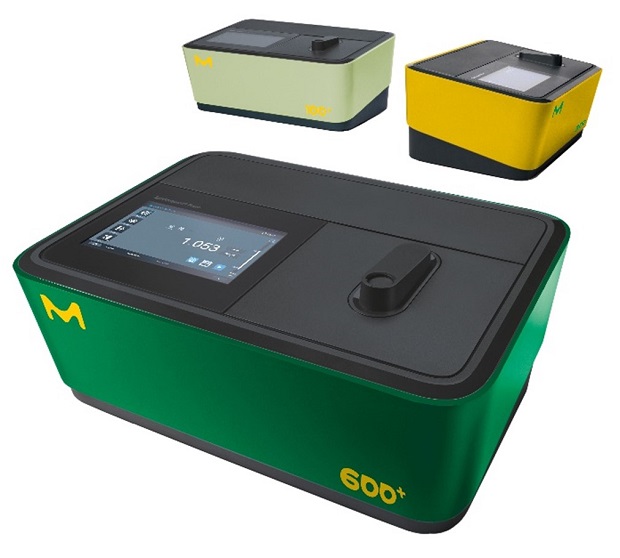
For the measurement, one of the following Spectroquant® photometers is necessary:
- Spectroquant® VIS Spectrophotometer Prove 100 Plus (1.73026)
- Spectroquant® UV/VIS Spectrophotometer Prove 300 Plus (1.73027)
- Spectroquant® UV/VIS Spectrophotometer Prove 600 Plus (1.73028)
- Spectroquant® Colorimeter Move 100 (1.73632)
Note: Also, legacy Spectroquant® instruments are suitable.
Software for Data transfer
- Optional Spectroquant® Prove Connect to LIMS software package (Y.11086) to transfer your data into an existing LIMS system.
Instrument Accessories
Other Reagents and Accessories
- Calcium chloride dihydrate for analysis (1.02382)
- Water for analysis (1.16754)
- Analytical balance
- Standard laboratory glassware (e.g., glass beakers) and pipettes
- Shaker or stirring plate
- Spatula
- Drying kiln
- Charcoal activated for soil test
- Folded filter
Analytical Procedure
For more information on the measurement, see the packaging insert for the test.
Reagent Preparation
- Calcium chloride solution, 0.025 mol/L: Dissolve 3.68 g of calcium chloride dihydrate for analysis with 1 L of water for analysis.
Sample Preparation
- In a glass bottle mix 50 g of naturally moist sample, free from coarse stones, with 100 mL of a calcium chloride solution 0.025 mol/L.
- Add a spatula-tip full of charcoal activated for soil tests and shake the closed bottle in a shaking machine for 1 hour (alternative stir in a beaker).
- Let the suspension settle and filter it through a folded filter.
- For determination of the water content dry a similar sample to constant weight in the drying kiln at 105 °C.
- A drying of the sample before the determination is not advisable because of the fast change in the nitrogen forms.
The analysis should take place very quickly. Storing the sample in plastic bags at room temperature changes the analysis values after a short time already.
Using Cat. No. 1.14542: Procedure and Measurement
For more information on the measurement, see the packaging insert for the test.
Procedure
- Place 1 level microspoon (in the cap of the NO3-1K bottle) Reagent NO3-1K into a reaction cell, immediately close the cell tightly, and shake vigorously for 1 min.
- Very slowly and carefully allow 1.5 mL Pretreated sample to run from the pipette down the inside of the tilted reaction cell onto the reagent (Wear eye protection! The cell becomes hot!). Immediately close the cell tightly and mix briefly. The cell must be held only by the screw cap!
- Leave the hot cell to stand for 10 min (reaction time). Do not cool with cold water!
- Measure the sample in the photometer.
Measurement
- For photometric measurement the cells must be clean. Wipe, if necessary, with a clean dry cloth.
- Measurement of turbid solutions yields false-high readings.
- The color of the measurement solution remains stable for at least 60 min after the end of the reaction time stated above.
Hints for Measurement
- It is recommended to zero the method each new working day. To do this, open the method, either by manually selecting the method or by inserting a barcoded cell. Tap the <Settings> button and select the <ZERO ADJUSTMENT> menu item. After prompting, insert the 16 mm zero cell through the corresponding opening. The zero adjustment is performed automatically. Confirm the performance of the zero-adjustment procedure by clicking on <OK>.
- After the zero has been performed, insert the barcoded Spectroquant® round cell through the corresponding opening, ensuring that the white position mark on the cell is aligned with the positioning mark on the spectrophotometer. The measurement starts automatically.
- Read off the result in mg/L from the display.
Hint: The above written measurement description is only valid for the Spectroquant® Prove (plus) series photometer. If a different instrument is used, please consult the corresponding instrument manual for more details on how to perform the measurement.
Using Cat. No. 1.14773: Procedure and Measurement
For more information on the measurement, see the packaging insert for the test.
Procedure
- Place 1 level microspoon (in the cap of the NO3-1K bottle) Reagent NO3-1K into a dry test tube. Empty cells Cat. No. 1.14724 are recommended that can be sealed with screw caps, thus enabling the sample to be mixed safely.
- Add 5.0 mL Reagent NO3-2 with a pipette and shake vigorously for 1 min until reagent NO3-1 is completely dissolved
- Very slowly and carefully allow 1.5 mL Pretreated sample to run from the pipette down the inside of the tilted reaction cell onto the reagent (Wear eye protection! The cell becomes hot!). Immediately close the cell tightly and mix briefly. The cell must be held only by the screw cap!
- Leave the hot cell to stand for 10 min (reaction time). Do not cool with cold water!
- Fill the sample into the rectangular cell and measure the sample in the photometer.
Measurement
- Certain photometers may require a blank (preparation as per measurement sample, but with distilled water instead of sample).
- For photometric measurement the cells must be clean. Wipe, if necessary, with a clean dry cloth.
- Measurement of turbid solutions yields false-high readings.
- The color of the measurement solution remains stable for at least 60 min after the end of the reaction time stated above.
Hints for Measurement
- It is recommended to zero the method for each new working day. To do this, open the method by inserting the barcode, tap the <Settings> button and select the <ZERO ADJUSTMENT> menu item. Fill the same cell which will be used for the sample measurement with distilled water. After prompting, insert the filled rectangular cell into the cell compartment. The zero adjustment is performed automatically. Confirm the performance of the zero-adjustment procedure by clicking on <OK>.
- After the zero adjustment, fill the measurement sample into the same or a matched rectangular cell and insert the cell into the cell compartment. The measurement starts automatically.
- Read off the result in mg/L from the display.
Hint: The above written measurement description is only valid for the Spectroquant® Prove (plus) series photometer. If a different instrument is used, please consult the corresponding instrument manual for more details on how to perform the measurement.
Analytical Quality Assurance
Analytical quality assurance (AQA) is recommended before each measurement series.
To check the photometric measurement system (test reagents, measurement device, handling) and the mode of working, the nitrate standard solutions (see section 5 of the respective packaging insert) or Spectroquant® CombiCheck 10 or 20 can be used. Besides a standard solution with 2.50 mg/l NO3-N (CombiCheck 10) or, respectively, 9.0 mg/l NO3-N (CombiCheck 20) these articles also contain an addition solution for determining sample-dependent interferences (matrix effects).
Sample-dependent interferences (matrix effects) can be determined by means of standard addition or dilution.
To view additional notes, visit SigmaAldrich.com/qa-test-kits.
Calculation
Nitrate content in mg/kg NO3- = analysis value in mg/L NO3- x 2