
Sign In to View Organizational & Contract Pricing.
Select a Size
Change View
About This Item
Empirical Formula (Hill Notation):
C22H17ClN2
CAS Number:
Molecular Weight:
344.84
NACRES:
NA.24
PubChem Substance ID:
UNSPSC Code:
41116107
MDL number:
grade
pharmaceutical primary standard
API family
clotrimazole
manufacturer/tradename
USP
application(s)
pharmaceutical (small molecule)
format
neat
SMILES string
Clc1ccccc1C(c2ccccc2)(c3ccccc3)n4ccnc4
InChI
1S/C22H17ClN2/c23-21-14-8-7-13-20(21)22(25-16-15-24-17-25,18-9-3-1-4-10-18)19-11-5-2-6-12-19/h1-17H
InChI key
VNFPBHJOKIVQEB-UHFFFAOYSA-N
General description
This product is provided as delivered and specified by the issuing Pharmacopoeia. All information provided in support of this product, including SDS and any product information leaflets have been developed and issued under the Authority of the issuing Pharmacopoeia.For further information and support please go to the website of the issuing Pharmacopoeia.
Application
Clotrimazole USP reference standard, intended for use in specified quality tests and assays as specified in the USP compendia. Also, for use with USP monographs such as:
- Clotrimazole and Betamethasone Dipropionate Cream
- Clotrimazole Cream
- Clotrimazole Lotion
- Clotrimazole Lozenges
- Clotrimazole Topical Solution
- Clotrimazole Vaginal Inserts
Analysis Note
These products are for test and assay use only. They are not meant for administration to humans or animals and cannot be used to diagnose, treat, or cure diseases of any kind.
Other Notes
Sales restrictions may apply.
Still not finding the right product?
Explore all of our products under Clotrimazole

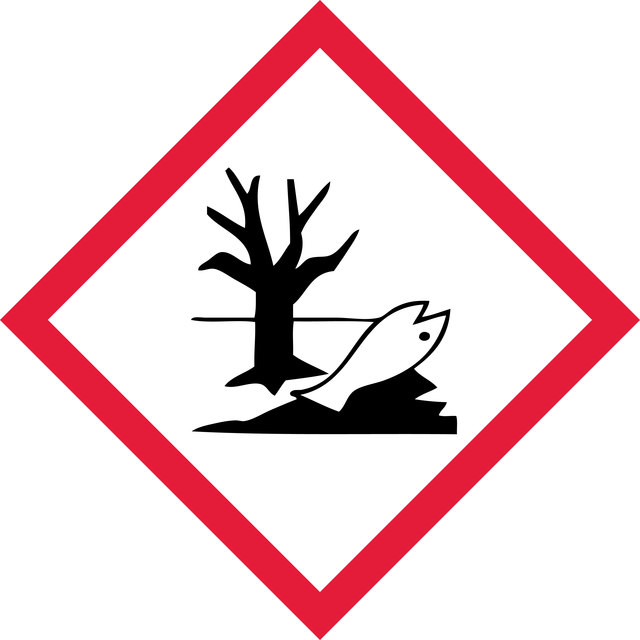
signalword
Warning
hcodes
Hazard Classifications
Acute Tox. 4 Oral - Aquatic Acute 1 - Aquatic Chronic 1 - Eye Irrit. 2 - Skin Irrit. 2
Storage Class
11 - Combustible Solids
Choose from one of the most recent versions:
Already Own This Product?
Find documentation for the products that you have recently purchased in the Document Library.
Jenna Corcoran et al.
Aquatic toxicology (Amsterdam, Netherlands), 152, 57-65 (2014-04-15)
Clotrimazole (CTZ) is a persistent imidazole antifungal agent which is frequently detected in the aquatic environment and predicted to bio-concentrate in fish. Common carp (Cyprinus carpio) were exposed to mean measured concentrations of either 1.02 or 14.63μgl(-1) CTZ for 4
S Nishanth Kumar et al.
Medical mycology, 52(5), 482-490 (2014-06-12)
Candidiasis infections are caused by yeasts from the genus Candida. The types of infection range from superficial to systemic. Treatment often requires antifungals such as the azoles; however, increased use of these drugs has led to the generation of yeasts
Kathryn L Turner et al.
Cerebral cortex (New York, N.Y. : 1991), 24(9), 2388-2400 (2013-04-16)
From the subventricular zone (SVZ), neuronal precursor cells (NPCs), called neuroblasts, migrate through the rostral migratory stream (RMS) to become interneurons in the olfactory bulb (OB). Ion channels regulate neuronal migration during development, yet their role in migration through the
Global Trade Item Number
| SKU | GTIN |
|---|---|
| 1141002-200MG | 04061838701695 |