Skip to Content
Merck
CN

PS281

Disodium methyl arsenate

analytical standard

Sign In to View Organizational & Contract Pricing.

Select a Size


About This Item

CAS Number:
UNSPSC Code:
41116107
EC Number:
205-620-7
Technical Service
Need help? Our team of experienced scientists is here for you.
Let Us Assist
Technical Service
Need help? Our team of experienced scientists is here for you.
Let Us Assist

InChI key

SDIXRDNYIMOKSG-UHFFFAOYSA-L

InChI

1S/CH5AsO3.2Na/c1-2(3,4)5;;/h1H3,(H2,3,4,5);;/q;2*+1/p-2

grade

analytical standard

packaging

ampule of 500 mg

manufacturer/tradename

Chem Service, Inc. PS-281

technique(s)

HPLC: suitable, gas chromatography (GC): suitable

application(s)

agriculture
environmental

format

neat

Application
Refer to the product′s Certificate of Analysis for more information on a suitable instrument technique. Contact Technical Service for further support.

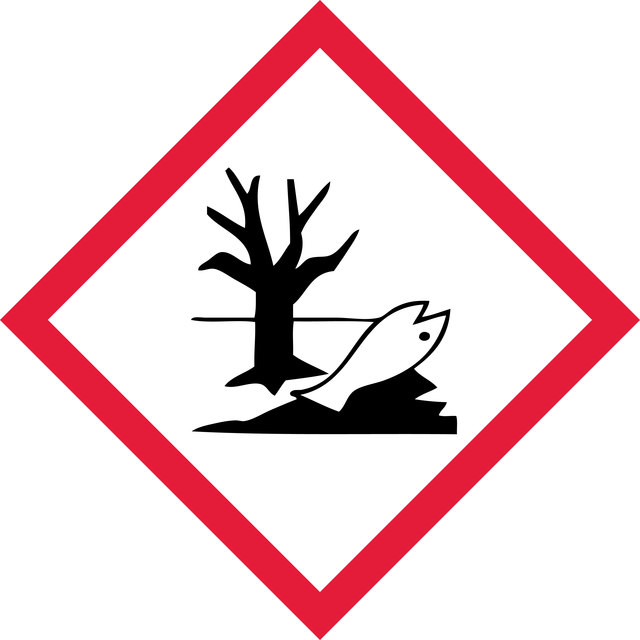
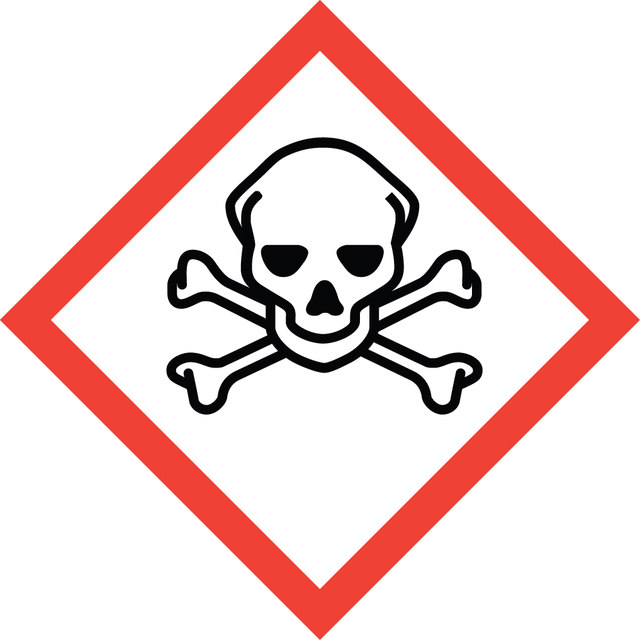
pictograms

Skull and crossbonesEnvironment

signalword

Danger

Hazard Classifications

Acute Tox. 3 Inhalation - Acute Tox. 4 Oral - Aquatic Acute 1 - Aquatic Chronic 1

Storage Class

6.1C - Combustible acute toxic Cat.3 / toxic compounds or compounds which causing chronic effects

wgk

WGK 3

flash_point_f

Not applicable

flash_point_c

Not applicable

ppe

dust mask type N95 (US), Eyeshields, Gloves

Regulatory Information

新产品
This item has

Choose from one of the most recent versions:

Certificates of Analysis (COA)

Lot/Batch Number

It looks like we've run into a problem, but you can still download Certificates of Analysis from our Documents section.

If you need assistance, please contact Customer Support

Already Own This Product?

Find documentation for the products that you have recently purchased in the Document Library.

Visit the Document Library

Yunqiang Zhao et al.
Se pu = Chinese journal of chromatography, 29(2), 111-114 (2011-05-24)
A method for the detection of trace As (III), As (V), monomethylarsonic acid (MMA), dimethylarsinic acid (DMA), arsenocholine (AsC) and arsenobetaine (AsB) in seaweeds by capillary electrophoresis-inductively coupled plasma mass spectrometry (CE-ICP-MS) was developed. The optimized conditions of CE including
Erik J Tokar et al.
Archives of toxicology, 86(6), 975-982 (2012-03-09)
Developmental exposure to inorganic arsenic is carcinogenic in humans and mice, and adult offspring of mice exposed to inorganic arsenic can develop tumors of the lung, liver, adrenal, uterus, and ovary. It has been suggested that methylarsonous acid (MMA3+), a
Renee M Gardner et al.
Pharmacogenetics and genomics, 22(7), 508-516 (2012-05-02)
The methyltransferase genotype and pregnancy both influence the arsenic metabolism phenotype, but it is unknown whether these factors interact, explaining the drastic changes in the efficiency of arsenic metabolism observed among pregnant women. The aim of this study was to
Takuya Mori et al.
The Science of the total environment, 409(15), 2881-2887 (2011-05-17)
The association between oxidative stress and exposure to environmental chemicals was assessed in a group of Japanese preschool children. The concentrations of 8-hydroxy-2'-deoxyguanosine (8-OHdG), 1-hydroxypyrene (1-OHP), inorganic arsenic (iAs) and monomethylarsonic acid (MMA), and cotinine in spot urine samples, collected
Lan Ding et al.
Toxicology and applied pharmacology, 264(1), 121-130 (2012-08-08)
Arsenic (+3 oxidation state) methyltransferase (AS3MT) is the key enzyme in the pathway for methylation of arsenicals. A common polymorphism in the AS3MT gene that replaces a threonyl residue in position 287 with a methionyl residue (AS3MT/M287T) occurs at a

Our team of scientists has experience in all areas of research including Life Science, Material Science, Chemical Synthesis, Chromatography, Analytical and many others.

Contact Technical Service