Skip to Content
Merck
CN

N13576

Propiconazole

analytical standard

Sign In to View Organizational & Contract Pricing.

Select a Size


About This Item

Empirical Formula (Hill Notation):
C15H17Cl2N3O2
CAS Number:
Molecular Weight:
342.22
EC Number:
262-104-4
UNSPSC Code:
41116107
PubChem Substance ID:
Beilstein/REAXYS Number:
9349305
MDL number:
Technical Service
Need help? Our team of experienced scientists is here for you.
Let Us Assist
Technical Service
Need help? Our team of experienced scientists is here for you.
Let Us Assist

InChI key

STJLVHWMYQXCPB-UHFFFAOYSA-N

InChI

1S/C15H17Cl2N3O2/c1-2-3-12-7-21-15(22-12,8-20-10-18-9-19-20)13-5-4-11(16)6-14(13)17/h4-6,9-10,12H,2-3,7-8H2,1H3

SMILES string

CCCC1COC(Cn2cncn2)(O1)c3ccc(Cl)cc3Cl

grade

analytical standard

packaging

ampule of 250 mg

manufacturer/tradename

Chem Service, Inc. PS-1075

technique(s)

HPLC: suitable, gas chromatography (GC): suitable

format

neat

Looking for similar products? Visit Product Comparison Guide

Application

Refer to the product′s Certificate of Analysis for more information on a suitable instrument technique. Contact Technical Service for further support.

signalword

Danger

Hazard Classifications

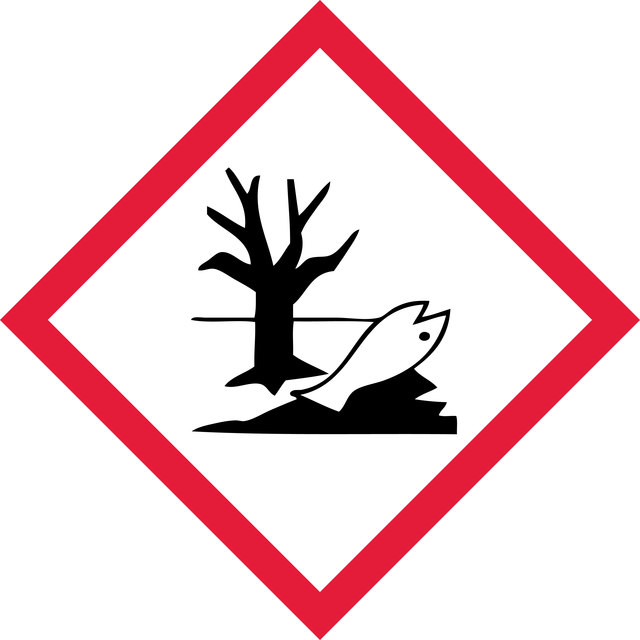
Acute Tox. 4 Oral - Aquatic Acute 1 - Aquatic Chronic 1 - Repr. 1B - Skin Sens. 1

Storage Class

6.1C - Combustible acute toxic Cat.3 / toxic compounds or compounds which causing chronic effects

wgk

WGK 3

Regulatory Information

农药列管产品
This item has

Choose from one of the most recent versions:

Certificates of Analysis (COA)

Lot/Batch Number

It looks like we've run into a problem, but you can still download Certificates of Analysis from our Documents section.

If you need assistance, please contact Customer Support

Already Own This Product?

Find documentation for the products that you have recently purchased in the Document Library.

Visit the Document Library

Deepika Somani et al.
Functional & integrative genomics, 19(3), 453-465 (2019-03-07)
Cochliobolus sativus (anamorph: Bipolaris sorokiniana) is a filamentous fungus from the class Dothideomycetes. It is a pathogen of cereals including wheat and barley, and causes foliar spot blotch, root rot, black point on grains, head blight, leaf blight, and seedling
Stephen Nesnow et al.
Chemico-biological interactions, 194(1), 79-89 (2011-08-26)
Propiconazole induces hepatocellular carcinomas and hepatocellular adenomas in mice and promotes liver tumors in rats. Transcriptional, proteomic, metabolomic and biochemical studies of hepatic tissues from mice treated with propiconazole under the conditions of the chronic bioassay indicated that propiconazole induced
Anna-Maija Nyman et al.
Ecotoxicology (London, England), 21(7), 1828-1840 (2012-05-09)
Toxicokinetic-toxicodynamic (TKTD) models quantify the time-course of internal concentration, which is defined by uptake, elimination and biotransformation (TK), and the processes which lead to the toxic effects (TD). TKTD models show potential in predicting pesticide effects in fluctuating concentrations, but
Jon Hulvey et al.
Applied and environmental microbiology, 78(18), 6674-6682 (2012-07-17)
We investigated genetic factors that govern the reduced propiconazole sensitivity of Sclerotinia homoeocarpa field isolates collected during a 2-year field efficacy study on dollar spot disease of turf in five New England sites. These isolates displayed a >50-fold range of
Arthur W Garrison et al.
International journal of environmental research and public health, 8(8), 3453-3467 (2011-09-13)
Propiconazole is a chiral fungicide used in agriculture for control of many fungal diseases on a variety of crops. This use provides opportunities for pollution of soil and, subsequently, groundwater. The rate of loss of propiconazole from the water phase

Our team of scientists has experience in all areas of research including Life Science, Material Science, Chemical Synthesis, Chromatography, Analytical and many others.

Contact Technical Service