Skip to Content
Merck
CN

90126R

Aroclor 1242 solution

1000 μg/mL in hexane, analytical standard

Sign In to View Organizational & Contract Pricing.

Select a Size


About This Item

CAS Number:
UNSPSC Code:
41116107
NACRES:
NA.24
Technical Service
Need help? Our team of experienced scientists is here for you.
Let Us Assist
Technical Service
Need help? Our team of experienced scientists is here for you.
Let Us Assist

InChI

1S/C12H6Cl4/c13-7-1-3-9(11(15)5-7)10-4-2-8(14)6-12(10)16/h1-6H

InChI key

QORAVNMWUNPXAO-UHFFFAOYSA-N

grade

analytical standard

packaging

ampule of 1 mL

concentration

1000 μg/mL in hexane

technique(s)

HPLC: suitable, gas chromatography (GC): suitable

application(s)

environmental

format

single component solution

storage temp.

room temp

Quality Level

Looking for similar products? Visit Product Comparison Guide

Application

Refer to the product′s Certificate of Analysis for more information on a suitable instrument technique. Contact Technical Service for further support.

Legal Information

signalword

Danger

Hazard Classifications

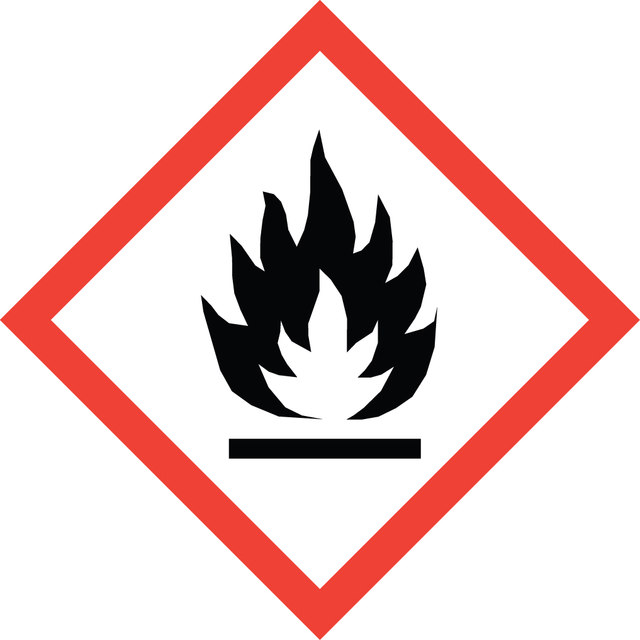
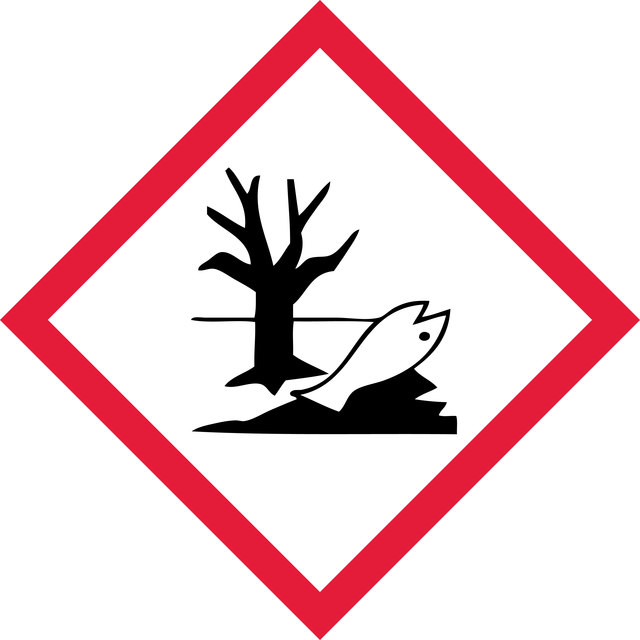
Aquatic Chronic 2 - Asp. Tox. 1 - Flam. Liq. 2 - Repr. 2 - Skin Irrit. 2 - STOT RE 2 - STOT RE 2 Inhalation - STOT SE 3

target_organs

Central nervous system, Nervous system

Storage Class

3 - Flammable liquids

wgk

WGK 3

flash_point_f

-14.8 °F - closed cup

flash_point_c

-26 °C - closed cup

Regulatory Information

新产品
This item has

Choose from one of the most recent versions:

Certificates of Analysis (COA)

Lot/Batch Number

It looks like we've run into a problem, but you can still download Certificates of Analysis from our Documents section.

If you need assistance, please contact Customer Support

Already Own This Product?

Find documentation for the products that you have recently purchased in the Document Library.

Visit the Document Library

Tarek Saba et al.
Chemosphere, 82(9), 1321-1328 (2010-12-31)
Aroclor 1242 contains a high percentage of lightly chlorinated congeners, which makes it susceptible to congener profile alterations as a result of physical-chemical environmental weathering by water washing, evaporation, and volatilization. The analysis of the variability of congener profiles in
He-Jun Ren et al.
Huan jing ke xue= Huanjing kexue, 30(3), 858-863 (2009-05-13)
A polychlorinated biphenyls-degrading bacterium DN2, using biphenyl as sole carbon source and energy source, was isolated from long-term PCBs-contaminated soil. Through morphological observation and sequence analysis of 16S rDNA, the strain was identified as Pseudomonas sp.. By identification of bphA1
Martha Gayosso-Canales et al.
Journal of environmental science and health. Part A, Toxic/hazardous substances & environmental engineering, 46(3), 298-305 (2011-02-11)
A 2(III)(7-3) fractional factorial experimental design was used to establish 16 culture media, with and without PCBs to enhance the activities of laccase (Lac), manganese peroxidase (MnP), and versatile peroxidase (VP) produced by the white rot fungus Pleurotus ostreatus. The
Lars Rehmann et al.
Biotechnology and bioengineering, 99(5), 1273-1280 (2007-10-12)
This article demonstrates the feasibility of a novel process concept for the remediation of PCB contaminated soil. The proposed process consists of PCB extraction from soil using solid polymer beads, followed by biodegradation of the extracted PCBs in a solid-liquid
J Jacob Parnell et al.
Applied and environmental microbiology, 72(10), 6607-6614 (2006-10-06)
The biodegradation of polychlorinated biphenyls (PCBs) relies on the ability of aerobic microorganisms such as Burkholderia xenovorans sp. LB400 to tolerate two potential modes of toxicity presented by PCB degradation: passive toxicity, as hydrophobic PCBs potentially disrupt membrane and protein

Our team of scientists has experience in all areas of research including Life Science, Material Science, Chemical Synthesis, Chromatography, Analytical and many others.

Contact Technical Service