Skip to Content
Merck
CN

48639

1,2-Dichlorobenzene solution

certified reference material, 200 μg/mL in methanol

Sign In to View Organizational & Contract Pricing.

Select a Size


About This Item

Empirical Formula (Hill Notation):
C6H4Cl2
CAS Number:
Molecular Weight:
147.00
UNSPSC Code:
12352200
PubChem Substance ID:
EC Number:
200-659-6
MDL number:
Technical Service
Need help? Our team of experienced scientists is here for you.
Let Us Assist
Technical Service
Need help? Our team of experienced scientists is here for you.
Let Us Assist

InChI key

RFFLAFLAYFXFSW-UHFFFAOYSA-N

InChI

1S/C6H4Cl2/c7-5-3-1-2-4-6(5)8/h1-4H

SMILES string

Clc1ccccc1Cl

grade

certified reference material

CofA

current certificate can be downloaded

packaging

ampule of 1 mL

concentration

200 μg/mL in methanol

technique(s)

HPLC: suitable, gas chromatography (GC): suitable

application(s)

agriculture
environmental

format

single component solution

storage temp.

2-30°C

Looking for similar products? Visit Product Comparison Guide

Application

Refer to the product′s Certificate of Analysis for more information on a suitable instrument technique. Contact Technical Service for further support.

Other Notes

This Certified Reference Material (CRM) is produced and certified in accordance with ISO 17034 and ISO/IEC 17025. All information regarding the use of this CRM can be found on the certificate of analysis.

signalword

Danger

Hazard Classifications

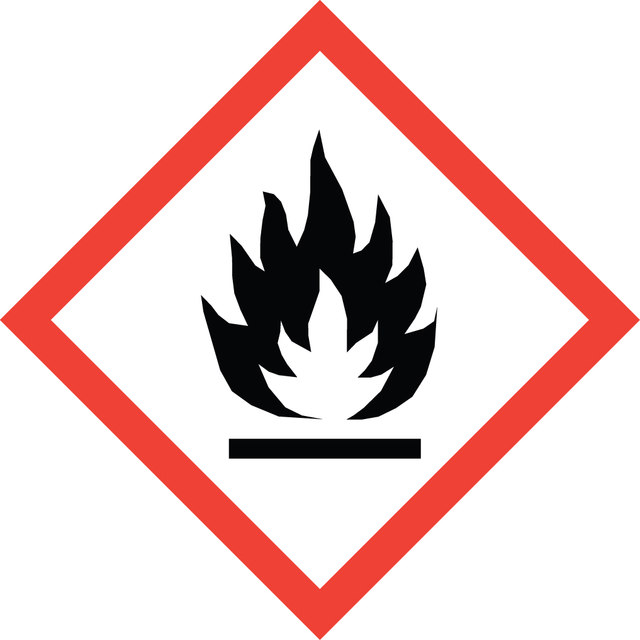
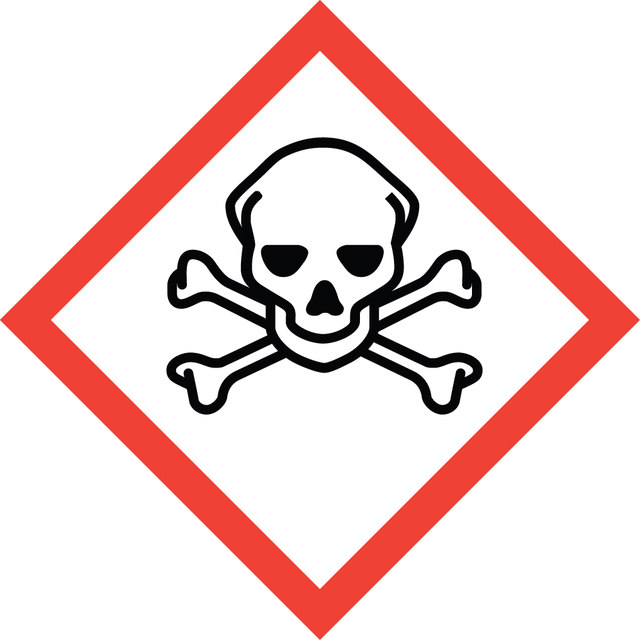
Acute Tox. 3 Dermal - Acute Tox. 3 Inhalation - Acute Tox. 3 Oral - Flam. Liq. 2 - STOT SE 1

target_organs

Eyes

Storage Class

3 - Flammable liquids

wgk

WGK 1

flash_point_f

50.0 °F

flash_point_c

10 °C

Regulatory Information

危险化学品
This item has

Certificates of Analysis (COA)

Search for Certificates of Analysis (COA) by entering the products Lot/Batch Number. Lot and Batch Numbers can be found on a product’s label following the words ‘Lot’ or ‘Batch’.

Already Own This Product?

Find documentation for the products that you have recently purchased in the Document Library.

Visit the Document Library

Shadrack Nganai et al.
Environmental science & technology, 45(3), 1034-1040 (2010-12-23)
Formation of polychorinated dibenzo-p-dioxins (PCDDs) has been demonstrated to occur via surface-mediated reactions of chlorinated phenols. However, polychlorinated dibenzofurans (PCDFs) are observed in much lower yields in laboratory studies than in full-scale combustors where PCDFs are in higher concentrations than
Jun Zhao et al.
The journal of physical chemistry. B, 113(6), 1587-1591 (2009-01-23)
In this work, the phase diagram of poly(3-hexyl thiophene) (P3HT) and [6,6]-phenyl C61-butyric acid methyl ester (PCBM) blends is measured by means of standard and modulated temperature differential scanning calorimetry. Blends were made by solvent-casting from chlorobenzene, as blends cast
Sarah Mahne et al.
American journal of physiology. Heart and circulatory physiology, 303(9), H1135-H1142 (2012-09-04)
Epidemiological studies have consistently linked inhalation of particulate matter (PM) to increased cardiac morbidity and mortality, especially in at risk populations. However, few studies have examined the effect of PM on baseline cardiac function in otherwise healthy individuals. In addition
Bimalendu Adhikari et al.
Chemistry (Weinheim an der Bergstrasse, Germany), 17(41), 11488-11496 (2011-09-29)
The N-terminally pyrene-conjugated oligopeptide, Py-Phe-Phe-Ala-OMe, (Py=pyrene 1-butyryl acyl) forms transparent, stable, supramolecular fluorescent organogels in various organic solvents. One of these organogels was thoroughly studied using various techniques including transmission electron microscopy (TEM), field-emission scanning electron microscopy (FESEM), atomic force
Sungmin Chin et al.
Chemosphere, 75(9), 1206-1209 (2009-03-10)
This study examined the catalytic oxidation of 1,2-dichlorobenzene on V(2)O(5)/TiO(2) nanoparticles. The V(2)O(5)/TiO(2) nanoparticles were synthesized by the thermal decomposition of vanadium oxytripropoxide and titanium tetraisopropoxide. The effects of the synthesis conditions, such as the synthesis temperature and precursor heating

Our team of scientists has experience in all areas of research including Life Science, Material Science, Chemical Synthesis, Chromatography, Analytical and many others.

Contact Technical Service