Skip to Content
Merck
CN

48260-U

4,4′-Dichlorobiphenyl solution

certified reference material

Sign In to View Organizational & Contract Pricing.

Select a Size


About This Item

CAS Number:
UNSPSC Code:
77101502
NACRES:
NA.24
Technical Service
Need help? Our team of experienced scientists is here for you.
Let Us Assist
Technical Service
Need help? Our team of experienced scientists is here for you.
Let Us Assist

InChI

1S/C12H8Cl2/c13-11-5-1-9(2-6-11)10-3-7-12(14)8-4-10/h1-8H

InChI key

YTBRNEUEFCNVHC-UHFFFAOYSA-N

grade

certified reference material, TraceCERT®

agency

EPA 508

feature

standard type surrogate

packaging

ampule of 1 mL

technique(s)

HPLC: suitable, gas chromatography (GC): suitable

application(s)

environmental

format

single component solution

Application

Refer to the product′s Certificate of Analysis for more information on a suitable instrument technique. Contact Technical Service for further support.

Other Notes

This Certified Reference Material (CRM) is produced and certified in accordance with ISO 17034 and ISO/IEC 17025. All information regarding the use of this CRM can be found on the certificate of analysis.

Legal Information

TraceCERT is a registered trademark of Merck KGaA, Darmstadt, Germany

signalword

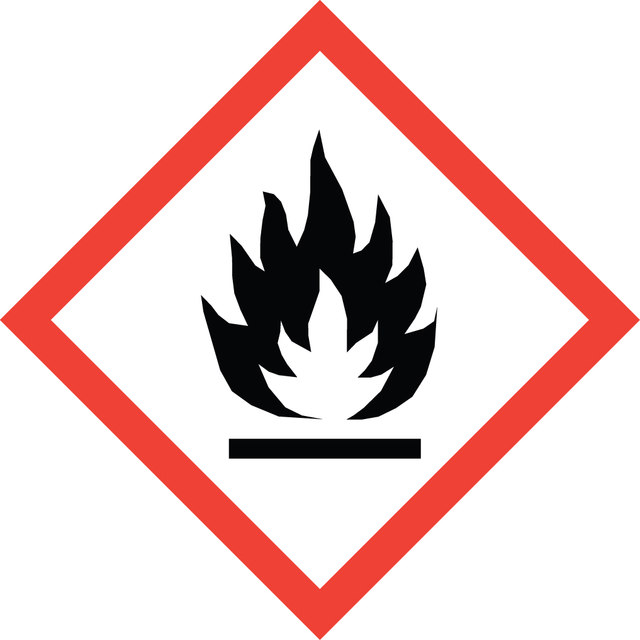
Danger

Hazard Classifications

Aquatic Acute 1 - Aquatic Chronic 1 - Asp. Tox. 1 - Flam. Liq. 2 - Skin Irrit. 2 - STOT RE 2 - STOT SE 3

target_organs

Central nervous system

Storage Class

3 - Flammable liquids

wgk

WGK 2

flash_point_f

10.4 °F - closed cup

flash_point_c

-12 °C - closed cup

Regulatory Information

危险化学品
This item has

Certificates of Analysis (COA)

Search for Certificates of Analysis (COA) by entering the products Lot/Batch Number. Lot and Batch Numbers can be found on a product’s label following the words ‘Lot’ or ‘Batch’.

Already Own This Product?

Find documentation for the products that you have recently purchased in the Document Library.

Visit the Document Library

Accumulation and excretion of isopropylchlorobiphenyls in mouse and fish.
K Sugiura et al.
Bulletin of environmental contamination and toxicology, 26(1), 46-53 (1981-01-01)
Ichiro Kamei et al.
Applied microbiology and biotechnology, 72(3), 566-575 (2006-03-11)
Degradation experiment of model polychlorinated biphenyl (PCB) compound 4,4'-dichlorobiphenyl (4,4'-DCB) and its metabolites by the white-rot fungus Phanerochaete chrysosporium and newly isolated 4,4'-DCB-degrading white-rot fungus strain MZ142 was carried out. Although P. chrysosporium showed higher degradation of 4,4'-DCB in low-nitrogen
W Chu et al.
Water research, 37(10), 2442-2448 (2003-05-03)
The system design based on the photodegradation kinetics of 4,4'-dichlorobiphenyl (4,4'-DCB) in surfactant solution with the aid of solvents (acetone and/or squalane) has been studied. Organic solvents acetone and squalane were added as a photosensitizer and a hydrogen source, respectively
R Mavoungou et al.
The Science of the total environment, 101(3), 263-268 (1991-01-15)
Anaerobic cultures containing 4,4'-dichlorobiphenyl (4,4'CB) were inoculated with various environmental samples. The degradation of the substrate was followed by gas chromatographic analysis. Three of the cultures tested showed an ability to dehalogenate the substrate, as judged by the presence of
Uptake of 4-chlorobiphenyl and 4,4'-dichlorobiphenyl in six species of plant tissue cultures.
K Yamamoto et al.
Bulletin of environmental contamination and toxicology, 28(6), 728-732 (1982-06-01)

Our team of scientists has experience in all areas of research including Life Science, Material Science, Chemical Synthesis, Chromatography, Analytical and many others.

Contact Technical Service