Skip to Content
Merck
CN

SML1581

Moxifloxacin hydrochloride

98.0 to 102.0% (HPLC)

Synonym(s):

12-8039, Avalox, BAY12-8039, 1-Cyclopropyl-6-fluoro-8-methoxy-7-[(4aS,7aS)-octahydropyrrolo[3,4-b]pyridin-6-yl]-4-oxo-1,4-dihydroquinoline-3-carboxylic acid hydrochloride

Sign In to View Organizational & Contract Pricing.

Select a Size


About This Item

Empirical Formula (Hill Notation):
C21H24FN3O4· HCl
CAS Number:
Molecular Weight:
437.89
NACRES:
NA.77
PubChem Substance ID:
UNSPSC Code:
12352200
MDL number:
Beilstein/REAXYS Number:
8377447
Technical Service
Need help? Our team of experienced scientists is here for you.
Let Us Assist
Technical Service
Need help? Our team of experienced scientists is here for you.
Let Us Assist

Product Name

Moxifloxacin hydrochloride, 98-102% (HPLC)

InChI key

IDIIJJHBXUESQI-DFIJPDEKSA-N

SMILES string

Cl.COc1c(N2C[C@@H]3CCCN[C@@H]3C2)c(F)cc4C(=O)C(=CN(C5CC5)c14)C(O)=O

InChI

1S/C21H24FN3O4.ClH/c1-29-20-17-13(19(26)14(21(27)28)9-25(17)12-4-5-12)7-15(22)18(20)24-8-11-3-2-6-23-16(11)10-24;/h7,9,11-12,16,23H,2-6,8,10H2,1H3,(H,27,28);1H/t11-,16+;/m0./s1

assay

98-102% (HPLC)

form

powder

storage condition

desiccated

color

light yellow to yellow

solubility

H2O: slightly soluble

storage temp.

−20°C

Quality Level

Looking for similar products? Visit Product Comparison Guide

Related Categories

Application

Moxifloxacin hydrochloride has been used to study its antibacterial action against bacteria that have grown to high density.

Biochem/physiol Actions

Moxifloxacin has proved to be effective in treating sinusitis, community-acquired respiratory tract infection, pneumonia and acute exacerbations of chronic bronchitis. It has improved anti-gram positive activity compared to other fluoroquinolone such as ciprofloxacin and ofloxacin. Moxifloxacin is useful in treating skin infections that is of bacterial origin. It is known to have proper penetration into peripheral tissues and inflammatory fluids. Fluoroquinolones stabilize DNA strand breaks created by DNA gyrase and topoisomerase IV by binding to the enzyme-DNA complex. Compared to mammalian DNA gyrase, moxifloxacin has 100 times higher affinity for bacterial DNA gyrase. Moxifloxacin is an antibiotic and works against both Gram-positive and Gram-negative bacteria. Moxifloxacin is being investigated for the treatment of multidrug-resistant tuberculosis.

General description

Moxifloxacin is a fourth-generation synthetic fluoroquinolone antibacterial. Moxifloxacin is a 8-methoxy quinolone and differs from other quinolones.

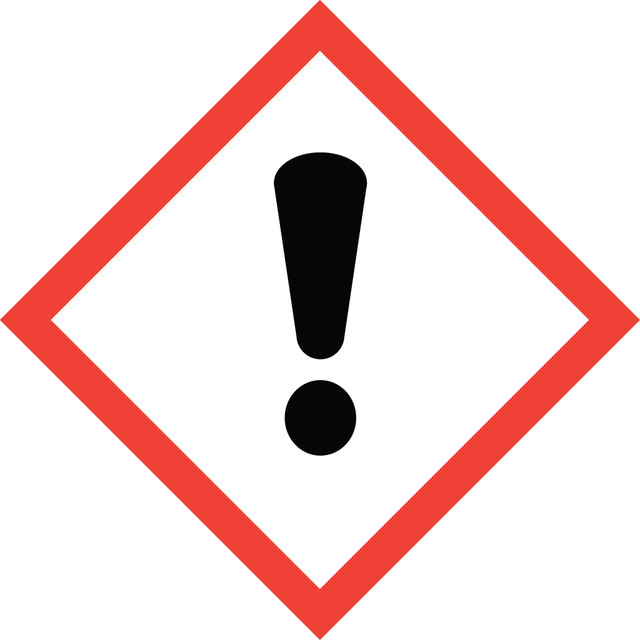
pictograms

Exclamation mark

signalword

Warning

Hazard Classifications

Acute Tox. 4 Oral - Aquatic Chronic 3 - Eye Irrit. 2

Storage Class

11 - Combustible Solids

wgk

WGK 2

flash_point_f

Not applicable

flash_point_c

Not applicable

Regulatory Information

涉药品监管产品
This item has

Choose from one of the most recent versions:

Certificates of Analysis (COA)

Lot/Batch Number

Don't see the Right Version?

If you require a particular version, you can look up a specific certificate by the Lot or Batch number.

Already Own This Product?

Find documentation for the products that you have recently purchased in the Document Library.

Visit the Document Library

An HPLC Method for the Determination of Moxifloxacin in Breast Milk by Fluorimetric Detection with Precolumn Derivatization.
Tekkeli SEK
Acta Chromatographica , 10-10 (2016)
Understanding and sensitizing density-dependent persistence to quinolone antibiotics.
Gutierrez A, et al.
Molecular Cell, 68(6), 1147-1154 (2017)
Ana Topete et al.
Journal of controlled release : official journal of the Controlled Release Society, 326, 245-255 (2020-07-20)
Posterior capsule opacification (PCO) still remains the most frequent long term complication after cataract surgery, while endophthalmitis is rare but severe and should be prevented at all cost. Intraocular lenses (IOLs) with different designs (eg. edge and body-haptics angle) and
Edward D Chan et al.
American journal of respiratory and critical care medicine, 169(10), 1103-1109 (2004-01-27)
Multidrug-resistant tuberculosis, a disease caused by Mycobacterium tuberculosis strains that are resistant at least to rifampin and isoniazid, entails extended treatment, expensive and toxic regimens, and higher rates of treatment failure and death. We retrospectively analyzed the outcomes in 205
Stephen H Gillespie
European respiratory review : an official journal of the European Respiratory Society, 25(139), 19-28 (2016-03-02)
Tuberculosis (TB) remains a global threat with more than 9 million new infections. Treatment remains difficult and there has been no change in the duration of the standard regimen since the early 1980s. Moreover, many patients are unable to tolerate

Our team of scientists has experience in all areas of research including Life Science, Material Science, Chemical Synthesis, Chromatography, Analytical and many others.

Contact Technical Service