Sign In to View Organizational & Contract Pricing
Select a Size
About This Item
Empirical Formula (Hill Notation):
C6H10S3
CAS Number:
Molecular Weight:
178.34
EC Number:
MDL number:
UNSPSC Code:
12352200
PubChem Substance ID:
NACRES:
NA.25
biological source
Allium sativum L.
Quality Level
Assay
≥97% (HPLC)
form
liquid
application(s)
metabolomics
vitamins, nutraceuticals, and natural products
storage temp.
−20°C
SMILES string
C=CCSSSCC=C
InChI
1S/C6H10S3/c1-3-5-7-9-8-6-4-2/h3-4H,1-2,5-6H2
InChI key
UBAXRAHSPKWNCX-UHFFFAOYSA-N
Looking for similar products? Visit Product Comparison Guide
Related Categories
General description
Diallyl trisulfide (DATS) is one of the stable naturally occurring bioactive polysulfide compounds found in Allium vegetables, especially in garlic.
Application
Diallyl trisulfide (DATS) has been used as an exogenous hydrogen sulfide (H2S)donor to study the effects on proliferation, apoptosis, and autophagy of human urothelial carcinoma (UC) cells in vitro.
Biochem/physiol Actions
Diallyl trisulfide elicits cardioprotective and anti-metabolic syndrome (MetS) effects against ex vivo induced myocardial ischemia/reperfusion (I/R) injury in MetS rats (male Wistar albino). It is a potent anti-cancer agent and acts by modulating different cancer-related pathways, inducing cell cycle arrest, apoptosis, metastasis, and angiogenesis in in vitro studies. DATS is also an effective therapeutic agent against multidrug resistance in triple-negative breast cancer (TNBC). DATS and its nanoemulsions display high antifungal activity against wood-rotting fungi such as T. hirsuta and L. sulphureus. It also provides protection against brain damage induced by ischemia/reperfusion (I/R) by activating nuclear factor erythroid 2-related factor 2 (Nrf2) in rat brains.
Signal Word
Danger
Hazard Statements
Precautionary Statements
Hazard Classifications
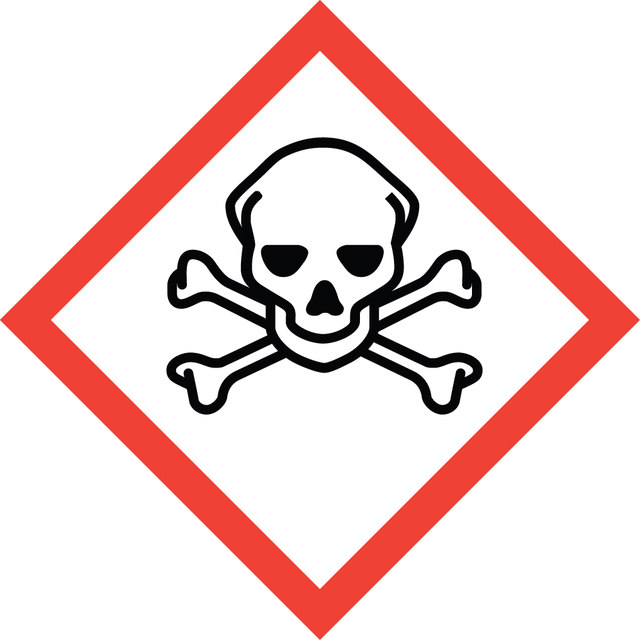
Acute Tox. 3 Oral
Storage Class Code
6.1C - Combustible acute toxic Cat.3 / toxic compounds or compounds which causing chronic effects
WGK
WGK 3
Flash Point(F)
Not applicable
Flash Point(C)
Not applicable
Choose from one of the most recent versions:
Already Own This Product?
Find documentation for the products that you have recently purchased in the Document Library.
Carlos A Silva-Islas et al.
Antioxidants (Basel, Switzerland), 8(9) (2019-09-22)
Stroke is a public health problem due to its high mortality and disability rates; despite these, the pharmacological treatments are limited. Oxidative stress plays an important role in cerebral damage in stroke and the activation of the nuclear factor erythroid
Elisabetta Panza et al.
Biomedicine & pharmacotherapy = Biomedecine & pharmacotherapie, 151, 113137-113137 (2022-05-24)
The role of H2S in urothelial carcinoma (UC) is still unclear. Here we have evaluated the expression of H2S producing enzymes as well as the effect of endogenous and exogenous H2S on human bladder UC cells. In human UC cells
RamaRao Malla et al.
Journal of pharmaceutical analysis, 12(2), 221-231 (2022-05-19)
Breast cancer is one of the leading causes of cancer-related deaths in women worldwide. It is a cancer that originates from the mammary ducts and involves mutations in multiple genes. Recently, the treatment of breast cancer has become increasingly challenging
Diallyl Trisulfide, the Antifungal Component of Garlic Essential Oil and the Bioactivity of Its Nanoemulsions Formed by Spontaneous Emulsification.
Gong, et al.
Molecules (Basel), 26 (2022)
Garlic Derived Diallyl Trisulfide in Experimental Metabolic Syndrome: Metabolic Effects and Cardioprotective Role.
Jeremic, et al.
International Journal of Molecular Sciences, 21 (2021)
Our team of scientists has experience in all areas of research including Life Science, Material Science, Chemical Synthesis, Chromatography, Analytical and many others.
Contact Technical Service