Skip to Content
Merck
CN

P8556

Pentachloronitrobenzene

suitable for plant cell culture, BioReagent, ≥94% (GC), powder

Synonym(s):

PCNB, Quintozene

Sign In to View Organizational & Contract Pricing.

Select a Size


About This Item

Empirical Formula (Hill Notation):
C6Cl5NO2
CAS Number:
Molecular Weight:
295.33
UNSPSC Code:
10171502
NACRES:
NA.72
PubChem Substance ID:
EC Number:
201-435-0
Beilstein/REAXYS Number:
1914324
MDL number:
Technical Service
Need help? Our team of experienced scientists is here for you.
Let Us Assist
Technical Service
Need help? Our team of experienced scientists is here for you.
Let Us Assist

Product Name

Pentachloronitrobenzene, suitable for plant cell culture, BioReagent, ≥94% (GC), powder

InChI key

LKPLKUMXSAEKID-UHFFFAOYSA-N

InChI

1S/C6Cl5NO2/c7-1-2(8)4(10)6(12(13)14)5(11)3(1)9

SMILES string

[O-][N+](=O)c1c(Cl)c(Cl)c(Cl)c(Cl)c1Cl

product line

BioReagent

assay

≥94% (GC)

form

crystalline powder
powder

technique(s)

cell culture | plant: suitable

mp

140-143 °C (lit.)

solubility

toluene: 50 mg/mL, clear, faintly to slightly yellow

density

1.718 g/cm3 at 25 °C

antibiotic activity spectrum

fungi

application(s)

agriculture

mode of action

DNA synthesis | interferes

Looking for similar products? Visit Product Comparison Guide

Application

Pentachloronitrobenzene (PCNB) is used as a fungicide to suppress the growth of fungi in selective culture media such as Nash and Snyder medium (NS).

Other Notes

Keep container tightly closed in a dry and well-ventilated place.Keep in a dry place.

pictograms

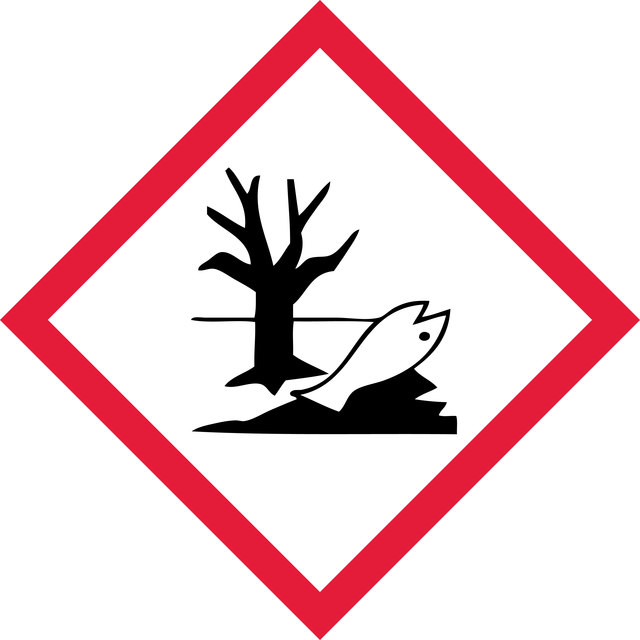
Exclamation markEnvironment

signalword

Warning

Hazard Classifications

Acute Tox. 4 Oral - Aquatic Acute 1 - Aquatic Chronic 1 - Skin Sens. 1

Storage Class

11 - Combustible Solids

wgk

WGK 2

ppe

dust mask type N95 (US), Eyeshields, Faceshields, Gloves

Regulatory Information

农药列管产品
危险化学品
This item has

Choose from one of the most recent versions:

Certificates of Analysis (COA)

Lot/Batch Number

Don't see the Right Version?

If you require a particular version, you can look up a specific certificate by the Lot or Batch number.

Already Own This Product?

Find documentation for the products that you have recently purchased in the Document Library.

Visit the Document Library

Theodore P Klupinski et al.
Environmental science & technology, 38(16), 4353-4360 (2004-09-24)
Pentachloronitrobenzene is a fungicide that is degraded in anoxic soils and sediments through unknown processes that are often thought to be biologically mediated. The present research describes the kinetics for the abiotic reduction of this compound in aqueous Fe(II)/goethite systems
Ting Xu et al.
Journal of agricultural and food chemistry, 55(10), 3764-3770 (2007-04-26)
A competitive enzyme-linked immunosorbent assay (ELISA) for pentachloronitrobenzene (PCNB), a fungicide and chemical intermediate, was developed using a polyclonal antiserum produced against a hapten-protein conjugate of pentachlorophenoxypropionic acid-bovine serum albumin (BSA). An indirect competitive ELISA of PCNB showed an IC50
Eva Holt et al.
Chemosphere, 88(3), 364-370 (2012-04-21)
Chlorinated pesticides can contain impurities of dibenzo-p-dioxins and dibenzofurans (PCDD/Fs), and their precursors, as a result of various manufacturing processes and conditions. As precursor formation of PCDD/Fs can also be mediated by ultraviolet light (UV), this study investigated whether PCDD/Fs
J Alexandra Hakala et al.
Environmental science & technology, 41(21), 7337-7342 (2007-11-30)
Nitroaromatic pesticides (NAPs) are hydrophobic contaminants that can accumulate in sediments by the deposition of suspended solids from surface waters. Fe(II) and dissolved organic matter (DOM), present in suboxic and anoxic zones of freshwater sediments, can transform NAPs in natural
J-M Durgnat et al.
Food additives and contaminants, 22(12), 1224-1230 (2005-12-17)
Ginseng extracts are available as ingredients for improving energy and vitality and can be used in functional foods and as flavouring ingredients. A survey was been performed to determine the content of pesticides and toxic metals in ginseng extracts. Forty-seven

Articles

Prevent fungal, yeast, and mold contamination in cell cultures. Discover the best antifungal agent for your cultures with the extensive Sigma® antifungal collection.

Our team of scientists has experience in all areas of research including Life Science, Material Science, Chemical Synthesis, Chromatography, Analytical and many others.

Contact Technical Service