
Skip to Content
Merck
CN

P7262

Plumbagin from Plumbago indica

Synonym(s):

5-Hydroxy-2-methyl-1,4-naphthoquinone

Sign In to View Organizational & Contract Pricing.

Select a Size


About This Item

Empirical Formula (Hill Notation):
C11H8O3
CAS Number:
Molecular Weight:
188.18
NACRES:
NA.79
PubChem Substance ID:
UNSPSC Code:
12352205
EC Number:
207-569-6
MDL number:
Technical Service
Need help? Our team of experienced scientists is here for you.
Let Us Assist
Technical Service
Need help? Our team of experienced scientists is here for you.
Let Us Assist

InChI key

VCMMXZQDRFWYSE-UHFFFAOYSA-N

InChI

1S/C11H8O3/c1-6-5-9(13)10-7(11(6)14)3-2-4-8(10)12/h2-5,12H,1H3

SMILES string

CC1=CC(C2=C(C1=O)C=CC=C2O)=O

biological source

Plumbago indica

form

powder

color

faint orange to dark orange

mp

76-78 °C (lit.)

storage temp.

−20°C

Quality Level

Looking for similar products? Visit Product Comparison Guide

Application

Plumbagin from Plumbago indica has been used:
  • as a reactive oxygen species agent (ROS) to induce cytotoxicity in mouse embryonic fibroblasts
  • as an oxidative stress inducer to generate superoxide anion in Saccharomyces cerevisiae
  • as a reference standard in thin layer chromatography and in spectrophotometric analysis for quantification of plumbagin in Plumbago auriculate samples

Biochem/physiol Actions
Exhibits cytotoxicity in rodent models of carcinogenesis and carcinoma; has antifungal, antiviral, and antibacterial action.
Plumbagin exhibits various pharmacological activities including antimicrobial, anticancer, anti-atherosclerotic, antidiabetic, anti-inflammatory, hypolipidemic, and neuroprotective activities. It inhibits the signal transducer and activator of transcription 3 (STAT3) signaling and halts the proliferation of esophageal squamous cell carcinoma (ESCC). Plumbagin elicits protective antioxidative functionality in 4-nitroquinoline-N-oxide (NQNO) induced stress in lymphoma. Plumbagin in a nanoemulsion formulation has antiproliferative effect towards prostate cancer.

General description

Plumbagin is a bioactive naphthoquinone present majorly in Plumbago indica L. It is a quinoid and is also derived from the roots of Plumbago zeylanica roots.

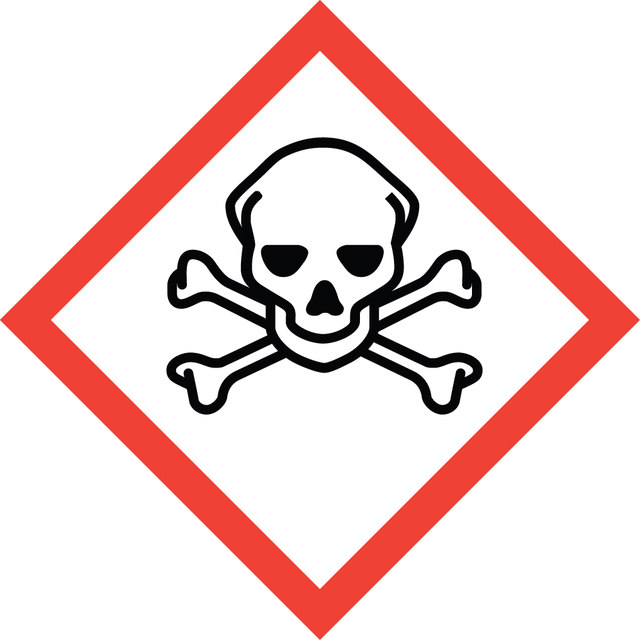
pictograms

Skull and crossbones

signalword

Danger

Hazard Classifications

Acute Tox. 3 Oral - Eye Irrit. 2 - Skin Irrit. 2 - STOT SE 3

target_organs

Respiratory system

Storage Class

6.1C - Combustible acute toxic Cat.3 / toxic compounds or compounds which causing chronic effects

wgk

WGK 1

flash_point_f

Not applicable

flash_point_c

Not applicable

ppe

Eyeshields, Faceshields, Gloves, type P3 (EN 143) respirator cartridges


Choose from one of the most recent versions:

Certificates of Analysis (COA)

Lot/Batch Number

Don't see the Right Version?

If you require a particular version, you can look up a specific certificate by the Lot or Batch number.

Already Own This Product?

Find documentation for the products that you have recently purchased in the Document Library.

Visit the Document Library

Xiao-Juan Chen et al.
Saudi journal of biological sciences, 25(6), 1033-1039 (2018-09-04)
Cerebral ischemic damage and infarction are well documented in stroke, which is presenting a foremost health concern globally with very high mortality and morbidity rates. Mechanisms that are associated with excitotoxicity, inflammation and oxidative stress are found to be critically
Increased production of plumbagin in Plumbago indica root cultures by gamma ray irradiation
Jaisi A, et al.
Pharmaceutical biology, 51(8), 1047-1051 (2013)
Yousef Alharbi et al.
Scientific reports, 9(1), 11471-11471 (2019-08-09)
The Na+/K+-ATPase (NKA) complex is the master regulator of membrane potential and a target for anti-cancer therapies. Here, we investigate the effect of drug-induced oxidative stress on NKA activity. The natural product, plumbagin increases oxygen radicals through inhibition of oxidative
Audrey Courboulin et al.
The European respiratory journal, 40(3), 618-629 (2012-04-13)
Like cancer, pulmonary arterial hypertension (PAH) is characterised by a pro-proliferative and anti-apoptotic phenotype. In PAH, pulmonary artery smooth muscle cell (PASMC) proliferation is enhanced and apoptosis suppressed. The sustainability of this phenotype requires the activation of pro-survival transcription factors
Kanjoormana Aryan Manu et al.
Molecular cancer, 10, 107-107 (2011-09-02)
Increasing evidence indicates that the interaction between the CXC chemokine receptor-4 (CXCR4) and its ligand CXCL12 is critical in the process of metastasis that accounts for more than 90% of cancer-related deaths. Thus, novel agents that can downregulate the CXCR4/CXCL12

Our team of scientists has experience in all areas of research including Life Science, Material Science, Chemical Synthesis, Chromatography, Analytical and many others.

Contact Technical Service