Skip to Content
Merck
CN

M6045

2-Methyl-4-isothiazolin-3-one hydrochloride

≥99%

Synonym(s):

MIT hydrochloride, Methylisothiazolinone hydrochloride

Sign In to View Organizational & Contract Pricing.

Select a Size


About This Item

Empirical Formula (Hill Notation):
C4H5NOS · HCl
CAS Number:
Molecular Weight:
151.61
UNSPSC Code:
51102829
NACRES:
NA.76
PubChem Substance ID:
EC Number:
247-499-3
Beilstein/REAXYS Number:
3993054
MDL number:
Technical Service
Need help? Our team of experienced scientists is here for you.
Let Us Assist
Technical Service
Need help? Our team of experienced scientists is here for you.
Let Us Assist

Product Name

2-Methyl-4-isothiazolin-3-one hydrochloride, ≥99%

InChI key

SJXPQSRCFCPWQQ-UHFFFAOYSA-N

InChI

1S/C4H5NOS.ClH/c1-5-4(6)2-3-7-5;/h2-3H,1H3;1H

SMILES string

Cl[H].CN1SC=CC1=O

Quality Level

biological source

synthetic

assay

≥99%

form

powder

concentration

≤ 100%

technique(s)

cell culture | mammalian: suitable

color

white to beige

mp

165—170 °C ((329 - 338 °F) at ca.990.4 hPa)

solubility

water: soluble 10.0 — 10.4 mg/mL, clear, colorless to faint yellow or tan

suitability

suitable for component for culture media

application(s)

microbiology

mode of action

protein synthesis | interferes

storage temp.

2-8°C

Looking for similar products? Visit Product Comparison Guide

Application

Methylisothiazolinone (MIT HCl) has been used:


  • as a cytotoxic substance to investigate its effect on bronchial epithelial cells (BEAS-2B cells) and its role in apoptotic cell death
  • to study the effects of tyrosine phosphorylation on focal adhesion kinase (FAK) activity in the development of neural axons and dendrites

Biochem/physiol Actions
2-Methyl-4-isothiazolin-3-one hydrochloride (MIT HCl) is a skin sensitizer known to cause contact dermatitis and allergy. It is extensively used in the cosmetic industry as a preservative. MIT HCl is a neurotoxin and its prolonged exposure may lead to neuronal death and inhibition of neurite outgrowth.

General description

2-Methyl-4-isothiazolin-3-one hydrochloride (MIT HCl) is a derivative of the synthetic isothiazolinone.

signalword

Danger

Hazard Classifications

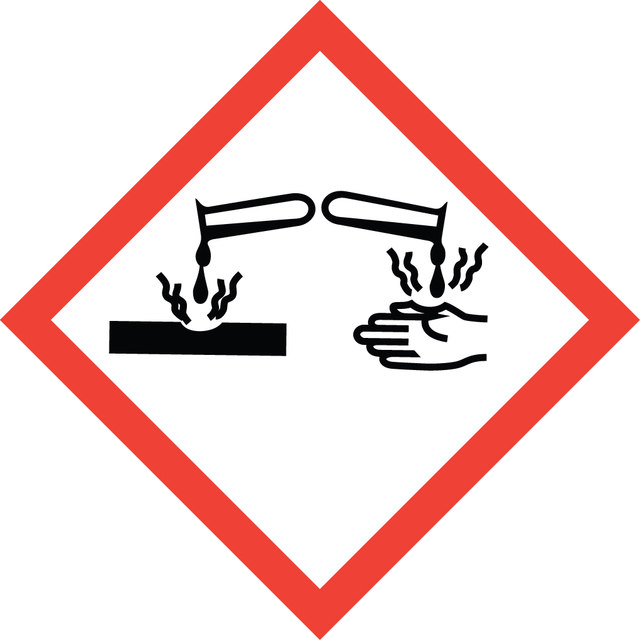
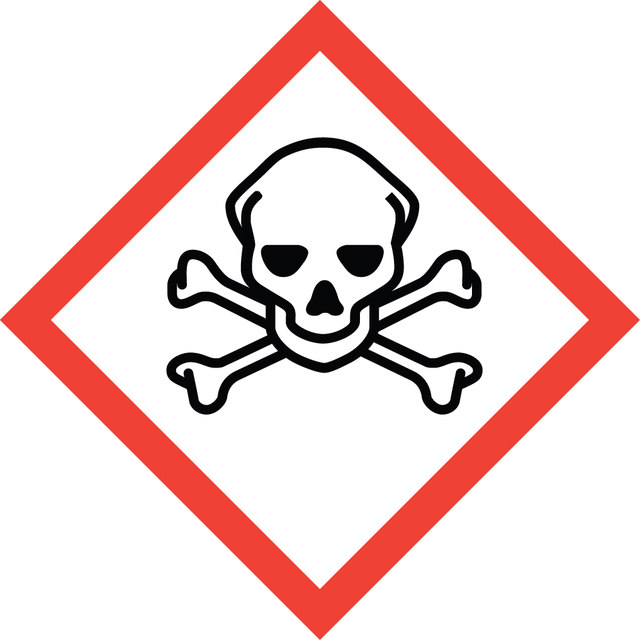
Acute Tox. 3 Oral - Aquatic Acute 1 - Aquatic Chronic 1 - Eye Dam. 1 - Skin Corr. 1A - Skin Sens. 1

supp_hazards

Storage Class

6.1A - Combustible acute toxic Cat. 1 and 2 / very toxic hazardous materials

wgk

WGK 3

flash_point_f

Not applicable

flash_point_c

Not applicable

ppe

Eyeshields, Faceshields, Gloves, type P3 (EN 143) respirator cartridges


Choose from one of the most recent versions:

Certificates of Analysis (COA)

Lot/Batch Number

Don't see the Right Version?

If you require a particular version, you can look up a specific certificate by the Lot or Batch number.

Already Own This Product?

Find documentation for the products that you have recently purchased in the Document Library.

Visit the Document Library

Zhenzhen Wang et al.
Biomaterials, 113, 145-157 (2016-11-07)
As common reactive oxygen species, H2O2 is widely used for bacterial inactivation and wound disinfection. However, the concentrations used are always higher than physiological levels, which frequently result in potential toxicity to healthy tissue and even delay wound healing. Here
Siamak Javanbakht et al.
Materials science & engineering. C, Materials for biological applications, 96, 302-309 (2019-01-05)
In compression with the intravenous administration, oral delivery most commonly used due to the non-invasive nature and the fact that avoids patient pain and discomfort. By consideration this aim, ibuprofen as a model drug was loaded into two-dimensional tunnels and
Erol Capkin et al.
Chemosphere, 182, 720-729 (2017-05-23)
Triclosan (TRC), chloroxylenol (PCMX) and methylisothiazolinone (MIT) have been commonly used as an antimicrobial in soaps while borax (BRX) is used in household cleaning. After using these chemicals, they are washed down drains and getting into the aquatic ecosystem in
Shen Du et al.
The Journal of neuroscience : the official journal of the Society for Neuroscience, 22(17), 7408-7416 (2002-08-28)
Neurodegenerative disorders in humans may be triggered or exacerbated by exposure to occupational or environmental agents. Here, we show that a brief exposure to methylisothiazolinone, a widely used industrial and household biocide, is highly toxic to cultured neurons but not
Zhengxi Wei et al.
Toxicology letters, 338, 67-77 (2020-12-09)
Chemical-peptide conjugation is the molecular initiating event in skin sensitization. The OECD test guideline uses a high-performance liquid chromatography/ultraviolet (HPLC/UV) detection method to quantify chemical-peptide conjugation in a direct peptide reactivity assay (DPRA), which measures the depletion of two synthetic

Our team of scientists has experience in all areas of research including Life Science, Material Science, Chemical Synthesis, Chromatography, Analytical and many others.

Contact Technical Service