Skip to Content
Merck
CN

F1428

Fenvalerate

≥97%

Synonym(s):

α-Cyano-3-phenoxybenzyl α-(4-chlorophenyl)­iso­valerate

Sign In to View Organizational & Contract Pricing.

Select a Size


About This Item

Empirical Formula (Hill Notation):
C25H22ClNO3
CAS Number:
Molecular Weight:
419.90
UNSPSC Code:
12352200
NACRES:
NA.77
PubChem Substance ID:
MDL number:
Beilstein/REAXYS Number:
2025982
Technical Service
Need help? Our team of experienced scientists is here for you.
Let Us Assist
Technical Service
Need help? Our team of experienced scientists is here for you.
Let Us Assist

InChI

1S/C25H22ClNO3/c1-17(2)24(18-11-13-20(26)14-12-18)25(28)30-23(16-27)19-7-6-10-22(15-19)29-21-8-4-3-5-9-21/h3-15,17,23-24H,1-2H3

SMILES string

CC(C)C(C(=O)OC(C#N)c1cccc(Oc2ccccc2)c1)c3ccc(Cl)cc3

InChI key

NYPJDWWKZLNGGM-UHFFFAOYSA-N

assay

≥97%

storage temp.

−20°C

Quality Level

Looking for similar products? Visit Product Comparison Guide

General description

Fenvalerate an ester molecule, exists in four stereoisomers with two chiral centers.

Application

Fenvalerate has been used to study the effect of Fen exposure on reproductive functions.

Biochem/physiol Actions

Fenvalerate has good insecticidal potential and is less toxic to animals. It might cause endocrine disruption and reproductive dysfunction in humans. Metabolism of fenvalerate includes oxidation, ester cleavage and conjugation reaction. It is stable at pH 5 and 7, while it gets hydrolyzed at pH 9. In rat models it is found to hinder the action of mitochondrial enzymes.
Fenvalerate is a type II semi-synthetic pyrethrin, which acts as a potent inhibitor of calcineurin (protein phosphatase 2B). This inhibitory action results in cellular hyperexcitability by causing non-mutated calcium channels to remain open for an extended period of time allowing an abundance of Ca2+ to enter the cell.
Type II pyrethroid. Potent inhibitor of calcineurin (protein phosphatase 2B).

Preparation Note

Fenvalerate has been reported to be soluble in DMSO, ethanol, and acetone.

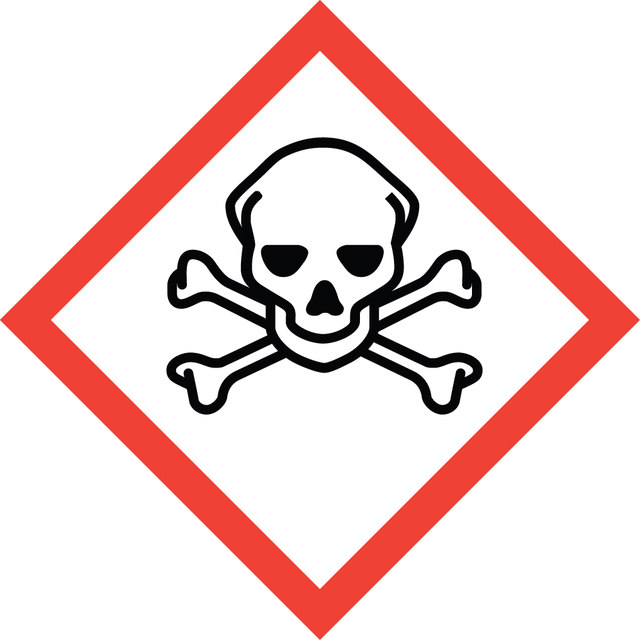
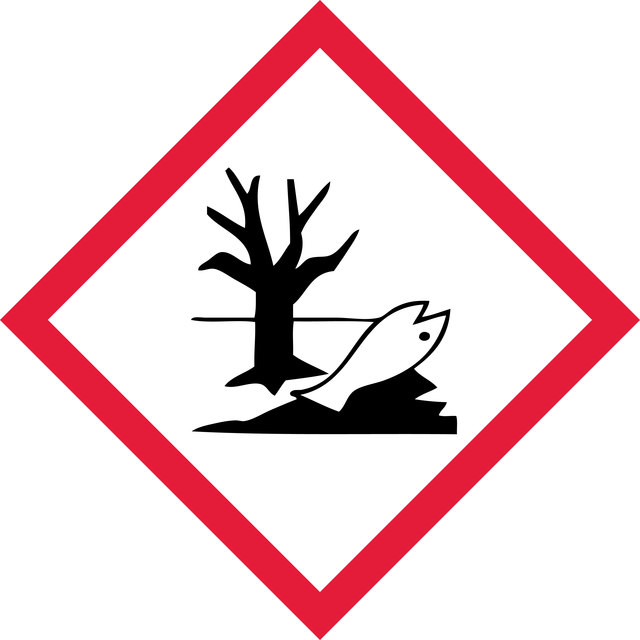
pictograms

Skull and crossbonesEnvironment

signalword

Danger

Hazard Classifications

Acute Tox. 3 Oral - Aquatic Acute 1 - Aquatic Chronic 1 - Eye Irrit. 2 - Skin Irrit. 2 - STOT SE 3

target_organs

Respiratory system

Storage Class

6.1C - Combustible acute toxic Cat.3 / toxic compounds or compounds which causing chronic effects

wgk

WGK 3

flash_point_f

Not applicable

flash_point_c

Not applicable

Regulatory Information

新产品
This item has

Choose from one of the most recent versions:

Certificates of Analysis (COA)

Lot/Batch Number

Don't see the Right Version?

If you require a particular version, you can look up a specific certificate by the Lot or Batch number.

Already Own This Product?

Find documentation for the products that you have recently purchased in the Document Library.

Visit the Document Library

Paternal fenvalerate exposure influences reproductive functions in the offspring
Xia D, et al.
Reproductive Sciences, 20(11), 1308-1315 (2013)
Metabolic Pathways of Agrochemicals: Insecticides and fungicides, 659-659 (1998)
Fenvalerate-induced oxidative damage in rat tissues and its attenuation by dietary sesame oil
Prasanthi K, et al.
Food And Chemical Toxicology, 43(2), 299-306 (2005)
Terrence L Adelsbach et al.
Reviews of environmental contamination and toxicology, 176, 137-154 (2002-11-22)
Fenvalerate is listed under Class IV of the U.S. Food and Drug Administration (USFDA) Surveillance Index Classification, indicating a low hazard potential to humans from both exposure and toxicological standpoints; thus, minimal monitoring is required (Reed 1981; Eisler 1992). To
Saskia Knillmann et al.
Global change biology, 19(5), 1598-1609 (2013-03-19)
Considerable research efforts have been made to predict the influences of climate change on species composition in biological communities. However, little is known about how changing environmental conditions and anthropogenic pollution can affect aquatic communities in combination. We investigated the

Our team of scientists has experience in all areas of research including Life Science, Material Science, Chemical Synthesis, Chromatography, Analytical and many others.

Contact Technical Service