Skip to Content
Merck
CN

A3007

N-Acetylmuramic acid

≥98% (TLC)

Synonym(s):

(R)-2-(Acetylamino)-3-O-(1-carboxyethyl)-2-deoxy-D-glucose, 2-Acetamido-2-deoxy-3-O-(D-1-carboxyethyl)-D-glucopyranose, MurNAc, NAMA

Sign In to View Organizational & Contract Pricing.

Select a Size


About This Item

Empirical Formula (Hill Notation):
C11H19NO8
CAS Number:
Molecular Weight:
293.27
UNSPSC Code:
12352201
NACRES:
NA.25
PubChem Substance ID:
MDL number:
Beilstein/REAXYS Number:
1994245
Technical Service
Need help? Our team of experienced scientists is here for you.
Let Us Assist
Technical Service
Need help? Our team of experienced scientists is here for you.
Let Us Assist

Product Name

N-Acetylmuramic acid, ≥98% (TLC)

InChI

1S/C11H19NO8/c1-5(11(18)19)20-10(9(17)8(16)4-14)7(3-13)12-6(2)15/h3,5,7-10,14,16-17H,4H2,1-2H3,(H,12,15)(H,18,19)/t5-,7+,8-,9-,10-/m1/s1

SMILES string

CC(O[C@H]1[C@H](O)[C@@H](CO)OC(O)[C@@H]1NC(C)=O)C(O)=O

InChI key

SOARVSUSWULNDI-TVVSKHENSA-N

biological source

synthetic

assay

≥98% (TLC)

form

powder

technique(s)

thin layer chromatography (TLC): suitable

impurities

≤1 mol/mol methanol

color

white

mp

125  °C ((257 °F ))

solubility

water: 50 mg/mL, clear, colorless

storage temp.

2-8°C

Quality Level

Looking for similar products? Visit Product Comparison Guide

Application

N-Acetylmuramic acid (NAMA), a lactic acid ether derivative of N-acetylglucosamine found in bacterial cell wall proteoglycans, is used as a substrate to identify, differentiate and characterize N-acetylmuramic acid/N-acetylglucosamine kinase(s) and N-acetylmuramic acid etherase(s).

Other Notes

To gain a comprehensive understanding of our extensive range of Monosaccharides for your research, we encourage you to visit our Carbohydrates Category page.

Packaging

Bottomless glass bottle. Contents are inside inserted fused cone.

pictograms

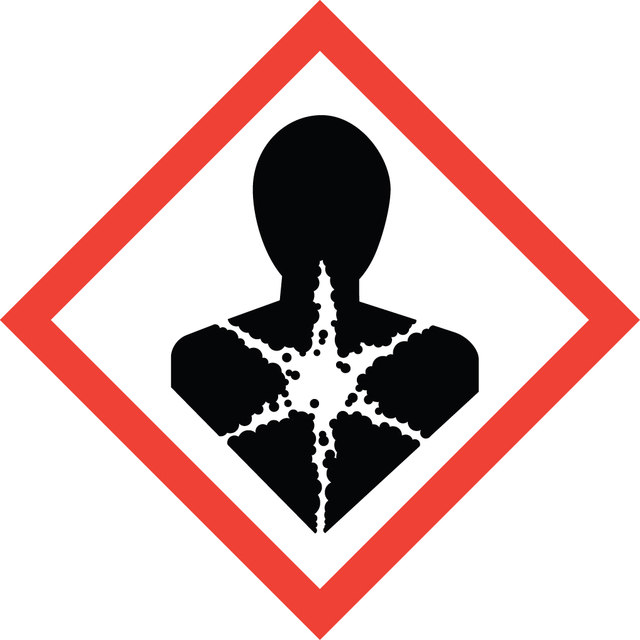
Health hazardExclamation mark

signalword

Warning

hcodes

Hazard Classifications

Acute Tox. 4 Oral - STOT SE 2

target_organs

Eyes,Central nervous system

Storage Class

6.1C - Combustible acute toxic Cat.3 / toxic compounds or compounds which causing chronic effects

wgk

WGK 3

flash_point_f

Not applicable

flash_point_c

Not applicable

ppe

Eyeshields, Faceshields, Gloves, type P2 (EN 143) respirator cartridges


Choose from one of the most recent versions:

Certificates of Analysis (COA)

Lot/Batch Number

Don't see the Right Version?

If you require a particular version, you can look up a specific certificate by the Lot or Batch number.

Already Own This Product?

Find documentation for the products that you have recently purchased in the Document Library.

Visit the Document Library

Kanda Leelanarathiwat et al.
The International journal of oral & maxillofacial implants, 35(2), 265-274 (2020-03-07)
Peri-implantitis is an important biologic complication that can lead to implant failure. Proper treatment should effectively kill bacteria, not harm the implant surface, and promote regeneration. Recently, photocatalytic coating without antibiotics or external agents was proposed to be an alternative
Wentao Jiang et al.
Applied and environmental microbiology, 86(14) (2020-05-18)
Due to the complex microecology and microenvironment of dental plaque, novel caries prevention strategies require modulating the microbial communities ecologically and reducing the cariogenic properties effectively. Antimicrobial peptide GH12 reduced the lactic acid production and exopolysaccharide (EPS) synthesis of a
Markus B Tomek et al.
Glycobiology, 27(6), 555-567 (2017-03-24)
The occurrence of nonulosonic acids in bacteria is wide-spread and linked to pathogenicity. However, the knowledge of cognate nonulosonic acid transferases is scarce. In the periodontopathogen Tannerella forsythia, several proposed virulence factors carry strain-specifically either a pseudaminic or a legionaminic
Marta Kamińska et al.
Journal of periodontology, 90(6), 637-646 (2018-12-07)
Statins effectively reduce risk of cardiovascular-related morbidity and mortality in patients with hyperlipidemia, hypertension, or type 2 diabetes. In addition to lowering cholesterol levels, several studies have attributed statins with immunomodulatory and bactericidal properties. Therefore, the aim of this study
Markus B Tomek et al.
Frontiers in microbiology, 9, 2008-2008 (2018-09-14)
The cell surface of the oral pathogen Tannerella forsythia is heavily glycosylated with a unique, complex decasaccharide that is O-glycosidically linked to the bacterium's abundant surface (S-) layer, as well as other proteins. The S-layer glycoproteins are virulence factors of

Our team of scientists has experience in all areas of research including Life Science, Material Science, Chemical Synthesis, Chromatography, Analytical and many others.

Contact Technical Service