
229075

1,8-Dihydroxy-3-methylanthraquinone
98%
Synonym(s):
3-Methylchrysazin, Chrysophanic acid
Sign In to View Organizational & Contract Pricing.
Select a Size
Change View
About This Item
Empirical Formula (Hill Notation):
C15H10O4
CAS Number:
Molecular Weight:
254.24
UNSPSC Code:
51102829
NACRES:
NA.85
PubChem Substance ID:
EC Number:
207-572-2
Beilstein/REAXYS Number:
1252300
MDL number:
Quality Level
assay
98%
form
crystalline
color
yellow-orange
solubility
chloroform: 1%
antibiotic activity spectrum
neoplastics, viruses
mode of action
enzyme | inhibits
SMILES string
Cc1cc(O)c2C(=O)c3c(O)cccc3C(=O)c2c1
InChI
1S/C15H10O4/c1-7-5-9-13(11(17)6-7)15(19)12-8(14(9)18)3-2-4-10(12)16/h2-6,16-17H,1H3
InChI key
LQGUBLBATBMXHT-UHFFFAOYSA-N
Gene Information
human ... ELA2(1991)
Application
Chrysophanic acid, a natural anthraquinone, is used to study anticancer activity in EGFR-overexpressing SNU-C5 human colon cancer cells . It is also used to study the inhibition of replication of poliovirus types 2 and 3 (Picornaviridae) in vitro .
Biochem/physiol Actions
Anticancer activity for chrysophanic acid is via the EGFR/mTOR mediated signaling transduction pathway . Chrysophanic acid has two hydrophobic positions on the molecule (C-6 and the methyl group attached to C-3) which are responsible for the compound′s activity against poliovirus .
Other Notes
Keep container tightly closed in a dry and well-ventilated place.
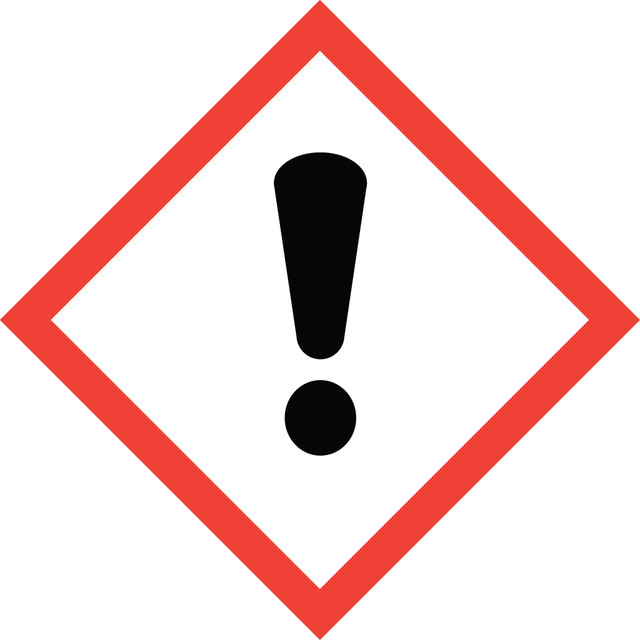
signalword
Warning
hcodes
Hazard Classifications
Eye Irrit. 2 - Skin Irrit. 2 - STOT SE 3
target_organs
Respiratory system
Storage Class
11 - Combustible Solids
wgk
WGK 3
flash_point_f
Not applicable
flash_point_c
Not applicable
ppe
dust mask type N95 (US), Eyeshields, Gloves
Regulatory Information
新产品
This item has
Choose from one of the most recent versions:
Already Own This Product?
Find documentation for the products that you have recently purchased in the Document Library.
Haoxie Xu et al.
Food chemistry, 281, 28-35 (2019-01-20)
Anthraquinones, a class of naturally occurring polyphenolic compounds, exhibit a wide range of bioactivities. However, most free anthraquinones are lipophilic bioactive compounds. Bovine β-lactoglobulin (βLG), a major whey protein, has a high affinity for small hydrophobic compounds. In this study
Anne C Jones et al.
Die Naturwissenschaften, 99(7), 583-586 (2012-06-23)
The nonnative hemlock woolly adelgid (Adelges tsugae Annand, Hemiptera: Sternorrhyncha: Adelgidae) has been a significant mortality agent of eastern hemlock (Tsuga canadensis Carriere) throughout a large portion of its geographic range. During a study investigating adelgid vigor in relation to
Hee-Yun Kim et al.
Inflammation research : official journal of the European Histamine Research Society ... [et al.], 68(5), 387-395 (2019-03-16)
AST2017-01 is developed to be used for treatment and prevention of allergic diseases and composed of processed-Cordyceps militaris and processed-Rumex crispus. But, effect of AST2017-01 remains unclear in an allergic rhinitis (AR). So, this study aimed to explore the effects
Global Trade Item Number
| SKU | GTIN |
|---|---|
| 229075-1G | 04061838781604 |
| 229075-50MG | 04061838781611 |