
B85919

2-Butanol
ReagentPlus®, ≥99%
Synonym(s):
sec-Butyl alcohol
Sign In to View Organizational & Contract Pricing.
Select a Size
Change View
About This Item
Linear Formula:
CH3CH2CH(OH)CH3
CAS Number:
Molecular Weight:
74.12
UNSPSC Code:
12352001
NACRES:
NA.21
PubChem Substance ID:
EC Number:
201-158-5
Beilstein/REAXYS Number:
773649
MDL number:
Assay:
≥99%
Bp:
98 °C (lit.)
Vapor pressure:
12.5 mmHg ( 20 °C)
vapor density
2.6 (vs air)
Quality Level
vapor pressure
12.5 mmHg ( 20 °C)
product line
ReagentPlus®
assay
≥99%
form
liquid
autoignition temp.
761 °F
expl. lim.
9.8 %
IVD
for in vitro diagnostic use
dilution
(for general lab use)
refractive index
n20/D 1.397 (lit.)
bp
98 °C (lit.)
mp
−115 °C (lit.)
density
0.808 g/mL at 25 °C (lit.)
SMILES string
CCC(C)O
InChI
1S/C4H10O/c1-3-4(2)5/h4-5H,3H2,1-2H3
InChI key
BTANRVKWQNVYAZ-UHFFFAOYSA-N
General description
2-Butanol is secondary alcohol mainly used as a solvent in organic synthesis. 2-butanol readily converts into 2-butanone (methyl ethyl ketone, MEK), which is used as a solvent in the industrial sector and many domestic cleaning products. It is an intermediate in devulcanizing rubber and the production of alkyl ester for use as biodiesel fuel.
Application
2-Butanol is used:
- As a precursor to produce 2-butanone in presence of KMnO4 oxidant and CPC (N-cetylpyridinium chloride) micellar catalyst.
- In the production of CH3NH3PbI3 perovskite films.
Legal Information
ReagentPlus is a registered trademark of Merck KGaA, Darmstadt, Germany
Still not finding the right product?
Explore all of our products under 2-Butanol
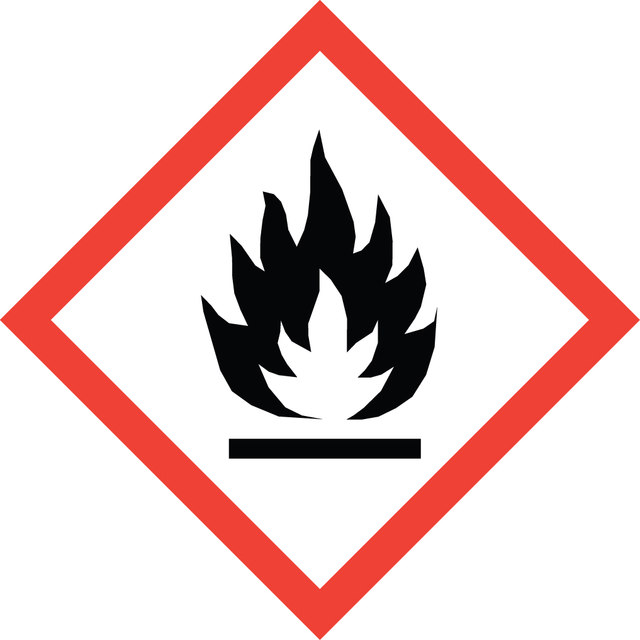
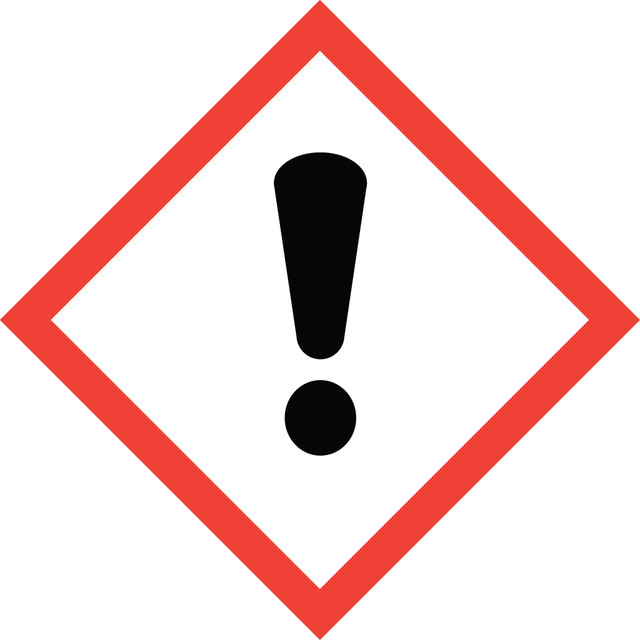
signalword
Warning
hcodes
Hazard Classifications
Eye Irrit. 2 - Flam. Liq. 3 - STOT SE 3
target_organs
Central nervous system, Respiratory system
Storage Class
3 - Flammable liquids
wgk
WGK 1
flash_point_f
80.6 °F - closed cup
flash_point_c
27 °C - closed cup
Regulatory Information
危险化学品
This item has
Choose from one of the most recent versions:
Already Own This Product?
Find documentation for the products that you have recently purchased in the Document Library.
Prabha Dwivedi et al.
Analytical chemistry, 78(24), 8200-8206 (2006-12-15)
This article introduces the concept of chiral ion mobility spectrometry (CIMS) and presents examples demonstrating the gas-phase separation of enantiomers of a wide range of racemates including pharmaceuticals, amino acids, and carbohydrates. CIMS is similar to traditional ion mobility spectrometry
Mark B Shiflett et al.
The journal of physical chemistry. B, 110(29), 14436-14443 (2006-07-21)
In this article, we investigate vapor-liquid-liquid equilibria (VLLE) of binary systems using a simple volumetric method. Being different from the usual cloud-point method for the determination of liquid-liquid separation boundaries, the present volumetric method is able to determine the direct
Dagmara Wojtków et al.
The journal of physical chemistry. A, 110(36), 10552-10557 (2006-09-08)
The effect of temperature and concentration on the structure of sec-butyl alcohol and isobutyl alcohol/water binary mixtures in the alcohol-rich region (mole fraction of water X(H2O) < 0.3) has been studied using Fourier transform (FT) near-infrared (NIR) spectroscopy. The experimental
Global Trade Item Number
| SKU | GTIN |
|---|---|
| B85919-20L | 04061833443040 |
| B85919-18L-CS | 04061833443026 |
| B85919-1L | 04061833443033 |
| B85919-4L | 04061833443057 |
| B85919-20L-P2 | 04061838162052 |
| B85919-25ML | 04061837225093 |