
673803

Diisopropyl ether
contains either BHT or hydroquinone as stabilizer, ACS reagent, ≥99.0%
Synonym(s):
Isopropyl ether
Sign In to View Organizational & Contract Pricing.
Select a Size
Change View
About This Item
Linear Formula:
(CH3)2CHOCH(CH3)2
CAS Number:
Molecular Weight:
102.17
UNSPSC Code:
12352112
NACRES:
NA.07
PubChem Substance ID:
EC Number:
203-560-6
Beilstein/REAXYS Number:
1731256
MDL number:
Assay:
≥99.0%
Grade:
ACS reagent
Bp:
68-69 °C (lit.)
Vapor pressure:
120 mmHg ( 20 °C)
grade
ACS reagent
Quality Level
vapor density
3.5 (vs air)
vapor pressure
120 mmHg ( 20 °C)
assay
≥99.0%
form
liquid
autoignition temp.
827 °F
contains
either BHT or hydroquinone as stabilizer
expl. lim.
1-21 %, 100 °F
dilution
(for analytical testing)
impurities
≤0.0007 meq/g Titr. acid, ≤0.05% peroxide (as C6H14O2)
evapn. residue
≤0.01%
color
APHA: ≤25
refractive index
n20/D 1.367 (lit.)
bp
68-69 °C (lit.)
mp
−85 °C (lit.)
density
0.725 g/mL at 25 °C (lit.)
SMILES string
CC(C)OC(C)C
InChI
1S/C6H14O/c1-5(2)7-6(3)4/h5-6H,1-4H3
InChI key
ZAFNJMIOTHYJRJ-UHFFFAOYSA-N
General description
Our premium ACS solvents are ideal for routine chemical synthesis, drying, purification, and critical labware cleaning. They meet or exceed the rigorous standards of the American Chemical Society (ACS), ensuring high-quality results for your research needs.
Premium ACS Solvents: Our solvents meet or exceed the stringent standards set by the American Chemical Society, ensuring high quality and reliability for your laboratory applications.
Replicable and Publishable Results: Designed for consistency, our solvents deliver results that can be reliably reproduced, making them ideal for research that requires publication.
Versatile Applications: Suitable for routine chemical synthesis, drying, purification, and critical labware cleaning, our solvents cater to a wide range of research needs in the laboratory.
Premium ACS Solvents: Our solvents meet or exceed the stringent standards set by the American Chemical Society, ensuring high quality and reliability for your laboratory applications.
Replicable and Publishable Results: Designed for consistency, our solvents deliver results that can be reliably reproduced, making them ideal for research that requires publication.
Versatile Applications: Suitable for routine chemical synthesis, drying, purification, and critical labware cleaning, our solvents cater to a wide range of research needs in the laboratory.
Still not finding the right product?
Explore all of our products under Diisopropyl ether
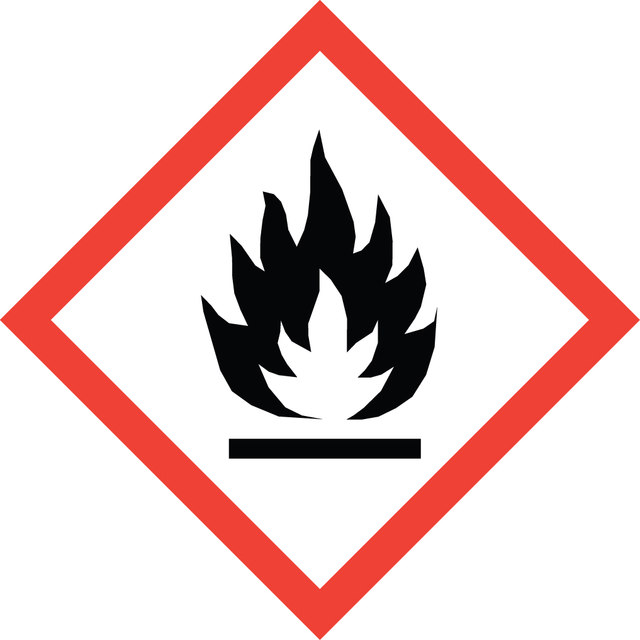

signalword
Danger
hcodes
Hazard Classifications
Flam. Liq. 2 - STOT SE 3
target_organs
Central nervous system
supp_hazards
Storage Class
3 - Flammable liquids
wgk
WGK 1
flash_point_f
-20.2 °F - closed cup
flash_point_c
-29 °C - closed cup
Regulatory Information
危险化学品
This item has
Choose from one of the most recent versions:
Already Own This Product?
Find documentation for the products that you have recently purchased in the Document Library.
Purification and analysis of gangliosides.
S Ladisch et al.
Methods in enzymology, 312, 135-145 (2000-11-09)
I Linhart et al.
Toxicology and applied pharmacology, 136(1), 155-160 (1996-01-01)
Biotransformation of acrolein (ACR) was studied in vivo in the rat following inhalation and ip administration. The major and minor urinary metabolites were 3-hydroxypropylmercapturic acid (HPMA) and 2-carboxyethylmercapturic acid (CEMA), respectively. Male Wistar rats were exposed to ACR, 23, 42
Fiorella Belpoggi et al.
Annals of the New York Academy of Sciences, 982, 70-86 (2003-02-04)
Tert-amyl-methyl ether (TAME) was administered by gavage in extra virgin olive oil solution at concentrations of 750, 250, or 0 mg/kg bw to groups of 100 male and 100 female Sprague-Dawley rats 8 weeks old at the start of the
Global Trade Item Number
| SKU | GTIN |
|---|---|
| 673803-1L | 04061832735481 |