Skip to Content
Merck
CN

252379

Nitrobenzene

ACS reagent, ≥99.0%

Sign In to View Organizational & Contract Pricing.

Select a Size


About This Item

Empirical Formula (Hill Notation):
C6H5NO2
CAS Number:
Molecular Weight:
123.11
NACRES:
NA.21
PubChem Substance ID:
eCl@ss:
39032002
UNSPSC Code:
12191501
EC Number:
202-716-0
MDL number:
Beilstein/REAXYS Number:
507540
Grade:
ACS reagent
Assay:
≥99.0%
Bp:
210-211 °C (lit.)
Vapor pressure:
0.15 mmHg ( 20 °C)
50 mmHg ( 120 °C)
Technical Service
Need help? Our team of experienced scientists is here for you.
Let Us Assist
Technical Service
Need help? Our team of experienced scientists is here for you.
Let Us Assist

Product Name

Nitrobenzene, ACS reagent, ≥99.0%

InChI key

LQNUZADURLCDLV-UHFFFAOYSA-N

InChI

1S/C6H5NO2/c8-7(9)6-4-2-1-3-5-6/h1-5H

SMILES string

[O-][N+](=O)c1ccccc1

grade

ACS reagent

vapor density

4.2 (vs air)

vapor pressure

0.15 mmHg ( 20 °C)
50 mmHg ( 120 °C)

assay

≥99.0%

form

liquid

autoignition temp.

899 °F

expl. lim.

40 %

dilution

(for analytical testing)

impurities

≤0.0005 meq/g water-soluble titr. acid

evapn. residue

≤0.005%

refractive index

n20/D 1.551 (lit.)

pH

8-8.5 (20 °C, 1 g/L)

bp

210-211 °C (lit.)

mp

5-6 °C (lit.)

density

1.196 g/mL at 25 °C (lit.)

anion traces

chloride (Cl-): ≤5 ppm

Quality Level

Looking for similar products? Visit Product Comparison Guide

Application

Nitrobenzene can be used as a reactant to synthesize aniline by selective hydrogenation reaction using Ru/SBA-15 catalyst.

General description

Nitrobenzene is an aromatic nitro compound. It is mainly used as a starting material to produce aniline. It is also used in the manufacture of pharmaceuticals, dyes, and polymers. Additionally, nitrobenzene is also employed as a solvent in organic synthesis, especially for electrophilic reagents.
Our premium ACS solvents are ideal for routine chemical synthesis, drying, purification, and critical labware cleaning. They meet or exceed the rigorous standards of the American Chemical Society (ACS), ensuring high-quality results for your research needs.

Premium ACS Solvents: Our solvents meet or exceed the stringent standards set by the American Chemical Society, ensuring high quality and reliability for your laboratory applications.

Replicable and Publishable Results: Designed for consistency, our solvents deliver results that can be reliably reproduced, making them ideal for research that requires publication.

Versatile Applications: Suitable for routine chemical synthesis, drying, purification, and critical labware cleaning, our solvents cater to a wide range of research needs in the laboratory.

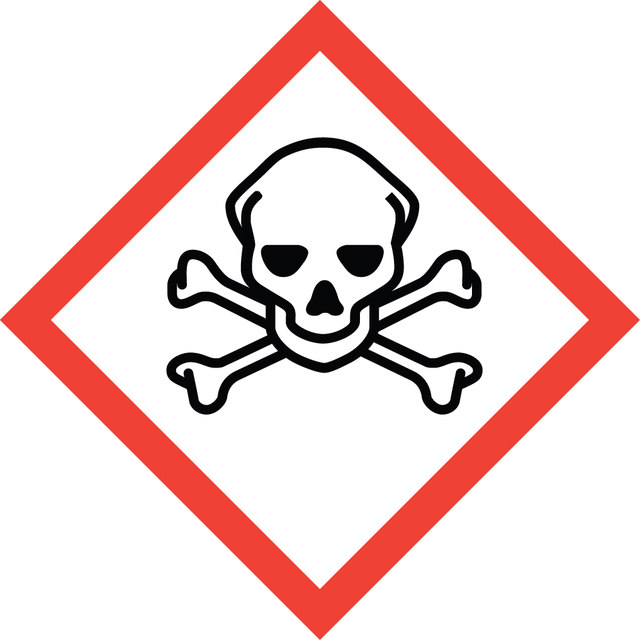
pictograms

Skull and crossbonesHealth hazard

signalword

Danger

Hazard Classifications

Acute Tox. 3 Dermal - Acute Tox. 3 Inhalation - Acute Tox. 3 Oral - Aquatic Chronic 3 - Carc. 2 - Repr. 1B - STOT RE 1 Inhalation

target_organs

Blood

Storage Class

6.1A - Combustible acute toxic Cat. 1 and 2 / very toxic hazardous materials

wgk

WGK 3

flash_point_f

190.4 °F - closed cup

flash_point_c

88 °C - closed cup

Regulatory Information

危险化学品
This item has

Choose from one of the most recent versions:

Certificates of Analysis (COA)

Lot/Batch Number

Don't see the Right Version?

If you require a particular version, you can look up a specific certificate by the Lot or Batch number.

Already Own This Product?

Find documentation for the products that you have recently purchased in the Document Library.

Visit the Document Library

Eagleson M.
Concise Encyclopedia Chemistry, 327-327 (1994)
Paula Rubio-Marqués et al.
Chemical communications (Cambridge, England), 50(14), 1645-1647 (2013-11-26)
Cyclohexanone oxime is formed from nitrobenzene with 97% yield in a one-pot reaction catalysed by palladium and gold nanoparticles on carbon. The reaction is carried out under hydrogen at 60 °C and the overall transformation involves a multi-step catalysed mechanism
Eagleson M.
Concise Encyclopedia Chemistry, 112-112 (1994)
Stephen W T Price et al.
Angewandte Chemie (International ed. in English), 54(34), 9886-9889 (2015-07-04)
Heterogeneous catalysis performed in the liquid phase is an important type of catalytic process which is rarely studied in situ. Using microfocus X-ray fluorescence and X-ray diffraction computed tomography (μ-XRF-CT, μ-XRD-CT) in combination with X-ray absorption near-edge spectroscopy (XANES), we have
R Emmanuel et al.
Journal of hazardous materials, 279, 117-124 (2014-07-23)
The present study involves a green synthesis of gold nanoparticles (Au-NPs) using Acacia nilotica twig bark extract at room temperature and trace level detection of one of the hazardous materials, viz. nitrobenzene (NB) that causes Methemoglobinaemia. The synthesis protocol demonstrates

Our team of scientists has experience in all areas of research including Life Science, Material Science, Chemical Synthesis, Chromatography, Analytical and many others.

Contact Technical Service