
208086

Zinc chloride
reagent grade, ≥98%
Synonym(s):
Dichlorozinc
Sign In to View Organizational & Contract Pricing.
Select a Size
Change View
About This Item
Linear Formula:
ZnCl2
CAS Number:
Molecular Weight:
136.30
NACRES:
NA.21
PubChem Substance ID:
UNSPSC Code:
12352302
EC Number:
231-592-0
MDL number:
Assay:
≥98%
Grade:
reagent grade
Form:
powder, crystals or chunks
grade
reagent grade
Quality Level
vapor pressure
1 mmHg ( 428 °C)
assay
≥98%
form
powder, crystals or chunks
reaction suitability
reagent type: catalyst
core: zinc
pH
5 (20 °C, 100 g/L)
mp
293 °C (lit.)
SMILES string
[Cl-].[Cl-].[Zn++]
InChI
1S/2ClH.Zn/h2*1H;/q;;+2/p-2
InChI key
JIAARYAFYJHUJI-UHFFFAOYSA-L
General description
Zinc chloride in combination with 1-ethyl-3-methylimidazolium chloride comprises a molten salt, which is employed in the electrodeposition studies of zinc on various substrates (glassy carbon and nickel).
Application
Zinc chloride (ZnCl2) has been used as an activation agent during the synthesis of phenolic based chemically activated carbon fibers (CAFs). It may also be employed as a catalyst in the preparation of carbonyl-methylene condensation products and poly(propylene fumarate).
ZnCl2 mayalso be used as a catalyst for the Knoevenagel condensation of aromatic aldehydes with substituted acetonitriles to form carbonyl-methylene products under solvent-free conditions. The activation of sugar cane bagasse with zinc chloride forms activated carbons for use as supercapacitor electrodes.
ZnCl2 mayalso be used as a catalyst for the Knoevenagel condensation of aromatic aldehydes with substituted acetonitriles to form carbonyl-methylene products under solvent-free conditions. The activation of sugar cane bagasse with zinc chloride forms activated carbons for use as supercapacitor electrodes.
Other Notes
Legal Information
Redi-Dri is a trademark of Sigma-Aldrich Co. LLC
Still not finding the right product?
Explore all of our products under Zinc chloride
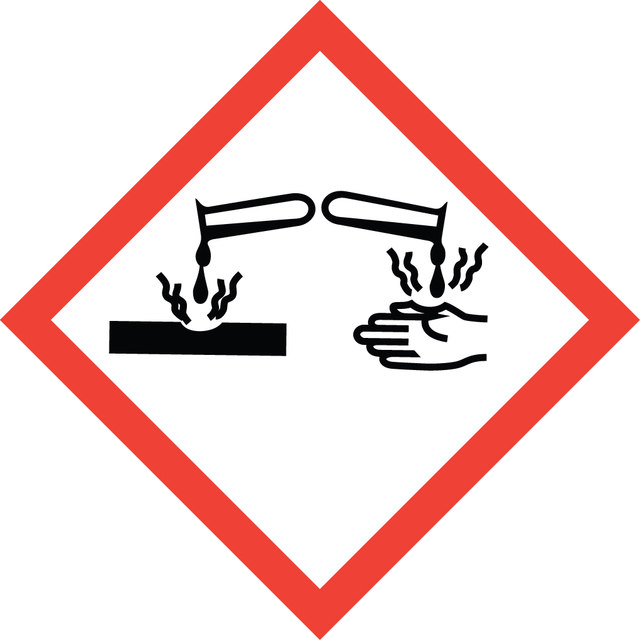

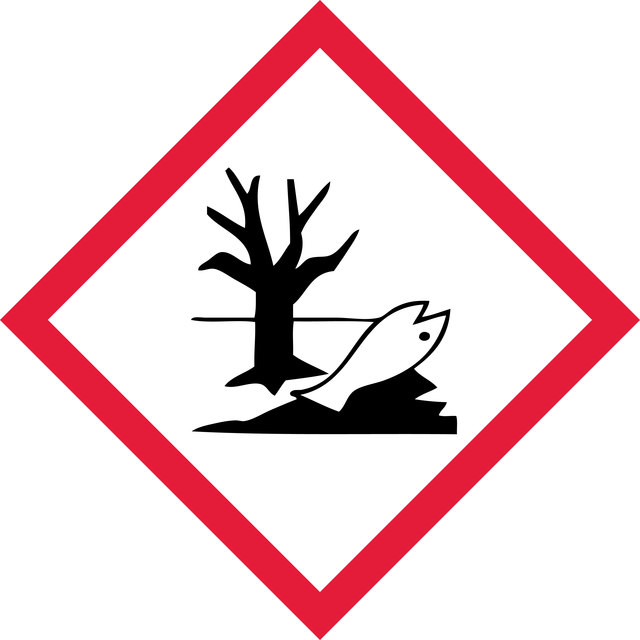
signalword
Danger
hcodes
Hazard Classifications
Acute Tox. 4 Oral - Aquatic Acute 1 - Aquatic Chronic 1 - Eye Dam. 1 - Skin Corr. 1B - STOT SE 3
target_organs
Respiratory system
Storage Class
8A - Combustible corrosive hazardous materials
wgk
WGK 3
flash_point_f
Not applicable
flash_point_c
Not applicable
Regulatory Information
危险化学品
This item has
Choose from one of the most recent versions:
Already Own This Product?
Find documentation for the products that you have recently purchased in the Document Library.
Activated carbon fiber composites for gas phase ammonia adsorption
Zheng W, et al.
Microporous and Mesoporous Materials : The Official Journal of the International Zeolite Association, 234, 146-154 (2016)
Microstructure and electrochemical double-layer capacitance of carbon electrodes prepared by zinc chloride activation of sugar cane bagasse.
Rufford TE, et al.
Journal of Power Sources, 195(3), 912-918 (2010)
Electrodeposition of zinc from a Lewis acidic zinc chloride-1-ethyl-3-methylimidazolium chloride molten salt.
Lin Y-F and Sun I.
Electrochimica Acta, 44(16), 2771-2777 (1999)
Global Trade Item Number
| SKU | GTIN |
|---|---|
| 208086-500G | 04061838769381 |
| 208086-5G | 04061838769398 |
| 208086-100G | 04061838769374 |