Skip to Content
Merck
CN

P3640000

Propyl gallate

European Pharmacopoeia (EP) Reference Standard

Synonym(s):

3,4,5-Trihydroxybenzoic acid propyl ester

Sign In to View Organizational & Contract Pricing.

Select a Size


About This Item

Linear Formula:
3,4,5-(HO)3C6H2CO2CH2CH2CH3
CAS Number:
Molecular Weight:
212.20
UNSPSC Code:
41116107
NACRES:
NA.24
PubChem Substance ID:
MDL number:
Beilstein/REAXYS Number:
1877976
Technical Service
Need help? Our team of experienced scientists is here for you.
Let Us Assist
Technical Service
Need help? Our team of experienced scientists is here for you.
Let Us Assist

InChI key

ZTHYODDOHIVTJV-UHFFFAOYSA-N

InChI

1S/C10H12O5/c1-2-3-15-10(14)6-4-7(11)9(13)8(12)5-6/h4-5,11-13H,2-3H2,1H3

grade

pharmaceutical primary standard

API family

propyl gallate

manufacturer/tradename

EDQM

SMILES string

CCCOC(=O)c1cc(O)c(O)c(O)c1

mp

146-149 °C (lit.)

application(s)

pharmaceutical (small molecule)

format

neat

Looking for similar products? Visit Product Comparison Guide

General description

This product is provided as delivered and specified by the issuing Pharmacopoeia. All information provided in support of this product, including SDS and any product information leaflets have been developed and issued under the Authority of the Issuing Pharmacopoeia. For further information and support please go to the website of the issuing Pharmacopoeia.

Packaging

The product is delivered as supplied by the issuing Pharmacopoeia. For the current unit quantity, please visit the EDQM reference substance catalogue.

Preparation Note

Prepare a 0.1M solution in glycerol:PBS (9:1)

Other Notes

Sales restrictions may apply.

signalword

Danger

Hazard Classifications

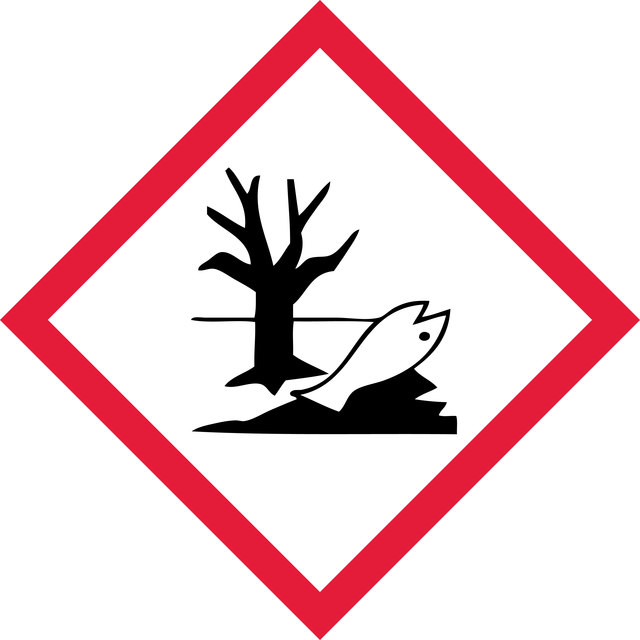
Acute Tox. 4 Oral - Aquatic Acute 1 - Aquatic Chronic 1 - Eye Dam. 1 - Skin Sens. 1

Storage Class

13 - Non Combustible Solids

wgk

WGK 2

flash_point_f

368.6 °F - closed cup

flash_point_c

187 °C - closed cup


Choose from one of the most recent versions:

Certificates of Analysis (COA)

Lot/Batch Number

It looks like we've run into a problem, but you can still download Certificates of Analysis from our Documents section.

If you need assistance, please contact Customer Support

Already Own This Product?

Find documentation for the products that you have recently purchased in the Document Library.

Visit the Document Library

Paola Colindres et al.
Journal of the science of food and agriculture, 91(5), 963-968 (2011-01-22)
The effect of selected antioxidants (grape seed extract (GS), oleoresin rosemary (OR), water-soluble oregano extract (WO), propyl gallate (PG), butylated hydroxyanisole (BHA)), butylated hydroxytoluene (BHT)) on sensory, color and oxidative stability of cooked, frozen, reheated ground beef patties was evaluated.
Sunil Yeruva et al.
Frontiers in physiology, 11, 430-430 (2020-06-09)
Intercalated discs (ICDs), which connect adjacent cardiomyocytes, are composed of desmosomes, adherens junctions (AJs) and gap junctions (GJs). Previous data demonstrated that adrenergic signaling enhances cardiac myocyte cohesion, referred to as positive adhesiotropy, via PKA-mediated phosphorylation of plakoglobin (PG). However
Kanako Inoue et al.
FEMS microbiology letters, 326(1), 83-90 (2011-11-19)
Azoxystrobin (AZ), a strobilurin-derived fungicide, is known to inhibit mitochondrial respiration in fungi by blocking the electron transport chain in the inner mitochondrial membrane. Germination was strongly inhibited when Botrytis cinerea spore suspension was treated with AZ and the alternative
Tomohisa Hirano et al.
Photodiagnosis and photodynamic therapy, 10(1), 28-32 (2013-03-08)
Photodynamic diagnosis (PDD) using aminolevulinic acid (ALA) is widely used in clinical fields. In PDD, protoporphyrin IX (PpIX) is generated from ALA in tumors, allowing the detection of the tumors by PpIX fluorescence. However, it is well known that PpIX
Deepak Kumar Yadav et al.
PloS one, 7(9), e45883-e45883 (2012-10-11)
When photosystem II (PSII) is exposed to excess light, singlet oxygen ((1)O(2)) formed by the interaction of molecular oxygen with triplet chlorophyll. Triplet chlorophyll is formed by the charge recombination of triplet radical pair (3)[P680(•+)Pheo(•-)] in the acceptor-side photoinhibition of

Our team of scientists has experience in all areas of research including Life Science, Material Science, Chemical Synthesis, Chromatography, Analytical and many others.

Contact Technical Service