Skip to Content
Merck
CN

N0550000

Neostigmine methyl sulfate

European Pharmacopoeia (EP) Reference Standard

Synonym(s):

3-(N,N-Dimethylcarbamoyloxy)-N,N,N,-trimethylanilinium methyl sulfate

Sign In to View Organizational & Contract Pricing.

Select a Size


About This Item

Empirical Formula (Hill Notation):
C13H22N2O6S
CAS Number:
Molecular Weight:
334.39
NACRES:
NA.24
PubChem Substance ID:
UNSPSC Code:
41116107
MDL number:
Technical Service
Need help? Our team of experienced scientists is here for you.
Let Us Assist
Technical Service
Need help? Our team of experienced scientists is here for you.
Let Us Assist

Product Name

Neostigmine methyl sulfate, European Pharmacopoeia (EP) Reference Standard

InChI

1S/C12H19N2O2.CH4O4S/c1-13(2)12(15)16-11-8-6-7-10(9-11)14(3,4)5;1-5-6(2,3)4/h6-9H,1-5H3;1H3,(H,2,3,4)/q+1;/p-1

SMILES string

COS([O-])(=O)=O.CN(C)C(=O)Oc1cccc(c1)[N+](C)(C)C

InChI key

OSZNNLWOYWAHSS-UHFFFAOYSA-M

grade

pharmaceutical primary standard

API family

neostigmine

manufacturer/tradename

EDQM

application(s)

pharmaceutical (small molecule)

format

neat

Gene Information

human ... ACHE(43)

Looking for similar products? Visit Product Comparison Guide

Application

Neostigmine methyl sulfate EP Reference standard, intended for use in laboratory tests only as specifically prescribed in the European Pharmacopoeia.

Biochem/physiol Actions

Reversible inhibitor of acetylcholinesterase that is similar to eserine, but does not cross the blood-brain barrier.
Reversible inhibitor of acetylcholinesterase; does not cross the blood-brain barrier.

General description

This product is provided as delivered and specified by the issuing Pharmacopoeia. All information provided in support of this product, including SDS and any product information leaflets have been developed and issued under the Authority of the Issuing Pharmacopoeia. For further information and support please go to the website of the issuing Pharmacopoeia.

Other Notes

Sales restrictions may apply.

Packaging

The product is delivered as supplied by the issuing Pharmacopoeia. For the current unit quantity, please visit the EDQM reference substance catalogue.

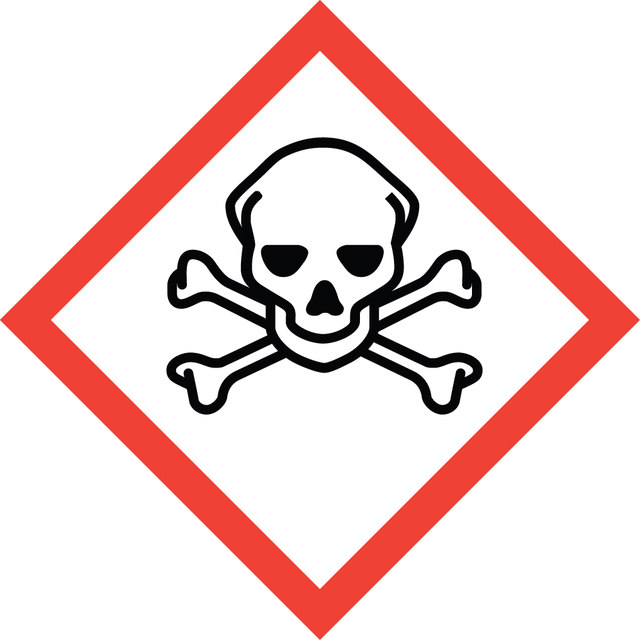
pictograms

Skull and crossbonesHealth hazard

signalword

Danger

Hazard Classifications

Acute Tox. 2 Oral - Eye Irrit. 2 - Resp. Sens. 1 - Skin Irrit. 2 - STOT SE 3

target_organs

Respiratory system

Storage Class

6.1A - Combustible acute toxic Cat. 1 and 2 / very toxic hazardous materials

wgk

WGK 3

flash_point_f

Not applicable

flash_point_c

Not applicable


Choose from one of the most recent versions:

Certificates of Analysis (COA)

Lot/Batch Number

It looks like we've run into a problem, but you can still download Certificates of Analysis from our Documents section.

If you need assistance, please contact Customer Support

Already Own This Product?

Find documentation for the products that you have recently purchased in the Document Library.

Visit the Document Library

Saraguaci Hernandez-Oliveira e Silva et al.
Muscle & nerve, 47(4), 591-593 (2013-03-06)
Crotamine is a basic, low-molecular-weight peptide that, at low concentrations, improves neurotransmission in isolated neuromuscular preparations by modulating sodium channels. In this study, we compared the effects of crotamine and neostigmine on neuromuscular transmission in myasthenic rats. We used a
Failure of prefilled thiopental to induce anaesthesia.
P J Stewart et al.
Anaesthesia, 68(3), 308-308 (2013-02-07)
G V Cammu et al.
Anaesthesia and intensive care, 40(6), 999-1006 (2012-12-01)
Six years ago, a study performed in our department reported that the incidence of postoperative residual curarisation (PORC) was 39%. The reassessment of neuromuscular monitoring and reversal of neuromuscular block in routine anaesthetic practice is relevant now that sugammadex has
Oyun Khookhor et al.
Neuro endocrinology letters, 34(1), 58-61 (2013-03-26)
We previously demonstrated that the direct microinjection of cholinesterase inhibitor (neostigmine) into the hippocampus in rats activated the hypothalamo-pituitary -adrenal axis and increased the level of norepinephrine in the plasma. In the current study we tried to measure the effects
Martina Grosse-Sundrup et al.
BMJ (Clinical research ed.), 345, e6329-e6329 (2012-10-19)
To determine whether use of intermediate acting neuromuscular blocking agents during general anesthesia increases the incidence of postoperative respiratory complications. Prospective, propensity score matched cohort study. General teaching hospital in Boston, Massachusetts, United States, 2006-10. 18,579 surgical patients who received

Our team of scientists has experience in all areas of research including Life Science, Material Science, Chemical Synthesis, Chromatography, Analytical and many others.

Contact Technical Service