Skip to Content
Merck
CN

ERMAC058

Aflatoxin B2 solution

3.80 μg/g in acetonitrile, ERM®, certified reference material

Sign In to View Organizational & Contract Pricing.

Select a Size


About This Item

Empirical Formula (Hill Notation):
C17H14O6
CAS Number:
Molecular Weight:
314.29
UNSPSC Code:
85151701
NACRES:
NA.24
PubChem Substance ID:
EC Number:
200-835-2
Beilstein/REAXYS Number:
1355115
MDL number:
Technical Service
Need help? Our team of experienced scientists is here for you.
Let Us Assist
Technical Service
Need help? Our team of experienced scientists is here for you.
Let Us Assist

Product Name

Aflatoxin B2 solution, 3.80 μg/g in acetonitrile, ERM®, certified reference material

InChI

1S/C17H14O6/c1-20-10-6-11-14(8-4-5-21-17(8)22-11)15-13(10)7-2-3-9(18)12(7)16(19)23-15/h6,8,17H,2-5H2,1H3/t8-,17+/m0/s1

SMILES string

[H][C@@]12CCO[C@]1([H])Oc3cc(OC)c4C5=C(C(=O)CC5)C(=O)Oc4c23

InChI key

WWSYXEZEXMQWHT-WNWIJWBNSA-N

grade

certified reference material

agency

ERM®

manufacturer/tradename

JRC

concentration

3.80 μg/g in acetonitrile

application(s)

general analytical

format

single component solution

storage temp.

2-8°C

Looking for similar products? Visit Product Comparison Guide

Analysis Note

For more information please see:
ERMAC058

Legal Information

ERM is a registered trademark of European Commission

pictograms

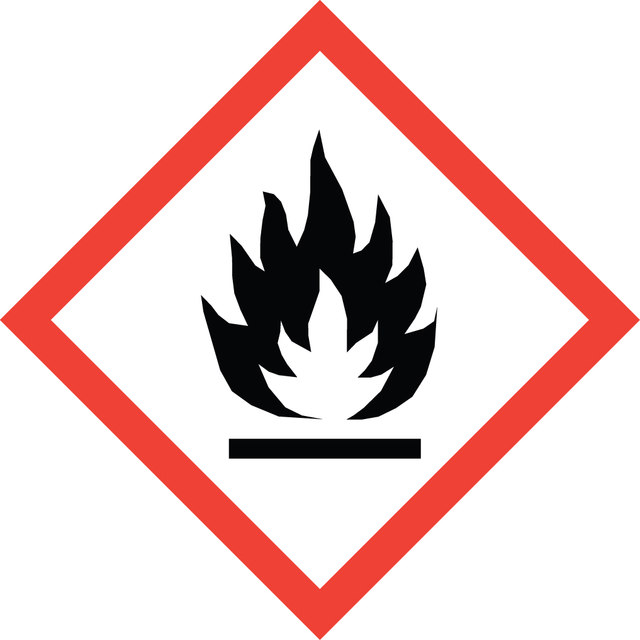
FlameExclamation mark

signalword

Danger

Hazard Classifications

Acute Tox. 4 Dermal - Acute Tox. 4 Inhalation - Acute Tox. 4 Oral - Eye Irrit. 2 - Flam. Liq. 2

Storage Class

3 - Flammable liquids

wgk

WGK 2

flash_point_f

35.6 °F - closed cup

flash_point_c

2.0 °C - closed cup

Regulatory Information

高风险级别生物产品--毒素类产品
危险化学品
This item has

Certificates of Analysis (COA)

Search for Certificates of Analysis (COA) by entering the products Lot/Batch Number. Lot and Batch Numbers can be found on a product’s label following the words ‘Lot’ or ‘Batch’.

Already Own This Product?

Find documentation for the products that you have recently purchased in the Document Library.

Visit the Document Library

Zarrin Es'haghi et al.
Journal of chromatography. B, Analytical technologies in the biomedical and life sciences, 879(28), 3034-3040 (2011-09-20)
The new pre-concentration technique, hollow fiber-solid phase microextraction based on carbon nanotube reinforced sol-gel and liquid chromatography-photodiode array detection was applied to determination of aflatoxins B(1), B(2) (AFB(1), AFB(2)) in rice, peanut and wheat samples. This research provides an overview
D Tang et al.
Biosensors & bioelectronics, 25(2), 514-518 (2009-08-25)
A novel membrane-based lateral-flow immunodipstick assay was developed for the fast screening of aflatoxin B(2) (AFB(2)) as a model compound in food samples. The detector reagent consisted of magnetic nanogold microspheres (MnGMs) with nano-Fe(2)O(3) particles as core and gold nanoparticles
J Yang et al.
Poultry science, 91(11), 2792-2801 (2012-10-24)
The purpose of this study was to evaluate the effects of feeding corn naturally contaminated with aflatoxin B(1) (AFB(1)) and aflatoxin B(2) (AFB(2)) on serum biochemical parameters, hepatic antioxidant enzyme activities, and pathological lesions of broilers. In total, 1,200 Cobb
J C Netto-Ferreira et al.
Photochemical & photobiological sciences : Official journal of the European Photochemistry Association and the European Society for Photobiology, 10(10), 1701-1708 (2011-08-13)
Aflatoxins are mycotoxins produced by fungi of the genus Aspergillus, which is widely spread in the tropics and subtropics. To date, aflatoxin phototoxicity has been recognized, but the mechanism responsible for this phototoxicity has not been fully characterized. In the
J Atehnkeng et al.
Food additives & contaminants. Part A, Chemistry, analysis, control, exposure & risk assessment, 25(10), 1264-1271 (2008-07-09)
Aflatoxin contamination resulting from maize infection by Aspergillus flavus is both an economic and a public health concern. Therefore, strategies for controlling aflatoxin contamination in maize are being investigated. The abilities of eleven naturally occurring atoxigenic isolates in Nigeria to

Our team of scientists has experience in all areas of research including Life Science, Material Science, Chemical Synthesis, Chromatography, Analytical and many others.

Contact Technical Service