Skip to Content
Merck
CN

D93856

Diethylenetriamine

99%, liquid, suitable for synthesis, ReagentPlus®

Synonym(s):

2,2′-Diaminodiethylamine, 2,2′-Iminodiethylamine, Bis(2-aminoethyl)amine

Sign In to View Organizational & Contract Pricing.

Select a Size


About This Item

Linear Formula:
(NH2CH2CH2)2NH
CAS Number:
Molecular Weight:
103.17
NACRES:
NA.21
PubChem Substance ID:
UNSPSC Code:
12352100
EC Number:
203-865-4
MDL number:
Beilstein/REAXYS Number:
605314
Assay:
99%
Bp:
199-209 °C (lit.)
Vapor pressure:
0.08 mmHg ( 20 °C)
Technical Service
Need help? Our team of experienced scientists is here for you.
Let Us Assist
Technical Service
Need help? Our team of experienced scientists is here for you.
Let Us Assist

Product Name

Diethylenetriamine, ReagentPlus®, 99%

InChI key

RPNUMPOLZDHAAY-UHFFFAOYSA-N

InChI

1S/C4H13N3/c5-1-3-7-4-2-6/h7H,1-6H2

SMILES string

NCCNCCN

vapor density

3.6 (vs air)

vapor pressure

0.08 mmHg ( 20 °C)

product line

ReagentPlus®

assay

99%

form

liquid

autoignition temp.

676 °F

expl. lim.

6.7 %

dilution

(for general lab use)

refractive index

n20/D 1.484 (lit.)

bp

199-209 °C (lit.)

mp

−35 °C (lit.)

density

0.955 g/mL at 25 °C (lit.)

functional group

amine

Quality Level

Looking for similar products? Visit Product Comparison Guide

Application

Diethylenetriamine has been used as a curing agent for diglycidyl ether of bisphenol-A epoxy resin nanofluids. It may be used in the preparation of 2,3,5,6-tetrahydroimidazo[2,1-c]pyrrolo[1,2-a]pyrazine and 8-methyl-2,3,5,6-tetrahydroimidazo[2,1-c]pyrrolo[1,2-a]pyrazine.

General description

Diethylenetriamine (DETA), a secondary amine, is synthesized from ethanol. Its ability to capture carbon monoxide from aqueous solutions has been studied. The toxicity of DETA has been assessed. The coupling reaction of DETA with carboxyl-terminated magnetic particles has been analyzed.

Legal Information

ReagentPlus is a registered trademark of Merck KGaA, Darmstadt, Germany

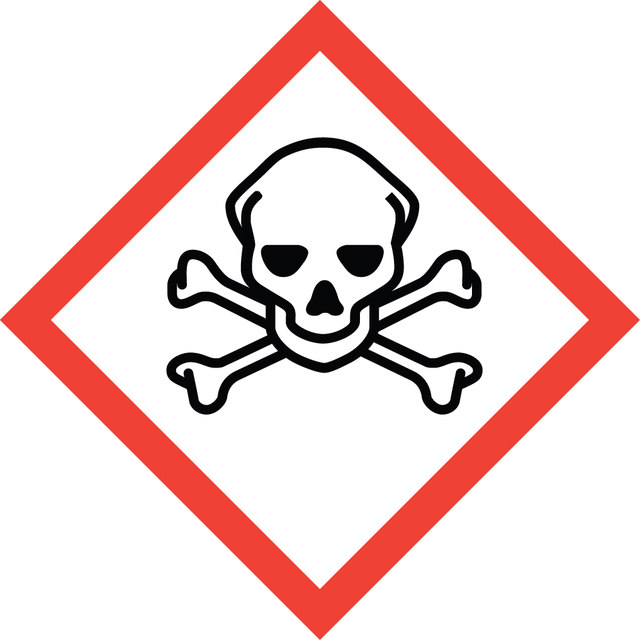
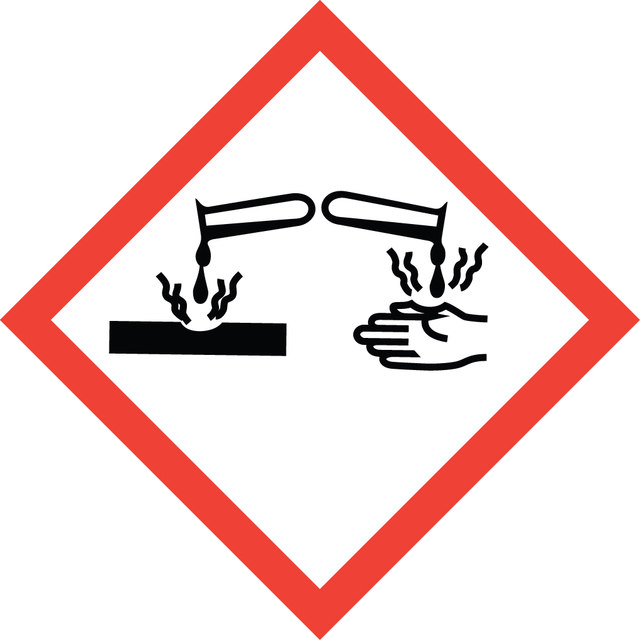
pictograms

Skull and crossbonesCorrosion

signalword

Danger

Hazard Classifications

Acute Tox. 2 Inhalation - Acute Tox. 4 Dermal - Acute Tox. 4 Oral - Eye Dam. 1 - Skin Corr. 1B - Skin Sens. 1B - STOT SE 3

target_organs

Respiratory system

Storage Class

6.1A - Combustible acute toxic Cat. 1 and 2 / very toxic hazardous materials

wgk

WGK 1

flash_point_f

201.2 °F - closed cup

flash_point_c

94 °C - closed cup

ppe

Faceshields, Gloves, Goggles, type ABEK (EN14387) respirator filter

Regulatory Information

危险化学品
This item has

Choose from one of the most recent versions:

Certificates of Analysis (COA)

Lot/Batch Number

Don't see the Right Version?

If you require a particular version, you can look up a specific certificate by the Lot or Batch number.

Already Own This Product?

Find documentation for the products that you have recently purchased in the Document Library.

Visit the Document Library

Kinetics of carbon dioxide removal by ethylenediamine and diethylenetriamine in aqueous solutions.
Salvi AP, et al.
The Canadian Journal of Chemical Engineering, 92(12), 2021-2028 (2014)
Stefan Fasbender et al.
Scientific reports, 9(1), 12028-12028 (2019-08-21)
Graphene quantum dots (GQDs) are a promising next generation nanomaterial with manifold biomedical applications. For real world applications, comprehensive studies on their influence on the functionality of primary human cells are mandatory. Here, we report the effects of GQDs on
Coupling of diethylenetriamine to carboxyl-terminated magnetic particles.
Gelinas S, et al.
Colloids and Surfaces. A, Physicochemical and Engineering Aspects, 164(2), 257-266 (2000)
Comparison of filler percolation and mechanical properties in graphene and carbon nanotubes filled epoxy nanocomposites.
Martin-Gallego M, et al.
European Polymer Journal, 49(6), 1347-1353 (2013)
Unexpected tandem condensation of 2-furonitriles with diethylenetriamine.
Terenin VI, et al.
Chemistry of Heterocyclic Compounds, 46(3), 351-353 (2010)

Articles

Kanjiro Miyata (The University of Tokyo, Japan) provides insights on the rational design of polymeric materials for “smart” oligonucleotide delivery.

Our team of scientists has experience in all areas of research including Life Science, Material Science, Chemical Synthesis, Chromatography, Analytical and many others.

Contact Technical Service