Skip to Content
Merck
CN

BCR049

Benzo[j]fluoranthene

BCR®, certified reference material

Synonym(s):

Benzo[j]fluoranthene (purity)

Sign In to View Organizational & Contract Pricing.

Select a Size


About This Item

Empirical Formula (Hill Notation):
C20H12
CAS Number:
Molecular Weight:
252.31
UNSPSC Code:
41116107
PubChem Substance ID:
MDL number:
Technical Service
Need help? Our team of experienced scientists is here for you.
Let Us Assist
Technical Service
Need help? Our team of experienced scientists is here for you.
Let Us Assist

InChI

1S/C20H12/c1-2-8-15-13(5-1)11-12-17-16-9-3-6-14-7-4-10-18(19(14)16)20(15)17/h1-12H

SMILES string

c1ccc2c-3c(ccc2c1)-c4cccc5cccc-3c45

InChI key

KHNYNFUTFKJLDD-UHFFFAOYSA-N

grade

certified reference material

agency

BCR®

technique(s)

HPLC: suitable, gas chromatography (GC): suitable

application(s)

cleaning products
cosmetics
environmental
food and beverages
personal care
pharmaceutical (small molecule)

format

neat

storage temp.

2-8°C

Analysis Note

For more information please see:
BCR049

Legal Information

BCR is a registered trademark of European Commission

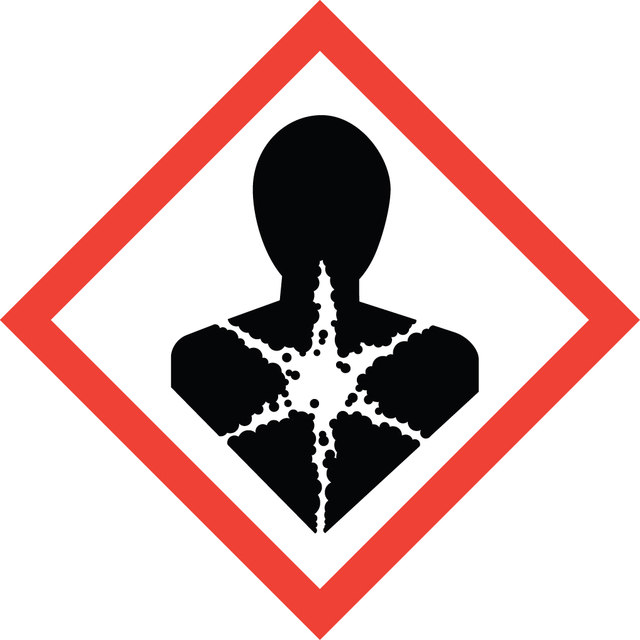
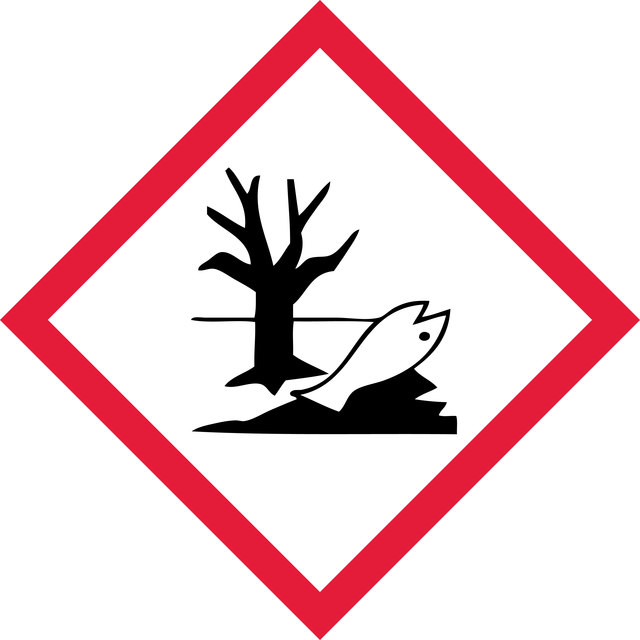
pictograms

Health hazardEnvironment

signalword

Danger

hcodes

Hazard Classifications

Aquatic Acute 1 - Aquatic Chronic 1 - Carc. 1B

Storage Class

6.1C - Combustible acute toxic Cat.3 / toxic compounds or compounds which causing chronic effects

wgk

WGK 3


Certificates of Analysis (COA)

Search for Certificates of Analysis (COA) by entering the products Lot/Batch Number. Lot and Batch Numbers can be found on a product’s label following the words ‘Lot’ or ‘Batch’.

Already Own This Product?

Find documentation for the products that you have recently purchased in the Document Library.

Visit the Document Library

Etienne Bourgart et al.
Archives of toxicology, 93(8), 2165-2184 (2019-07-10)
Combined exposure to complex mixtures of polycyclic aromatic hydrocarbons (PAHs) and ultraviolet radiation (UVR) is suspected to enhance PAH skin permeability and skin cancer risk depending on PAH bioactivation. The impact of PAH mixtures (exposure dose, composition, and complexity) and
Carmela Lestingi et al.
Food additives & contaminants. Part A, Chemistry, analysis, control, exposure & risk assessment, 34(7), 1140-1152 (2017-05-18)
A gas-chromatographic single-quadrupole analytical method for the analysis of the 16 priority European Union (EU) polycyclic aromatic hydrocarbons (PAHs) in food is presented. The method fulfils the request of Regulation EU 836/2011 for an analytical procedure to be used for
B D Silverman et al.
Chemico-biological interactions, 47(3), 289-292 (1983-12-01)
The benzo- and dibenzofluoranthenes, widespread environmental contaminants, have been subjects of continued interest. Calculations of the reactivity of potential ultimate carcinogenic metabolites of the benzofluoranthenes predict unexpected behavior for these non-alternant hydrocarbons.
Gemma Assante et al.
Applied microbiology and biotechnology, 69(6), 718-721 (2005-06-30)
The binaphthyl derivative cladosporol 3 was supplied from 60 to 200 mg l(-1) to shaken cultures of Cladosporium cf. cladosporioides. Compared to blank, fungal biomass was not affected by adding cladosporol till 100 mg l(-1): it rather increased at higher
E J LaVoie et al.
Cancer letters, 70(1-2), 7-14 (1993-06-15)
Exceptional tumorigenic potency was observed with 4-fluorobenzo[j]fuoranthene (4-fluoroB[j]F) relative to benzo[j]fluoranthene (B[j]F) and 10-fluorobenzo[j]fluoranthene (10-fluoroB[j]F) in a mouse skin initiation promotion bioassay. Comparison of the tumorigenic response obtained at total initiating doses of 50, 100, and 1000 nmol firmly established

Our team of scientists has experience in all areas of research including Life Science, Material Science, Chemical Synthesis, Chromatography, Analytical and many others.

Contact Technical Service