Skip to Content
Merck
CN

B8647

Brilliant Blue R Concentrate

methanol solution

Synonym(s):

Brilliant Blue R, Acid Blue 83, Brilliant indocyanin 6B, Coomassie Brilliant Blue R

Sign In to View Organizational & Contract Pricing.

Select a Size


About This Item

Empirical Formula (Hill Notation):
C45H44N3NaO7S2
CAS Number:
Molecular Weight:
825.97
UNSPSC Code:
12171500
NACRES:
NA.47
PubChem Substance ID:
MDL number:
Beilstein/REAXYS Number:
5718025
Colour Index Number:
42660
Technical Service
Need help? Our team of experienced scientists is here for you.
Let Us Assist
Technical Service
Need help? Our team of experienced scientists is here for you.
Let Us Assist

Product Name

Brilliant Blue R Concentrate, suitable for SDS-PAGE, methanol solution

InChI

1S/C45H45N3O7S2.Na/c1-4-47(31-33-9-7-11-43(29-33)56(49,50)51)40-23-15-36(16-24-40)45(35-13-19-38(20-14-35)46-39-21-27-42(28-22-39)55-6-3)37-17-25-41(26-18-37)48(5-2)32-34-10-8-12-44(30-34)57(52,53)54;/h7-30H,4-6,31-32H2,1-3H3,(H2,49,50,51,52,53,54);/q;+1/p-1

SMILES string

[Na+].CCOc1ccc(Nc2ccc(cc2)C(\c3ccc(cc3)N(CC)Cc4cccc(c4)S([O-])(=O)=O)=C5\C=C/C(C=C5)=[N+](\CC)Cc6cccc(c6)S([O-])(=O)=O)cc1

InChI key

NKLPQNGYXWVELD-UHFFFAOYSA-M

form

methanol solution

color

dark blue

suitability

suitable for SDS-PAGE

application(s)

diagnostic assay manufacturing
hematology
histology

storage temp.

room temp

Quality Level

Looking for similar products? Visit Product Comparison Guide

Application

Brilliant Blue R concentrate is a methanol based stain especially designed for staining protein in polyacrylamide but will also stain agarose gels. The stain contains methanol and acetic acid so gels do not require fixing prior to staining.
Brilliant Blue R Concentrate has been used for protein band detection after nondenaturing gradient gel electrophoresis, isoelectric focussing and SDS-PAGE (sodium dodecyl sulfate polyacrylamide gel electrophoresis).
For detection of protein bands following electrophoresis.

Preparation Note

After dilution with deionized water to a final volume of one liter, solution will contain 0.25% (w/v) Brilliant Blue R, 40% (v/v) methanol and 7% (v/v) acetic acid.

Legal Information

signalword

Danger

Hazard Classifications

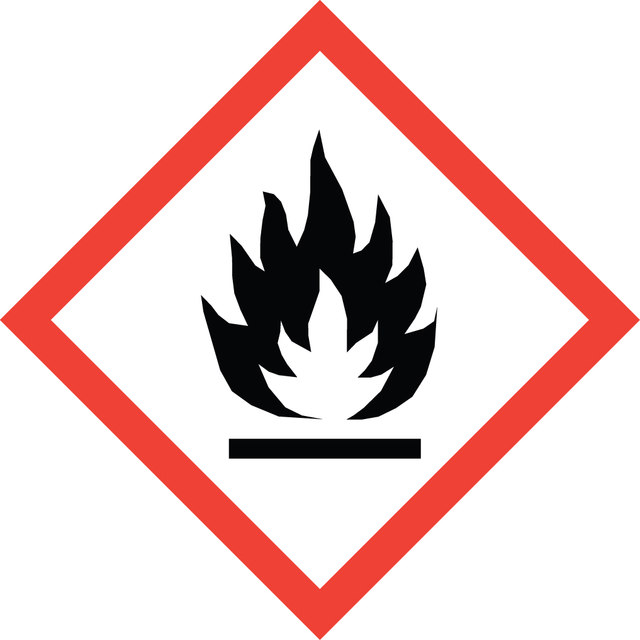
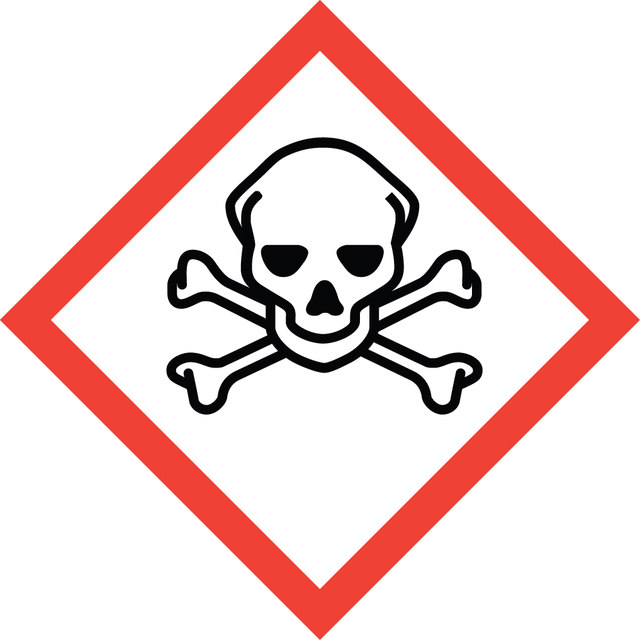
Acute Tox. 3 Dermal - Acute Tox. 3 Inhalation - Acute Tox. 3 Oral - Eye Irrit. 2 - Flam. Liq. 2 - Skin Irrit. 2 - STOT SE 1

target_organs

Eyes,Central nervous system

Storage Class

3 - Flammable liquids

wgk

WGK 3

flash_point_f

57.2 °F - closed cup

flash_point_c

14 °C - closed cup

ppe

Faceshields, Gloves, Goggles, type ABEK (EN14387) respirator filter

Regulatory Information

危险化学品
This item has

Choose from one of the most recent versions:

Certificates of Analysis (COA)

Lot/Batch Number

Don't see the Right Version?

If you require a particular version, you can look up a specific certificate by the Lot or Batch number.

Already Own This Product?

Find documentation for the products that you have recently purchased in the Document Library.

Visit the Document Library

Overexpression of human apolipoprotein AI in transgenic rats and the hyperlipoproteinemia associated with experimental nephrosis.
Burkey BF, et al.
Journal of Lipid Research, 36.7, 1463-1473 (1995)
Crystallization of soluble proteins in vapor diffusion for x-ray crystallography.
Benvenuti M and Mangani S
Nature Protocols, 2, 1633-1651 (2007)
The effect of ethanol or hepatotoxin exposure on rat transferrin desialylation.
Lof K, et al.
Alcohol and Alcoholism (Oxford, Oxfordshire), 31, 445-451 (1996)
Katharina Stock et al.
Cancer cell international, 19, 77-77 (2019-04-13)
The nucleation-promoting factor cortactin is expressed and promotes tumor progression and metastasis in various cancers. However, little is known about the biological role of cortactin in the progression of pancreatic ductal adenocarcinoma (PDAC). Cortactin and phosphorylated cortactin (Y421) were investigated
K Kubo
Analytical biochemistry, 213(2), 200-205 (1993-09-01)
In sodium dodecyl sulfate-polyacrylamide gel electrophoresis (SDS-PAGE) according to the method of Weber and Osborn, protein bands are often distorted by tailing at both ends, and the phenomenon is often called "edge tailing." This was eliminated by adding glycerol at

Articles

Explore the impact of water quality on protein electrophoresis and Western blotting. Learn about the role of ultrapure water and its effect on chemiluminescent signals in Western blotting.

Our team of scientists has experience in all areas of research including Life Science, Material Science, Chemical Synthesis, Chromatography, Analytical and many others.

Contact Technical Service