
A8097

Acridine Orange hydrochloride solution
>95.0% purity (HPLC), solution
Synonym(s):
3,6-Bis(dimethylamino)acridine hydrochloride
Sign In to View Organizational & Contract Pricing.
Select a Size
Change View
About This Item
Empirical Formula (Hill Notation):
C17H19N3 · HCl
CAS Number:
Molecular Weight:
301.81
NACRES:
NA.47
PubChem Substance ID:
UNSPSC Code:
12171500
MDL number:
Beilstein/REAXYS Number:
3575587
Product Name
Acridine Orange hydrochloride solution, 10 mg/mL in H2O, ≥95.0% (HPLC)
Quality Level
assay
≥95.0% (HPLC)
form
solution
concentration
10 mg/mL in H2O
technique(s)
microbe id | staining: suitable
color
orange to red
εmax
47-54 at 486-492 nm in water
application(s)
diagnostic assay manufacturing
hematology
histology
storage temp.
room temp
SMILES string
Cl[H].CN(C)c1ccc2cc3ccc(cc3nc2c1)N(C)C
InChI
1S/C17H19N3.ClH/c1-19(2)14-7-5-12-9-13-6-8-15(20(3)4)11-17(13)18-16(12)10-14;/h5-11H,1-4H3;1H
InChI key
VSTHNGLPHBTRMB-UHFFFAOYSA-N
Application
Acridine Orange hydrochloride solution has been used to study autophagic cell death. It has also been used for the staining of chromosomes.
Biochem/physiol Actions
Acridine Orange is a metachromatic dye which can stain DNA, RNA and acid glycosaminoglycans. At low concentration it intercalates into DNA and precipitates RNA. However, at high concentration it denatures and precipitates both RNA and DNA. Acridine Orange is also used to analyze autophagy. It goes into acidic organelles in a pH-dependent manner. At neutral pH, acridine orange gives a green fluorescence and in acidic conditions, it accumulates in the acidic organelle giving a bright red fluorescence.
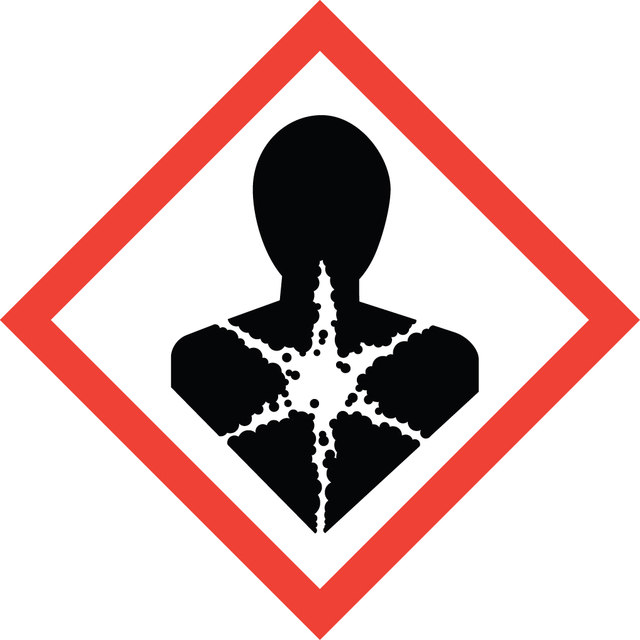
signalword
Warning
hcodes
Hazard Classifications
Muta. 2
Storage Class
12 - Non Combustible Liquids
wgk
WGK 2
flash_point_f
Not applicable
flash_point_c
Not applicable
ppe
Eyeshields, Gloves, multi-purpose combination respirator cartridge (US)
Choose from one of the most recent versions:
Already Own This Product?
Find documentation for the products that you have recently purchased in the Document Library.
Murugesan Sathiya Deepika et al.
Materials science & engineering. C, Materials for biological applications, 103, 109716-109716 (2019-07-28)
Improved therapeutic effects can be achieved by the delivery of combination of drugs through multifunctional cell targeted nanocarrier systems. The present investigation reports the preparation of Poly (D,L-lactic-co-glycolic acid) (PLGA) nanospheres loaded with the novel combination such as Rutin (R)
Nikolay A Pyataev et al.
Polymers, 11(5) (2019-05-28)
This study looked into the synthesis and study of Dextrane Sulfate-Doxorubicin Nanoparticles (DS-Dox NP) that are sensitive to amylase and show anticoagulant properties. The particles were obtained by the method of solvent replacement. They had a size of 305 ±
Paulina Arévalo-Jaramillo et al.
Environmental science and pollution research international, 26(24), 24911-24921 (2019-06-28)
Toxicity refers to the potential of a substance such as a pesticide to cause damage to the structure or functions of an exposed organism. Pesticides can lead to harmful biological effects in exposed animals and their offspring over the medium
Global Trade Item Number
| SKU | GTIN |
|---|---|
| A8097-10ML | 04061833391204 |